Pacta sunt servanda!
The European idea of open gardens was introduced to our country by Magdalena Prosińska and Łukasz Wilmann. In 2004, they successfully developed a community program aimed at restoring and revitalizing the heritage of Polish garden cities. The program’s main goal is to integrate residents and encourage broader cooperation between local organizations and municipal authorities. Drawing inspiration from foreign examples, they named it Open Gardens. However, this program is not a mere replication of similar European initiatives.
The French festival Rendez-vous aux jardins[1] is a national and international initiative focused on promoting garden heritage and garden culture. The British National Garden Scheme (NGS)[2] primarily involves opening private gardens to raise funds for healthcare-related causes. The German Tag der offenen Gärten[3] is more decentralized, with different regions organizing their own open garden days at various times. Meanwhile, the Italian festival Appuntamento in Giardino[4] is an annual initiative promoting Italy’s garden heritage, as part of the broader European Rendez-vous aux jardins, which takes place simultaneously in over twenty countries.
The Polish Open Gardens program, with its flagship event—the Open Gardens Festival—focuses on integrating and promoting local communities by organizing various intimate artistic, cultural, educational, and social events. Unlike similar European initiatives, it is characterized by a high degree of autonomy and a diverse festival format tailored to local specifics. Polish Open Gardens is a celebration of the local community—an occasion to honor its identity, history, and cultural achievements. Residents take on multiple roles, acting as garden hosts, event organizers, and audience members all at once.
Objectives of the Open Gardens Program
The objectives of the Open Gardens program are defined on two levels—local and supra-local.[5] These objectives guide complementary actions that bring tangible, measurable benefits to local communities.
Main Local Objectives:
- Protection of local spiritual, cultural, material, and natural heritage;
- Fostering good neighborly relations, a sense of community, and security;
- Creating platforms for collaboration to support local initiatives;
- Promoting local craftsmanship, artists, and their achievements;
- Supporting local entrepreneurship, especially small and medium-sized businesses.
Main Supra-Local Objectives:
- Promoting the unique heritage of garden cities and other towns participating in the program on a regional, national, and international level;
- Supporting inter-municipal initiatives within the participating towns;
- Promoting the Open Gardens program as a brand, where the name and logo serve as proof of the openness of local communities to good practices and their ability to:
- Establish both local and supra-local cooperation;
- Build public-private partnerships for local development;
- Uphold high standards of public governance;
- Effectively protect local cultural, social, and economic heritage.
The Open Gardens Festival is the flagship project of the Open Gardens program, but the program itself has a much broader scope. Beyond festival events, it also includes other initiatives aimed at achieving the program’s objectives. These may include conferences, lectures, workshops, expert meetings, cultural heritage revitalization studies, artistic and promotional projects, and many others—both social and commercial in nature. The program also facilitates activities related to historical education, the restoration of gardening traditions, and the dissemination of best practices in urban space management in all its dimensions. Thanks to its open and flexible framework, the Open Gardens program can be tailored to the unique characteristics and specific needs of each town.
Collaboration within the Open Gardens program strengthens community bonds and residents’ sense of responsibility for shared matters, particularly in eliminating threats to local heritage and traditions. The program aims to enhance the quality of governance in both urban and rural municipalities by fostering dialogue between local communities and municipal authorities. Its success lies in creating a genuine, lasting partnership between the government and society, united in their shared commitment to the present and future of self-governing communities.
The objectives of the Open Gardens program take on particular significance in the context of the growing influx of immigrants to our country, many of whom are reluctant to assimilate into the European cultural environment shaped by the Euro-Atlantic Latin civilization.[6] In a time when many European communities are struggling with serious internal conflicts, initiatives that strengthen cultural identity serve not only to protect national heritage but also as a tool for fostering social cohesion. The risk of the native culture fading away due to the adoption of foreign influences has become very real, as seen in France, Germany, the United Kingdom, and Scandinavian countries.
Organizing Open Gardens festivals helps preserve and pass down national traditions to future generations rather than succumbing to the pressures of multiculturalism. Contrary to optimistic narratives, multiculturalism often deepens divisions rather than fostering harmonious coexistence.[7] When incoming communities show little willingness to integrate and instead strive for cultural separation, inevitable conflicts arise in the realms of values, social norms, and customs. The Open Gardens program strengthens Polish national identity and enhances the resilience of local communities against the erosion of fundamental values, effectively counteracting social disintegration. In the face of challenges related to immigration, preserving and promoting Polish heritage is not only a matter of aesthetics or tradition but also a cornerstone of social stability and cultural security.
The Network-Based Nature of the Open Gardens Program
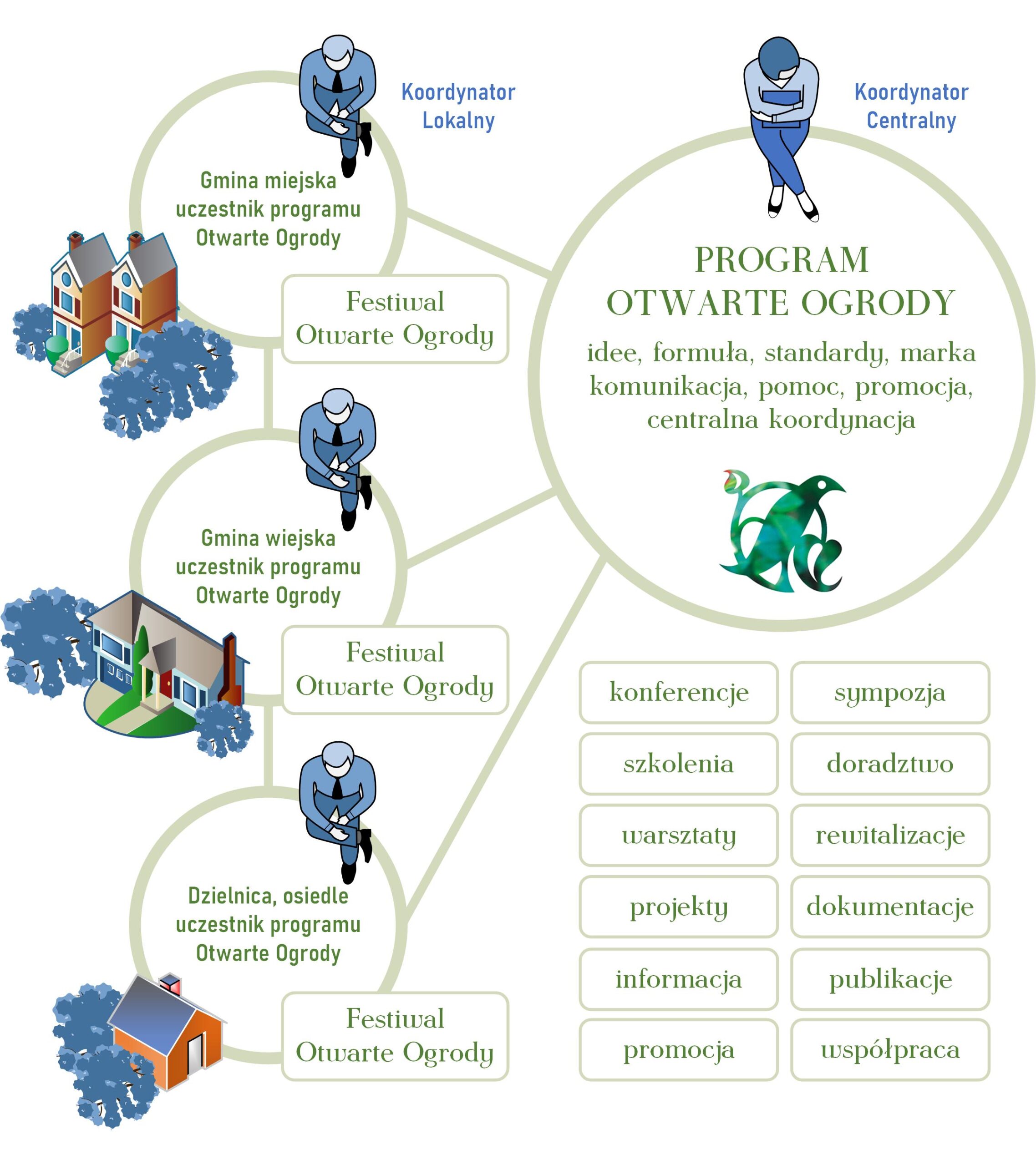
The Open Gardens program is a network-based initiative that connects various towns and communities around the idea of opening private gardens to neighbors and visitors, fostering strong neighborly bonds. It is built on the cooperation of its participants, who implement independent projects while adhering to shared standards. Through collaboration among participating towns, an extensive network for exchanging experiences, inspiring one another, and sharing best practices emerges in all areas related to the functioning of urban and rural communities.
Joining the Open Gardens program provides affiliated towns with greater opportunities for engaging in meaningful collaborations and promoting their unique qualities at both the national and international levels. It also facilitates connections with various institutions and organizations, as well as access to funding for projects related to cultural heritage and environmental protection. The network of participating towns strengthens their collective representation in advocating for shared interests and safeguarding their local priorities. For many smaller towns, participation in the program presents a chance to attract more visitors, thus enhancing the visibility of local tourist attractions, products, and services.
After more than two decades of operation, Open Gardens has become not only a well-recognized and respected social initiative but also a valuable brand. Its strong reputation makes joining the program an opportunity to be part of a prestigious nationwide and international movement dedicated to culture, heritage preservation, and social integration. Municipalities that decide to participate gain access to a proven and engaging model for fostering cultural initiatives, exchanging experiences, and achieving broader recognition. The Open Gardens program provides a platform for showcasing local values and talents, inspiring and activating residents, strengthening community identity, and increasing the appeal of participating towns and regions. Becoming part of the program means joining a network of communities that are committed to preserving their heritage while shaping social spaces in the spirit of openness, dialogue, and creativity.
Achievements of the Open Gardens Program
Since its inception, the Open Gardens program has achieved significant success in effectively realizing its objectives. Within the first seven years, eight towns joined the Open Gardens network, and today, that number has grown to more than a dozen. This steady expansion reflects the strength and appeal of the program’s core idea. The Open Gardens festivals have sparked community engagement in many towns, becoming a powerful tool for cultural and educational activation. Thanks to the dedication of volunteers, social organizations, and public institutions, the program not only delivers engaging cultural events but also leaves a lasting impact on urban spaces and local community awareness.
One of the program’s greatest accomplishments is the creation of a collaborative platform at both local and regional levels, leading to numerous initiatives that extend beyond the Open Gardens Festival itself. Participating towns have launched projects focused on preserving historical architecture, revitalizing urban spaces, developing new tourist and educational routes, and promoting environmental protection.
Notable achievements include:
- Józefów – the creation of the Świdermajer Historic Architecture Trail.[8]
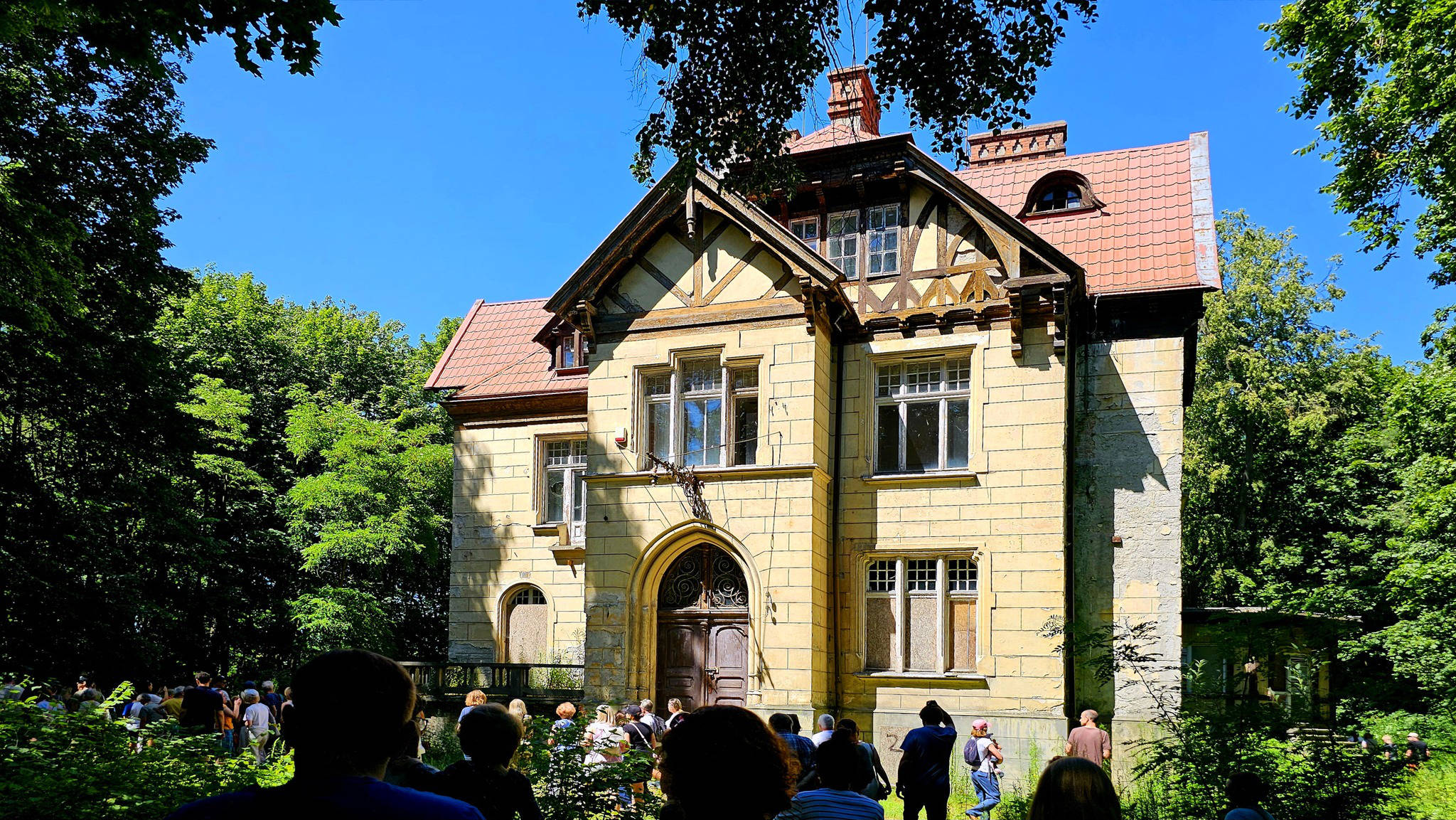
- Milanówek – the establishment of the Mały Londyn (Little London) heritage trail[9] and the restoration of the historic Turczynek Villa and Park.[10]
- Sadyba district od Warsaw – efforts by program participants led to the official recognition of “Starszych Panów” Square[11] on the city map.
- Zalesie Dolne – program activities accelerated the process of listing historic villas as protected heritage sites and initiated the foundation of the Józef Wilkoń Institute of Illustrative Arts.[12]
- Podkowa Leśna – development of the first guidelines for the revitalization of the Municipal Park[13] and its inclusion in the International Network of Garden Cities.[14]
Through these initiatives, the Open Gardens program continues to shape local communities, preserving cultural heritage while fostering a spirit of cooperation, creativity, and civic responsibility.
The program has also gained widespread recognition at both regional and national levels. Its cultural and social value has been acknowledged with numerous awards, including the title of Leader of the European Year of Creativity and Innovation in Poland in 2009 and the Foundation for the Development of Local Democracy Award under the patronage of UNESCO and the Minister of Culture for supporting local development through culture. In 2010, the project also received the Marshal of the Mazovian Voivodeship Award for its contributions to garden cities, and its website was a winner of the Syrenka w Sieci competition. All these and other distinctions highlight the significance of the program as an innovative initiative that not only engages local communities but also actively contributes to the preservation of cultural and natural heritage while promoting many Polish towns both domestically and internationally.
The Original Character of the Open Gardens Program
The creators of the Open Gardens program are Magdalena Prosińska and Łukasz Wilmann from Podkowa Leśna. Magdalena Prosińska is an ethnographer, cultural researcher, and animator specializing in the protection of cultural heritage, education, and the promotion of folk art.[15] Her experience in working with local communities enabled her to engage the residents of her hometown in the festival’s concept and encourage them to open their private gardens. Her efforts focused on building social bonds and strengthening local identity.
Łukasz Wilmann was a landscape architect, a UNESCO employee, and an enthusiast of urban spaces and greenery. He was interested in the preservation of historic gardens and the shaping of public spaces. His extensive knowledge of garden city history and his professional passion played a significant role in reviving awareness of their original urban planning concepts and promoting the protection of local architectural and landscape heritage.
The Open Gardens program was conceived as a socio-cultural initiative without a formal organizational or legal structure. It serves as a platform for cooperation among affiliated towns and as a unique complement to the legal frameworks governing inter-municipal associations, communal agreements, and municipal partnerships. It is an informal space for public-private partnership[16], based on dialogue between local communities and municipal authorities, as well as mutual support in information-sharing, promotion, and project development at the inter-municipal level. If needed, the program’s ideas and activities can take on formalized structures, as exemplified by the 2011 agreement and the subsequent establishment of the Podwarszawskie Trójmiasto Ogrodów association in 2016, uniting the neighboring towns of Brwinów, Milanówek, and Podkowa Leśna.[17]
As a festival concept promoting the heritage of garden cities, the Open Gardens program meets the criteria of a “work”[18] under copyright law, as it constitutes an original and creative cultural event project with a defined structure, methodology, and implementation format. Its author, Magdalena Prosińska, holds moral copyright[19] over this concept, meaning she has the right to associate the program with her name, its original title, graphic symbol, and to oversee its form and execution. She also holds economic copyright[20], allowing her to control the distribution and commercial use of the program. Copyright protection covers the program’s name, logo[21], organizational structure, and the event scenarios carried out under its framework, including the Open Gardens Festival. Any town wishing to organize the festival or other program-related events must obtain a license from Magdalena Prosińska and accept the *Open Gardens* program regulations, thereby gaining the right to use its name and logo.
The Open Gardens program, which has been implemented in many Polish localities for 20 years, is also protected under the provisions of the Acts on Combating Unfair Competition[22] and on Competition and Consumer Protection.[23] According to these regulations, Magdalena Prosińska has the right to take legal action in cases of unauthorized use of the program’s name, logo, or format by other entities if such actions could mislead the public or infringe upon her rights to the program.[24]
The moral rights of the author entitle Magdalena Prosińska to shape the content and structure of the program, set participation conditions, and introduce changes to its regulations. The Open Gardens program regulations were developed in 2008 in consultation with the cities that organized the first Open Gardens festivals.[25] Now, after two decades of experience, an updated version has been created, dated March 1, 2025.[26] While the principles of the program remain unchanged, the content of the regulations has been systematized and adjusted to reflect current program and festival practices. The regulations allow for the creation of local rules by local program coordinators, provided that their content aligns with the principles set forth in the main regulations authored by Magdalena Prosińska.
The Open Gardens Festival is an integral part of the Open Gardens program and, as such, is subject to the same legal protection. It is important to emphasize that Magdalena Prosińska does not exercise her proprietary copyrights for financial gain. She grants a free license to use the Open Gardens brand, provided that the standards outlined in the program regulations are strictly followed. The license for organizing the Open Gardens Festival is granted to interested localities through a written agreement.[27] Although this licensing agreement is non-exclusive and does not require a written form, it is highly recommended to use a written contract to protect the interests of both parties (the licensor and the licensee).[28]
The free licensing of the program is a significant advantage for cities and organizations joining this initiative. It enables municipalities to use the brand without incurring costs, making it easier for them to organize the Open Gardens Festival and develop local cultural and social activities. The absence of licensing fees also ensures broad accessibility to the program and encourages more communities to engage in this initiative, fostering intermunicipal cooperation and enhancing the promotion of participating localities.
On the other hand, the lack of financial contributions from program participants limits the possibilities for central coordination. In the long term, this could lead to a significant decline in the quality of program initiatives as individual localities gradually move away from the original principles of Open Gardens. Magdalena Prosińska has incurred substantial costs related to launching, managing, promoting, and developing the Open Gardens program without receiving appropriate compensation.[29] The lack of financial resources has prevented her from maintaining the program’s central website and conducting systematic coordination, promotional, communication, and monitoring activities.
The effective elimination of central program coordination and individual interpretations of program assumptions could lead to a complete dilution of its original socio-cultural goals and weaken its status as a cohesive intermunicipal initiative. Without unified oversight and adherence to a consistent vision, the program risks losing its mission of promoting local heritage, fostering social integration, and supporting cultural education. Some localities and organizers, lacking substantive support, may abandon high program standards in favor of random initiatives that do not necessarily align with the program’s core principles. Under these circumstances, there is a real danger that some Open Gardens Festivals will transform into marketplaces, where commercial fairs dominate over intimate meetings with experts, artists, workshops, concerts, and exhibitions. The loss of the program’s original concept poses a serious risk of eroding the unique character of Open Gardens, which, instead of nurturing traditions and strengthening cultural values, could become just another mass event devoid of a distinct identity.
Challenges and Difficulties
Organizing large-scale events requires efficient, effective, and responsible coordination, along with the standardization of activities. In the case of the community-based Open Gardens program, this creates organizational and financial challenges. These challenges can be classified into the following categories: organizational and coordination issues, image and promotional problems, financial difficulties, conflicts of interest, and actions detrimental to the program.
Over time, local authorities in some cities and social organizations have chosen to withdraw from collaboration with the program’s central coordinator, opting instead to manage program initiatives independently. This has weakened the effectiveness of the program’s network-based strategy, thereby limiting its promotional and marketing potential. The growing number of cities joining the program has created a natural need for increased coordination efforts at both the local and central levels. However, the passivity of some program participants has disrupted the flow of information, hindering both support activities and the responsible pursuit of sponsors, as well as the ongoing monitoring of program initiatives. The lack of a unified and agreed-upon schedule for intermunicipal program activities eliminates synergy effects[30] and makes it more difficult to achieve the program’s fundamental goals.
Ensuring effective promotion for all program participants is another challenge. Lesser-known localities may struggle to attract attention, often remaining overshadowed by more prestigious locations. These image and promotional issues are exacerbated by the fact that not all program partners adhere to the cooperation rules set out in the program regulations, leading to inconsistencies in festival events at the programmatic, organizational, and visual levels. This results in a negative perception of the program among both participants and event patrons. Some localities fail to include the official logo and required information in promotional materials or do not comply with guidelines for presenting sponsors, patrons, and program partners. Such negligence and inconsistencies hinder the joint promotion of the program, weakening its professional image and recognition. In some cases, municipal institutions and social organizations have even engaged in deliberate actions aimed at damaging the program’s reputation through so-called “black PR.”
One of the most fundamental challenges is the lack of financial support for the program’s central coordination, as mentioned earlier. Most localities do not allocate any funds for coordinating the program, resulting in minimal central promotion, the absence of a central website, and the discontinuation of other activities related to supporting and monitoring program initiatives. Without stable funding, further proper development and professionalization of the program become impossible. On the one hand, the program’s concept has continued to evolve organically for over two decades. On the other hand, the program has been deprived of the ability to undergo professional coordination and development, thereby limiting its capacity to effectively generate benefits for affiliated localities.
Perspectives and hopes
Despite the weakening of its original organizational framework over the years, the Open Gardens program and its flagship project—the Open Gardens Festival—continue to receive highly positive feedback from both participants and event organizers. Obiektywna Gazeta Internetowa[31] highlights the engagement and creativity of Podkowa Leśna residents in organizing events. In Milanówek, the festival is seen as an excellent opportunity to strengthen neighborhood bonds, explore the town’s history, and promote local artists and creators.[32] In Konstancin-Jeziorna, it allows visitors to explore the most beautiful parts of the spa town and meet exceptional artists, making it a unique cultural event.[33] Meanwhile, in Brwinów, the festival attracts numerous participants by offering intimate concerts, exhibitions, and literary meetings, enhancing its diversity and appeal.[34] The festival’s official Facebook profile also features numerous positive comments from participants praising the atmosphere and event organization.[35] Both the Open Gardens program and festival are highly valued for promoting local culture, fostering community integration, and providing residents and visitors with opportunities to discover unique places, fascinating stories, and remarkable artists.
The Open Gardens program has long enjoyed widespread recognition, underscoring its profound significance and vast potential for the future. Its uniqueness stems not only from the intimate and grassroots nature of the festival’s events, as well as their high content and aesthetic standards, but also from its ability to unite local communities and promote their rich cultural heritage. To ensure the continued development of this initiative and its ability to effectively address contemporary challenges, efficient program coordination is essential. Improved organization and forward-thinking, strategic management will allow for greater synergy among participating localities, the implementation of best practices, and the collective enhancement of local governance standards. Only through coordinated efforts and a long-term vision can the Open Gardens program retain its unique character and remain an inspiring platform for meaningful cultural, social, and educational initiatives, benefiting all participants.
Tomasz Domański
Owczarnia, Podkowa Leśna, 2025
Footnotes
[1] Rendez-vous aux jardins (French: Meeting in the Gardens) is an annual garden festival organized since 2003 in France and later expanded to other European countries. Its aim is to promote natural and cultural heritage by opening historic, private, and public gardens to visitors. The event includes workshops, meetings with gardeners, demonstrations, and educational activities. The festival usually takes place on the first weekend of June and engages a broad audience, emphasizing the importance of green spaces in cities and biodiversity conservation. (link)
[2] National Garden Scheme is a British charitable initiative launched in 1927 that allows visits to private gardens across the country for fundraising purposes. Ticket sales and donations support organizations focused on healthcare, hospices, and horticultural projects. The program is distinguished by the wide accessibility of unique gardens, often not usually open to the public, and by promoting gardening as a means of fostering health and social well-being. (link)
[3] Tag der offenen Gärten (German: Day of Open Gardens) is an annual initiative held in Germany, Austria, and Switzerland, during which private and public gardens are made accessible to visitors. The event promotes gardening, biodiversity, and the exchange of experiences among green enthusiasts. Depending on the region, it takes place on different dates, often in spring and summer. In addition to garden visits, participants can attend workshops, meetings with gardeners, and presentations related to ecology and landscape architecture. (link)
[4] Appuntamento in Giardino (Italian: Meeting in the Garden) is the Italian edition of the European initiative Rendez-vous aux jardins, organized by the Associazione Parchi e Giardini d’Italia (Italian: Association of Parks and Gardens of Italy). The event takes place annually in early June and allows visitors to explore both public and private gardens in Italy. Its purpose is to promote natural heritage, ecological education, and the popularization of garden art. The program includes guided tours, workshops, expert meetings, and cultural events related to the history and preservation of gardens. (link)
[5] Magdalena Prosińska, Summary of Cooperation 2004–2011, Heritage for the Future Foundation, Podkowa Leśna 2011, and the Open Gardens Program Regulations from 2008 (link) with amendments from 2025 (link).
[6] Latin civilization is based on three fundamental pillars: Greek philosophy, Roman law, and Christian ethics. Greek philosophy, particularly Aristotle’s concept of objective truth, introduced rational thinking, logic, and the pursuit of understanding reality based on the principle that truth is independent of subjective opinions. Roman law established the principles of the rule of law, private property protection, and a hierarchy of norms that became the foundation of modern legal systems. Meanwhile, Christian ethics gave Latin civilization a personalistic dimension, emphasizing human dignity, individual freedom, and morality based on the Ten Commandments. The combination of these three elements created a unique value system that shaped Europe for centuries, distinguishing it from other civilizations such as the Turanian, Byzantine, or Jewish, which, according to Feliks Koneczny, are incompatible with it.
[7] Feliks Koneczny, in his works, particularly in On the Plurality of Civilizations (link), argued that civilizations are systems of values that organize social, legal, and cultural life. In his view, different civilizations cannot permanently coexist in the same territory because each has a distinct way of understanding law, ethics, morality, and public organization. Civilization conflicts arise when civilizations with conflicting norms encounter each other in the same area, leading to competition for dominance, social tensions, and state destabilization. Koneczny emphasized that a community must be based on a unified value system; otherwise, it falls into chaos and disintegration. He also noted that attempts to merge different civilizations typically result in the victory of one and the disappearance of the other rather than harmonious coexistence.
[8] Agnieszka Piechowska, Otwock and Józefów Open Their Doors to History – Świdermajery on the Otwock Line, Przegląd Otwocki, June 9, 2024 (link).
[9] Milanówek in One Day – Little London (link).
[10] Turczynek. The Villa and Park Complex in Milanówek (link).
[11] Garden City Sadyba, Skwer Starszych Panów (link)
[12] Anna Żuber, The Institute of Art Awaits Its Headquarters, Przegląd Piaseczyński, August 2, 2022 (link)
[13] Concept for the Revitalization of the Municipal Park in Podkowa Leśna, 2019 (link)
[14] Currently, there is no formal international network of garden cities. However, cities promoting sustainable development and a high quality of life for residents can join other international networks, such as Cittaslow – The International Network of Cities of Good Living, which unites cities committed to sustainable development, environmental care, and the promotion of local traditions. Membership is available for cities with fewer than 50,000 inhabitants. (link)
[15] Magdalena Prosińska is involved in projects related to culture and artistic craftsmanship. She is a co-founder of Loft Design Berlin, a company specializing in the design and production of unique interior decor elements. In her work, she combines modern design with inspirations drawn from traditional craftsmanship. She is also the curator of Leluja Gallery, a space dedicated to folk art and crafts from Poland and other regions of Central and Eastern Europe. She organizes exhibitions, workshops, and meetings focused on traditional artistic and craft techniques. She collaborates with Piotr Borowiec, a Berlin-based interior designer, on projects that merge contemporary art with elements of traditional design. Their joint ventures focus on creating unique spaces where history and modernity coexist harmoniously. In February 2025, she participated in the Culture Train Berlin–Poznań–Warsaw project, aimed at promoting cultural integration between these cities. Her work serves as a living bridge between tradition and contemporary design trends.
[16] The Open Gardens program represents a broader interpretation of public-private partnership than usual. This partnership involves the engagement of local communities (residents, NGOs, artists) and municipal authorities (city offices, cultural centers) in organizing program events, particularly the Open Gardens Festival. Residents open their gardens, host meetings and events, while local governments often provide organizational, promotional, and partial financial support. This model of partnership is based on shared responsibility for culture and local heritage.
[17] Resolution No. 124/XXIII/2016 of the City Council of Podkowa Leśna of April 26, 2016, on the establishment of the Suburban Tri-City of Gardens Association. (link)
[18] A work under the Copyright and Related Rights Act of February 4, 1994 (Journal of Laws 1994 No. 24, item 83, as amended) (link) is any manifestation of creative activity of an individual nature, fixed in any form, regardless of its value, purpose, or means of expression. The protection applies to the form of the work, not its ideas, methods, or principles of operation (Article 1 of the Copyright Act).
[19] Moral rights are the rights of an author under the Copyright and Related Rights Act of February 4, 1994 (Journal of Laws 1994 No. 24, item 83, as amended). They are inalienable and protect the author’s connection with the work, including the right to authorship, the right to be credited by name or pseudonym, the right to the integrity of the work’s content and form, and the right to oversee its use (Article 16 of the Copyright Act).
[20] Economic copyright refers to the creator’s rights to use a work and derive financial benefits from it, as defined in the Copyright and Related Rights Act of February 4, 1994 (Journal of Laws 1994 No. 24, item 83, as amended). These rights include the exclusive right to exploit the work in specified fields, reproduce it, distribute it, and grant licenses for its use. They are time-limited—generally lasting 70 years after the author’s death—and can be transferred to other entities through a contract (Articles 17–22 of the Copyright Act).
[21] The distinctive logo of the Open Gardens program was designed by Studio Bakalia. In 2008, Magdalena Prosińska acquired unlimited economic rights to use this graphic symbol.
[22] The Act on Combating Unfair Competition of April 16, 1993 (Journal of Laws 1993 No. 47, item 211, as amended). (link)
[23] The Act on Competition and Consumer Protection of February 16, 2007 (Journal of Laws 2007 No. 50, item 331, as amended). (link)
[24] According to Article 3(1) of the Act on Combating Unfair Competition, an act of unfair competition is any action contrary to the law or good practices that may harm another entity’s interests. Article 5 of the same act prohibits the imitation of services in a way that could mislead customers, and Article 10 protects against the use of misleading designations for goods and services, which could apply to the unauthorized use of the Open Gardens name. Additionally, under Article 6(1)(3) of the Act on Competition and Consumer Protection, agreements restricting market access are prohibited, which could be relevant if other entities attempt to take over the event’s name and format. Article 9 of this act also prohibits the abuse of a dominant market position, which could occur if large institutions attempt to limit the author’s rights to the program by imposing their own version or taking over the brand.
[25] The Open Gardens Festival regulations, authored by Magdalena Prosińska, are available on the website of the Milanówek Municipal Cultural Center: www.mckmilanowek.pl (link).
[26] The program regulations, in their version from March 1, 2025, are available on the website of the Open Gardens Festival in Rawa Mazowiecka: www.rawafoo.org (link).
[27] A sample license agreement is attached to the Open Gardens program regulations dated March 1, 2025.
[28] According to Article 67(5) of the Copyright and Related Rights Act (Journal of Laws 1994 No. 24, item 83, as amended), an exclusive license agreement must be concluded in writing under penalty of nullity. In the case of the Open Gardens Festival, the license granted to multiple towns is non-exclusive, meaning that a written license agreement is not required, although the latest Open Gardens program regulations from March 1, 2025, suggest it. A written form for evidentiary purposes allows for a more precise determination of the rights and obligations of the parties and facilitates dispute resolution. If the Open Gardens Festival name and logo are registered trademarks, their use is also subject to Article 163(1) of the Industrial Property Law Act (Journal of Laws 2001 No. 49, item 508, as amended), which requires a written license agreement for trademark use. In the absence of such registration, festival brand protection may arise from Article 3 of the Act on Combating Unfair Competition (Journal of Laws 1993 No. 47, item 211, as amended), which prohibits the use of designations that may mislead recipients about the origin of an initiative. Additionally, Magdalena Prosińska—the program’s creator and central coordinator—may invoke the protection of personal rights under Articles 23 and 24 of the Civil Code.
[29] Magdalena Prosińska, Summary of Cooperation 2004-2011, Heritage for the Future Foundation, Podkowa Leśna, 2011.
[30] “None of us is as wise as all of us together,” an old proverb teaches. Together, we are wiser and stronger. We need each other to ensure safety, health, education, and work, as well as creativity, culture, and the joy of being together. Within a community, a synergy effect emerges. How can we benefit from it? We can learn from other communities living right next to us. What do geese teach us? (link)
[31] Tymoteusz Janczak, Kamil Kubacki, Two Decades of Open Gardens, Obiektywna Gazeta Internetowa, June 19, 2024 (link).
[32] Adam Fabisiewicz, The Open Gardens Festival in Milanówek for the Nineteenth Time, Grodzisk News, April 18, 2024 (link).
[33] Anna Żuber, The Gardens of Konstancin Invite You, Przegląd Piaseczyński, September 10, 2024 (link).
[34] KK, The Open Gardens Festival in Brwinów Municipality, WPR24, June 14, 2024 (link).
[35] Facebook, Open Gardens Festival group, approximately 1,100 members (link).
© Copyrighted material – all rights reserved.
Copying without the author’s permission is prohibited.
If needed, please contact me.