
 Pacta sunt servanda!
Opinion survey of the management staff at the NBP
Case study
The survey of the opinion of middle and lower management staff was prepared and conducted at the headquarters of the National Bank of Poland according to my methodology. It was part of a broader analytical process aimed at providing information on the internal efficiency of the Bank operations in the areas of support for its core operating activities. The study was to consist of two stages – a survey and a series of supplementary workshop sessions. Due to the limited time and scale of the project, it was decided to carry it out only the first stage.
The survey was used to extract objective information from lower levels of management and deliver it directly (without distortions at intermediate levels) to the highest level of the NBP management. At the same time, an analysis of work processes was carried out in order to obtain knowledge about the effectiveness of the use of resources at the NBP in current operations. The purpose of both studies was to provide data for formulating recommendations regarding the scope and methods of reorganization of the NBP head office.
Challenges
The main challenge in this project was to ensure the anonymity of the participants’ statements. Only in such conditions was it possible to obtain honest opinions on the functioning of the NBP, and only then did such a study make sense. Testing with the use of electronic means of communication was abandoned. The questionnaires were printed, but the method of their distribution and the method of elaboration of the results excluded the possibility of identifying the respondents.
162 middle and lower-level managers, i.e. heads of departments, team leaders, section heads and key specialists performing managerial functions, were invited to participate in the study. The statistical sample was determined by the Human Resources Department. The survey was conducted on March 16–20, 2009 at the NBP head office. A total of 120 completed questionnaires were submitted (73% attendance). The results were compiled over the next few days by two working teams, with the help of a properly prepared spreadsheet.
One of the success factors of this project was ensuring feedback, i.e. informing respondents about the results of the survey and taking their opinions and recommendations into account in further management activities. Clear communication was needed to build trust between middle and senior management, as well as to ensure a good climate for this type of research in the future. According to the intentions of the NBP authorities, employee opinion polls were to become a permanent (repeatable) element of the management by objectives system (MBO), focused on achieving the goals set out in the “NBP Management Strategy for 2009–2012” and its updates.
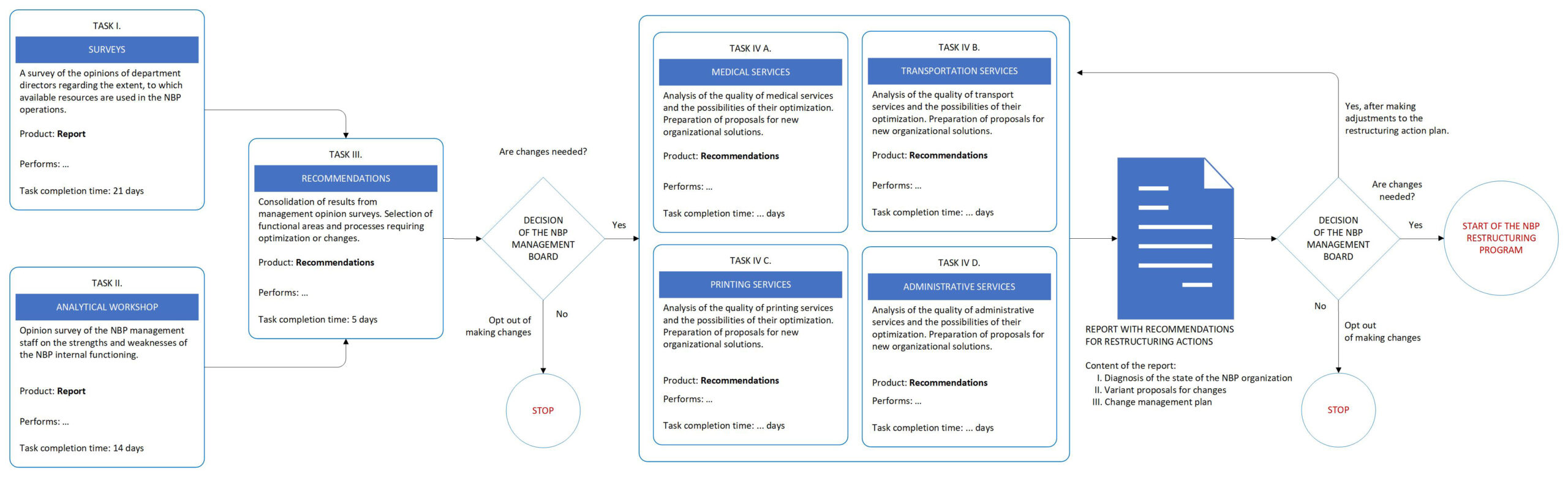
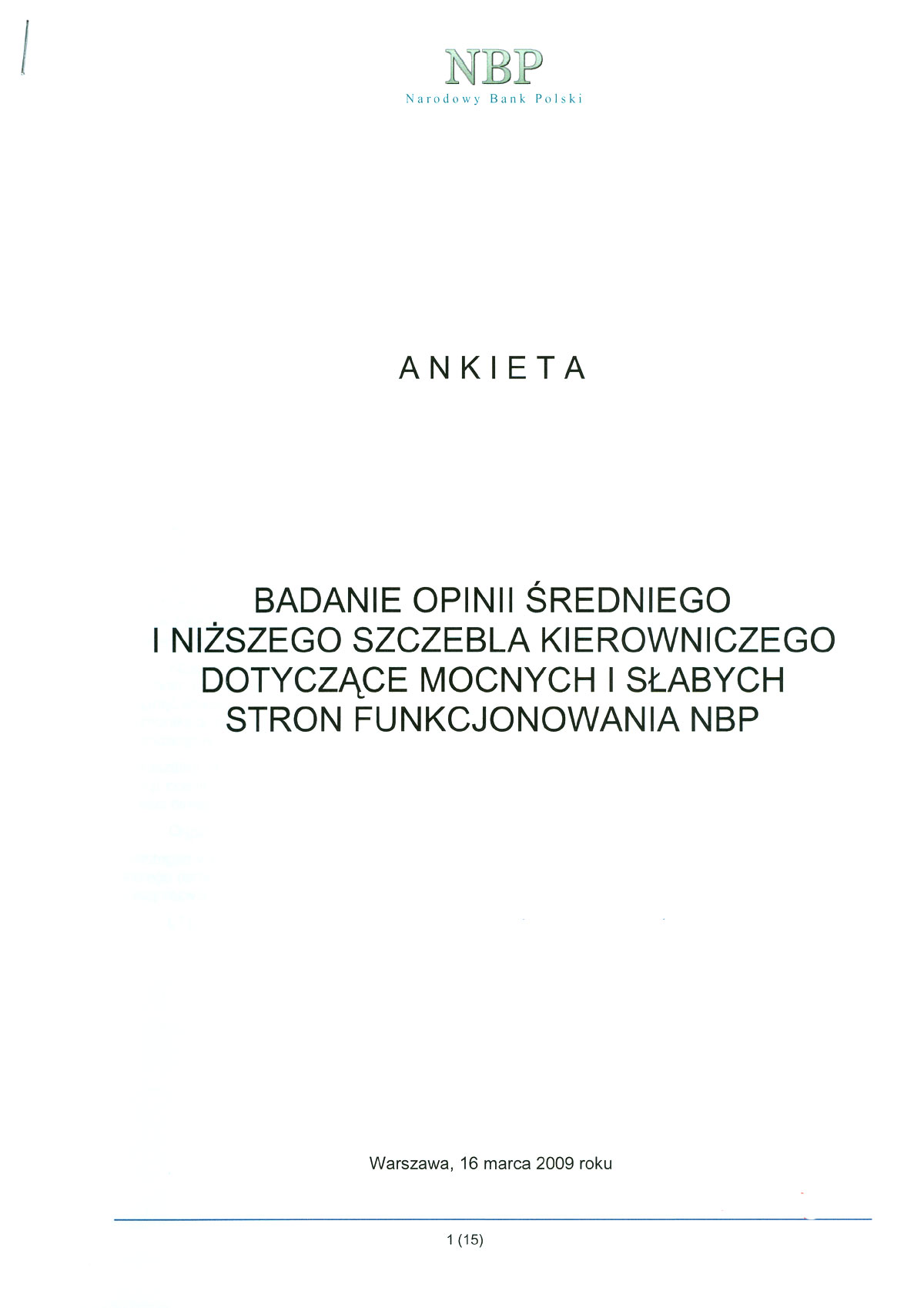
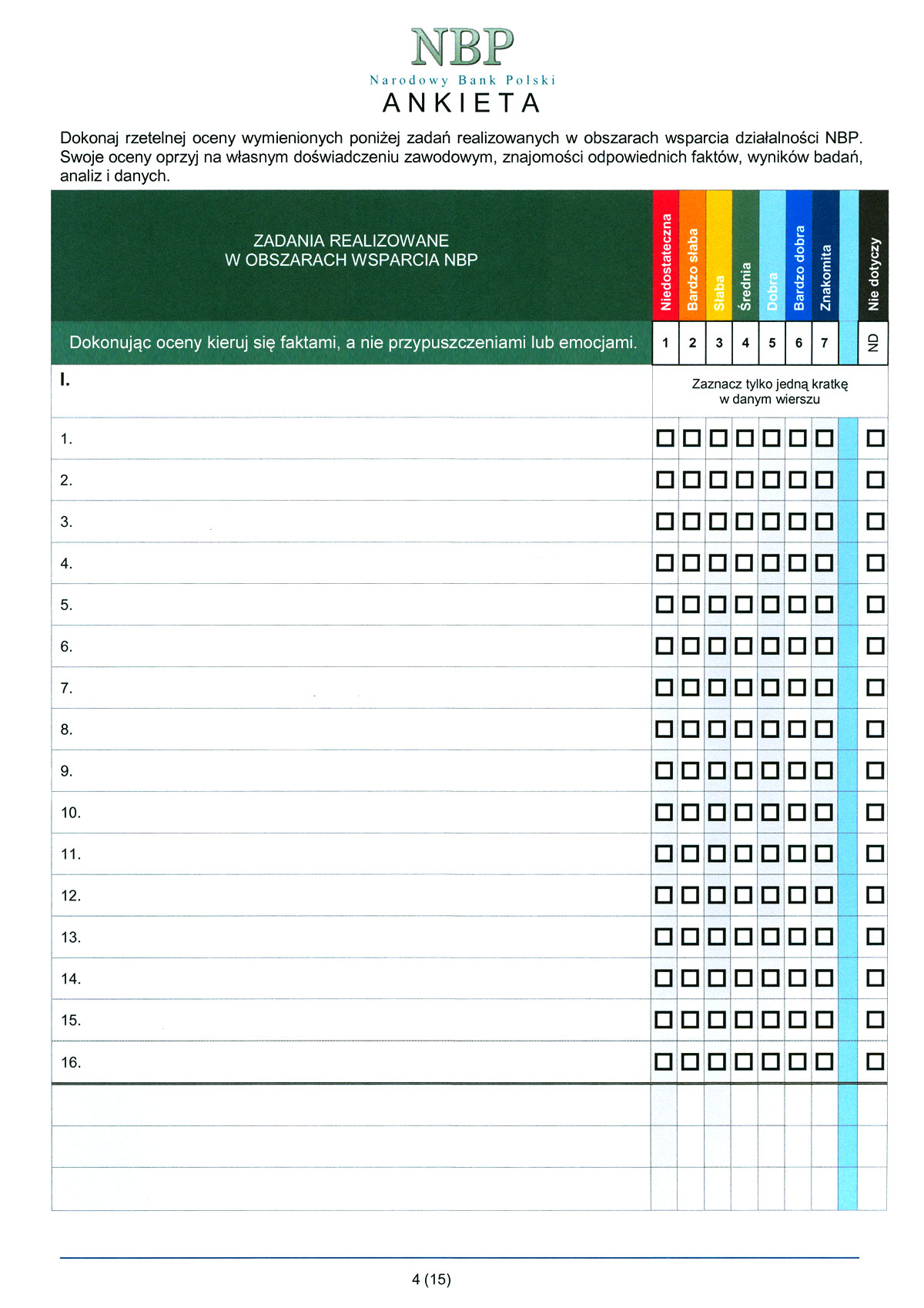
The 12-page questionnaire contained 201 items, grouped in twelve parts referring to the tasks of the twelve surveyed departments. The provisions in the individual parts of the survey were consulted with the directors of the relevant organizational units before the forms were delivered to the survey participants. Respondents were allowed to add their own items (problem issues) in the survey, as well as to formulate free statements. Individual issues were assessed on a scale from 1 to 7. Each questionnaire was provided with detailed instructions on how to approach the issues indicated in it and how to complete it technically.
The purpose of opinion polls is to gather information that allows you to make better, more effective decisions.
Almost all social and economic decisions are made under conditions of uncertainty. One of the ways of reducing the degree of uncertainty by the decision maker is to get to know the opinions of those people who will be affected by the consequences of his decision. Less uncertainty means less risk of making the wrong decision.
Mirosław Szreder
Results and effects of the study
The largest number of ratings was given to survey items concerning the organization of management at the NBP, such as the efficiency of internal communication, human capital management, coordination of task, the level of organizational culture, the level of bureaucracy and effectiveness of internal procedures. The lowest number of ratings was issued in specialized areas of the NBP operation, such as reporting the financial situation, cooperation with state administration bodies, exercising ownership supervision in the NBP companies, or examining legal acts of other countries.
The security of the facilities and the quality of electronic information processing systems were awarded high marks. The NBP publishing and printing activities were rated very well, the same like the quality of bookkeeping, cooperation with statutory auditors and external law enforcement bodies. Moreover, the working conditions at the NBP also received good marks.
One of the factors that was taken into account when developing the results of the study was the seniority of the respondents. The period of remaining in an employment relationship with one employer significantly reduces the objectivity of assessing one’s own work environment. On the other hand, such assessments are characterized by knowledge and prudence based on many years of experience. NBP is one of those employers who provide employees with high stability of employment.
The diagnosis of the condition of areas supporting the core activities of the NBP was the starting point for planning appropriate corrective actions in the form of specific projects. One of the important postulates of the NBP restructuring program was to streamline project management procedures. This required changing the organizational culture and updating the internal management acts. Opinions from the audit could also be the basis for undertaking current corrective actions by department directors (apart from the restructuring programme).
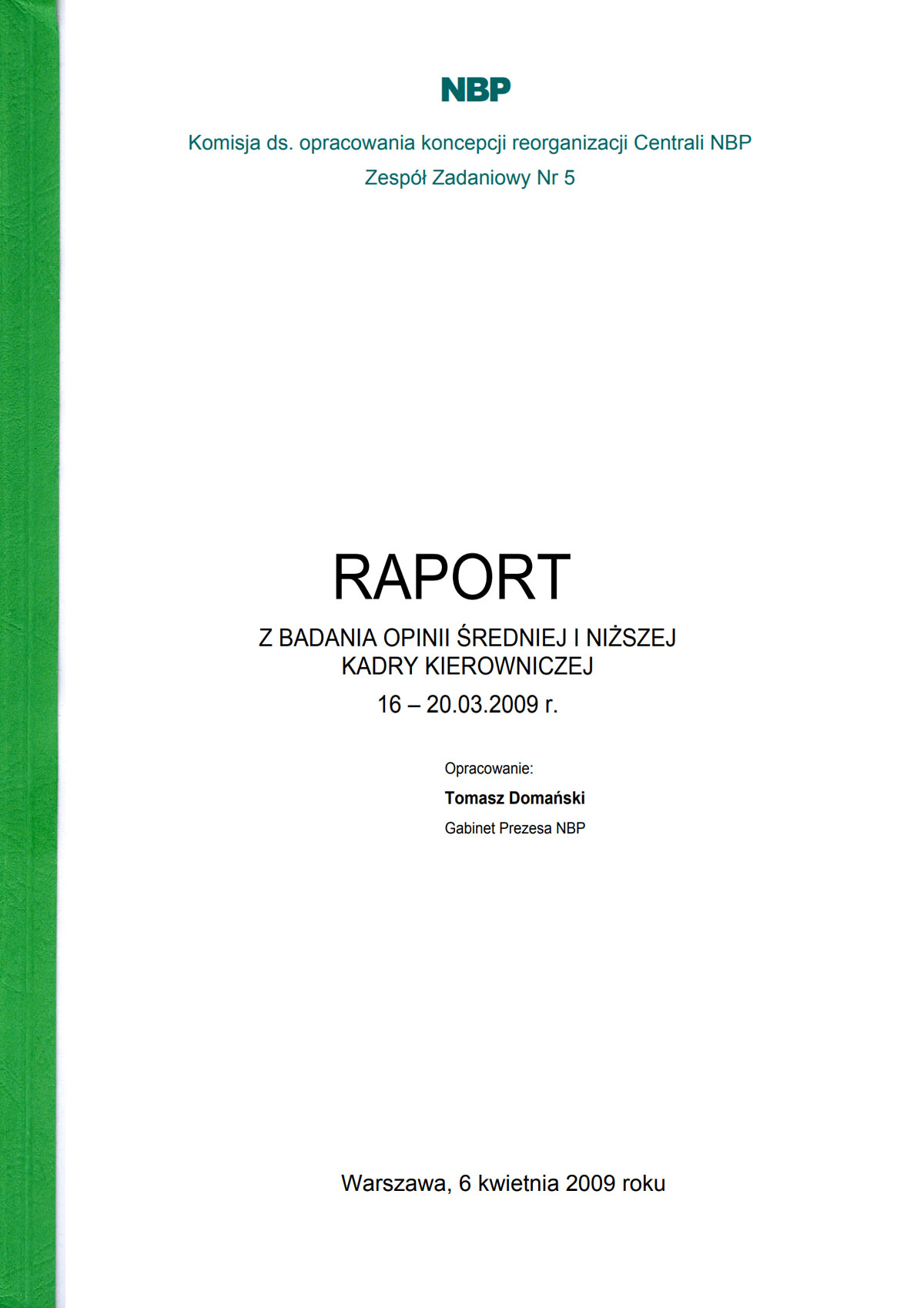
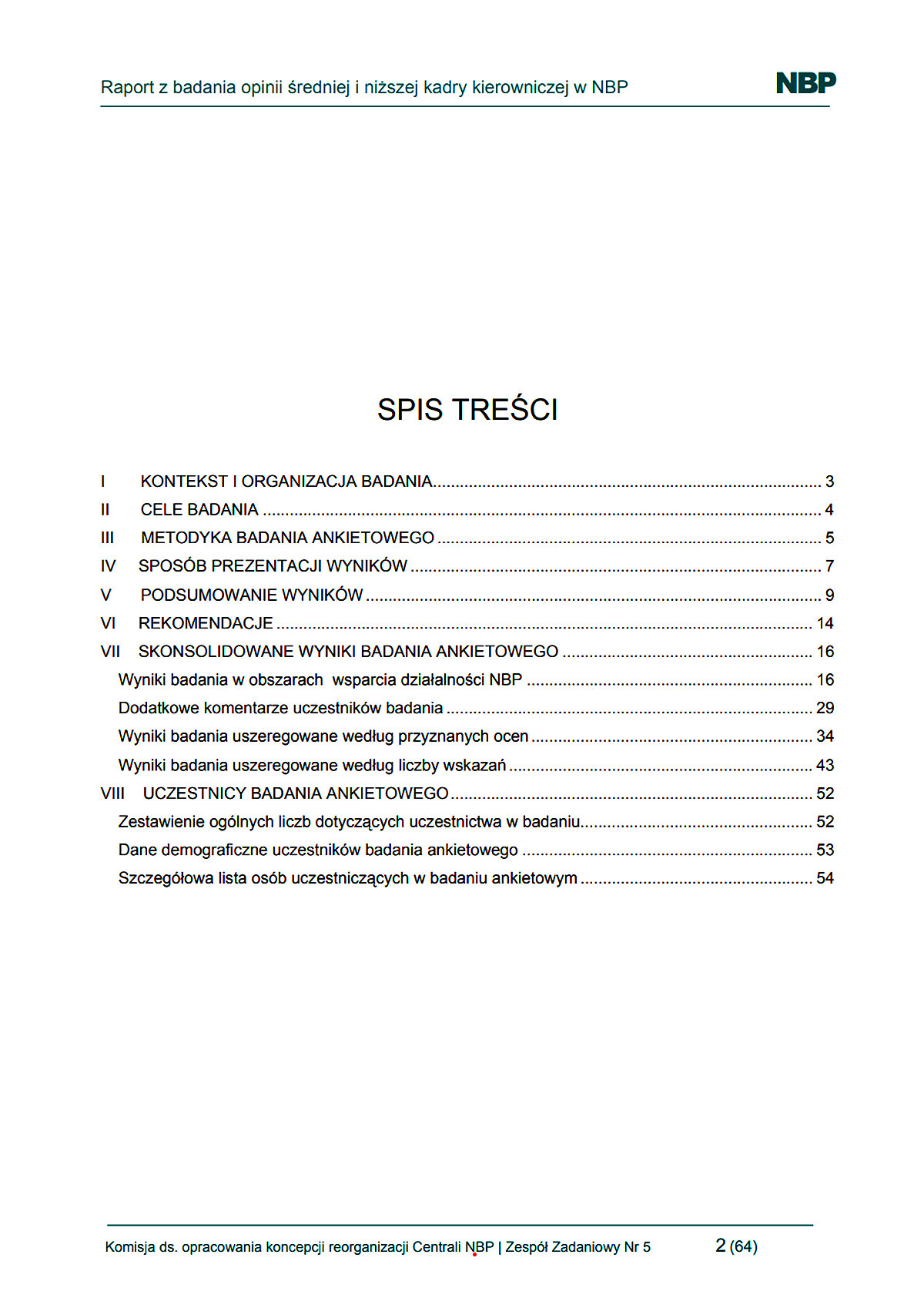
Report on the opinion poll – table of content
Survey for the opinion poll