Implementation of the number portability service

Case study

The launch of the number portability service in mobile telephony networks (Mobile Number Portability) and in fixed-line telephony networks (Fixed Number Portability) was of great importance for telephone users and network operators, although different. It enabled the customers of the network to freely choose the market offer without having to give up their number. This was particularly important for companies using a certain pool of catalog numbers entered into communication procedures with their clients and partners. However, the need to launch this service has raised serious concerns among network operators. Many individual customers and companies stayed with their operators only because changing a directory number or a pool of numbers would be troublesome, costly and burdened with the risk of losing important contacts. The ability to keep their numbers opened the way for them to take advantage of better market offers.

The NP (Number Portability) project was initiated at Polska Telefonia Cyfrowa (T-Mobile Polska) in the DNO (Division of Network Operations) division, and then came to me (Director of the Business Development Office). The project tasks went beyond strictly technical issues and required establishing multi-threaded cooperation with all telecommunications network operators – mobile and fixed. The introduction of number portability services was carried out under strong pressure from the European Union authorities and the Polish telecommunications market regulator – the President of the Office of Telecommunications and Post Regulation. Failure to meet the deadline for launching the MNP service was punishable by a loss of 3% of the operator’s annual income.

The NP project covered activities in two separate service spheres – in the sphere of mobile telephony and in the sphere of fixed telephony. Three operators were present in the mobile telephony sector at that time (2005-2006): PTK Centertel, Polkomtel and PTC. They were soon joined by P4 – the operator of the Play network. A little later, Mobile Virtual Network Operators appeared, for whom the number portability service was of fundamental importance in the context of the possibility of developing their business. There were about 170 operators in the fixed telephony sector, with Telekomunikacja Polska (today Orange) dominating the market.

Challenges

The implementation of MNP and FNP services differed from the implementation of other telecommunications services in that it had to be carried out in cooperation with competing companies afraid of losing their customers. For this reason, the design procedure was conducted in an atmosphere of great distrust and hard negotiation of technical, procedural and business arrangements. This, of course, made it difficult to reach final arrangements and agreements.

The implementation of the MNP and FNP services required many changes to ICT systems, establishing and implementing customer service procedures, agreeing on the method of directing telecommunications traffic to ported numbers (with or without a central base), as well as analyzing the security of systems, updating the principles of interconnect settlements and concluding new contracts about cooperation. Coordination of numerous project issues, located in distant fields, required an interdisciplinary approach to planning and coordinating project tasks.

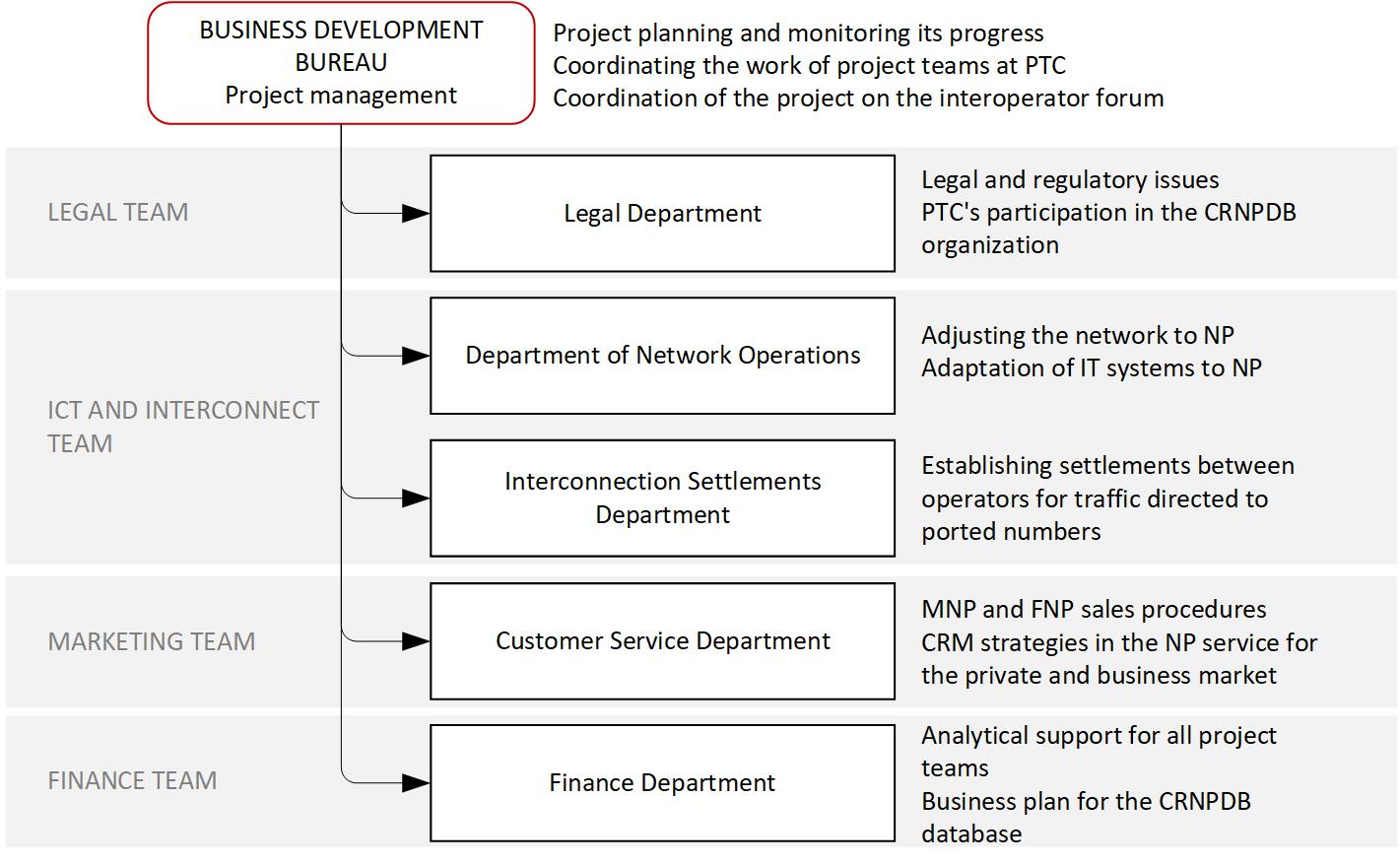
The NP project team at Polska Telefonia Cyfrowa (T-Mobile Polska)

One of the biggest challenges was to ensure effective communication between groups of various specialists, both within the company and on the inter-operator forum. Technical, procedural and financial arrangements were finally confirmed in formalized inter-operator agreements resulting from hard and painstaking negotiations. In the talks, which were attended simultaneously by engineers, lawyers, traders and financial analysts, it was crucial to use a language understandable to everyone and to clearly explain complex specialist issues.

The structure of the MNP project

Initializing 

  • Developing a strategy of implementation 
  • Identification of areas related to MNP
  • Identification of design issues

Planning 

  • Organizing the project team
  • Development of the project plan

Internal work stages 

  • Mapping of key MNP processes
  • Determining the architecture of MNP
  • Analyzing ICT systems
  • Changes in ICT systems
  • Internal testing of MNP systems

Cooperation with operators and the regulator 

  • Agreement of operators on cooperation
  • Agreeing on procedures 
  • Implementation of a working MNP (P2P)
  • Inter-operator technical tests

Implementation of the target MNP system

  • Implementation of MNP in sales systems
  • Agreement on the CRNPDB database
  • Implementation of target changes 
  • Integration with the CRNPDB database
  • Technical tests of the MNP system
  • Agreement on IT interface and procedures
  • Update of interconnect agreements
  • Updating billing procedures
  • Developing a communication strategy

In the FNP project, at the first stage of work, the NP principles were agreed with Telekomunikacja Polska S.A., which were then transferred to subsequent agreements negotiated with numerous operators of large and small local fixed-line networks. 

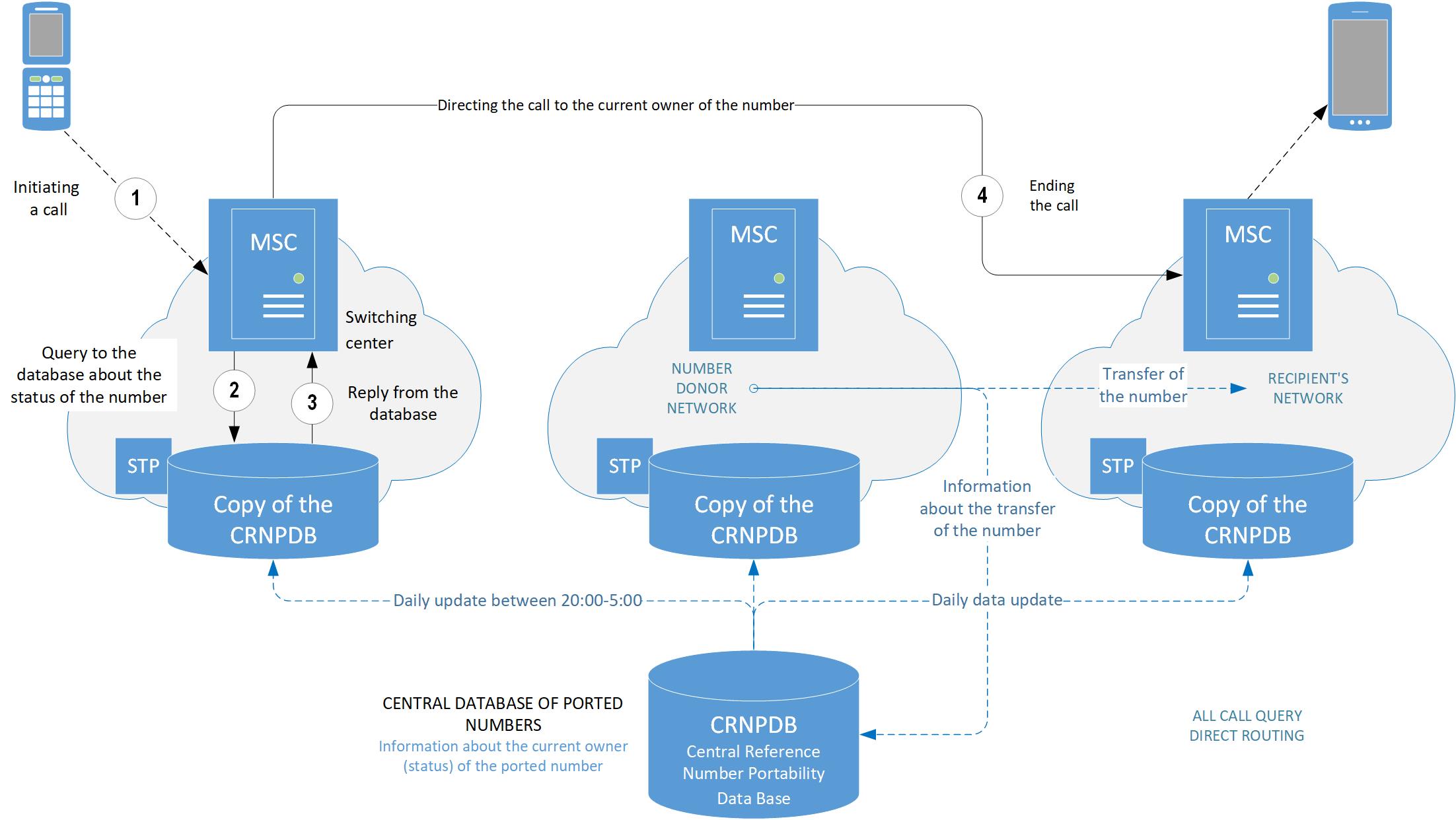
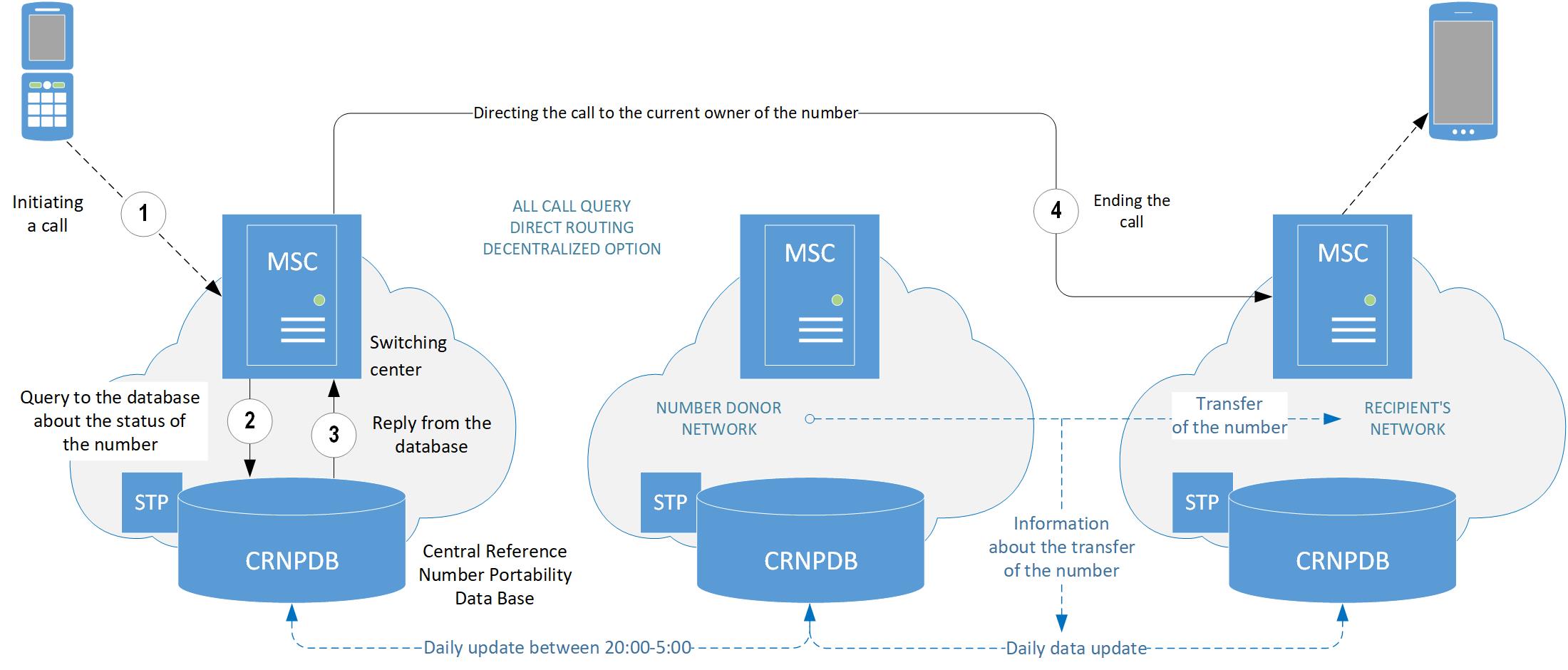
The ACQ (All Call Query) method allows you to direct calls directly to the network operator (direct routing), which has a telephone number transferred to it. Each connection is established after polling the database of transferred numbers, from which the exchange initiating the connection receives information about the operator or the exchange managing the called number. The ACQ method requires the existence of a Central Reference Number Portability Data Base, which can be managed jointly by operators, or by an independent economic entity, or by a state organizational unit. The resources of the central database are replicated by individual operators and updated once a day.
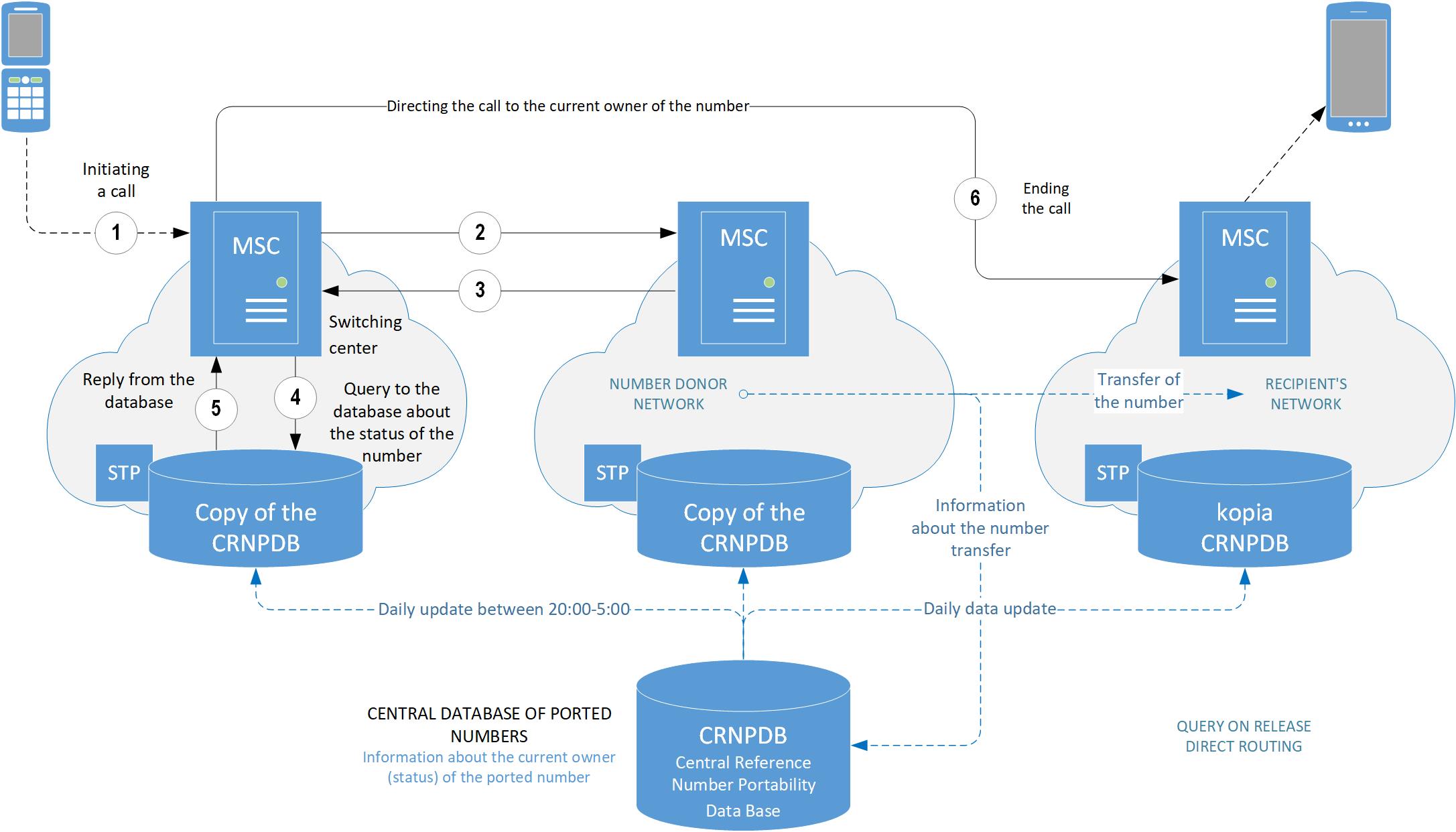
The QoR (Query on Release) method consists in querying the database of ported numbers only when the operator’s exchange to which the call was directed rejects it due to the transfer of the called number to another operator. After obtaining information about the impossibility of terminating the connection, the PBX initiating the connection queries the database of transferred numbers and, having obtained information about its current status, directs the connection directly to the operator who is the current owner of the number.
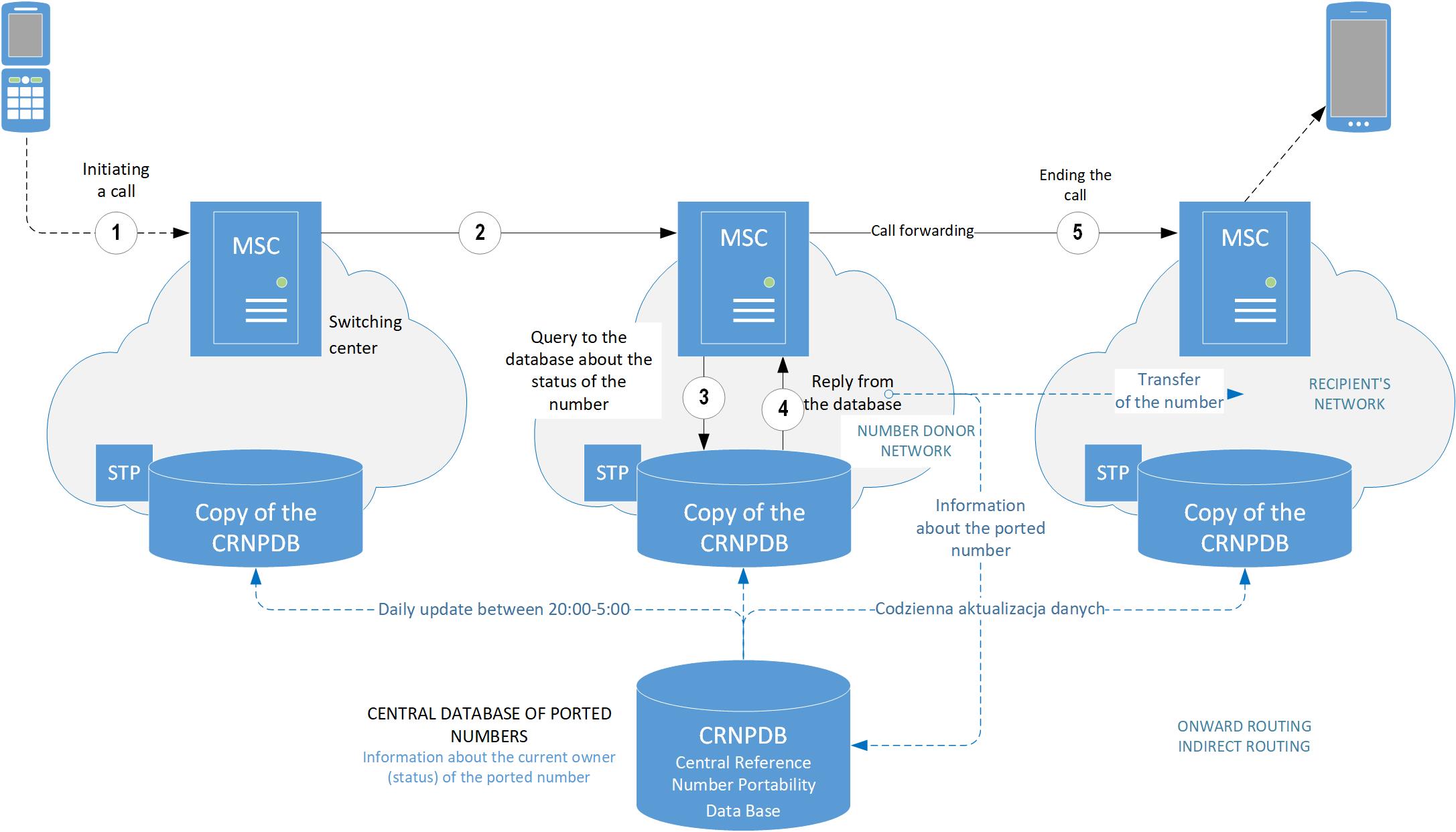
The OR (Onward Routing) method redirects the call through the network that transferred the telephone number to another operator. The call is initiated in a classic way and directed to another one based on the programmed information about the assigned numbering ranges. If the network receiving the call termination request finds that the called number has been ported, it queries the database of ported numbers and then establishes (redirects) the call to the appropriate operator. The donor’s network becomes part of the established connection for the entire duration.
The ACQ (All Call Query) method in the decentralized variant differs from the centralized ACQ variant in that the operators directly transfer information to each other about all transferred numbers. Each of them has its own database of ported numbers and does not use an external, central database. This variant of traffic routing has been implemented by Polish mobile network operators mainly due to significantly lower implementation and maintenance costs of such a solution.
Being able to communicate makes the world go round. It facilitates interpersonal contacts, allows us to learn, develop and make progress. Communication is not only about speaking and listening, but mainly about understanding what has been said – and in many cases
what has not been said.

Joanna Rubin

Effects of the implementation of the NP project

The right to keep the telephone number when changing the operator was guaranteed to telephone subscribers by the Act of July 16, 2004 Telecommunications Law (Article 70 et seq.). The deadlines for launching the number portability service in mobile networks (MNP) were set by the President of URTiP on October 10, 2005 (pilot start) and January 16, 2006 (full service). The availability of the portability service (FNP) in fixed networks was scheduled for December 31, 2005. In practice, however, it took longer due to the need to conclude agreements with approximately 170 fixed network operators.

Fees for porting a number have been set by mobile network operators in the amount of about PLN 100. In the first two years after the introduction of the service, approximately 200,000 telephone users (postpaid and prepaid) ported their numbers. The number of users coming or going with their number was between 0.5-2.5% for individual operators. The introduction of this service was particularly beneficial for new mobile virtual network operators (MVNOs) who lease call time from operators with their own mobile networks.

In accordance with the assumptions of URTiP, it was originally planned to organize a number portability system (mobile and fixed) with the participation of a central reference database of ported numbers. Such a solution would be beneficial to support portability with a growing number of operators. However, the three existing mobile network operators at that time decided to launch the MNP service in the decentralized ACQ (All Call Query) model, without a central base. This decision was determined by lower costs and shorter implementation time of such a solution.

The implementation of MNP and FNP services by Polska Telefonia Cyfrowa (today T-Mobile Polska) took place during the escalation of the ownership conflict and the related ambiguities regarding the rules of representing the company. This seriously hindered negotiations and signing inter-operator agreements related to the NP project. 

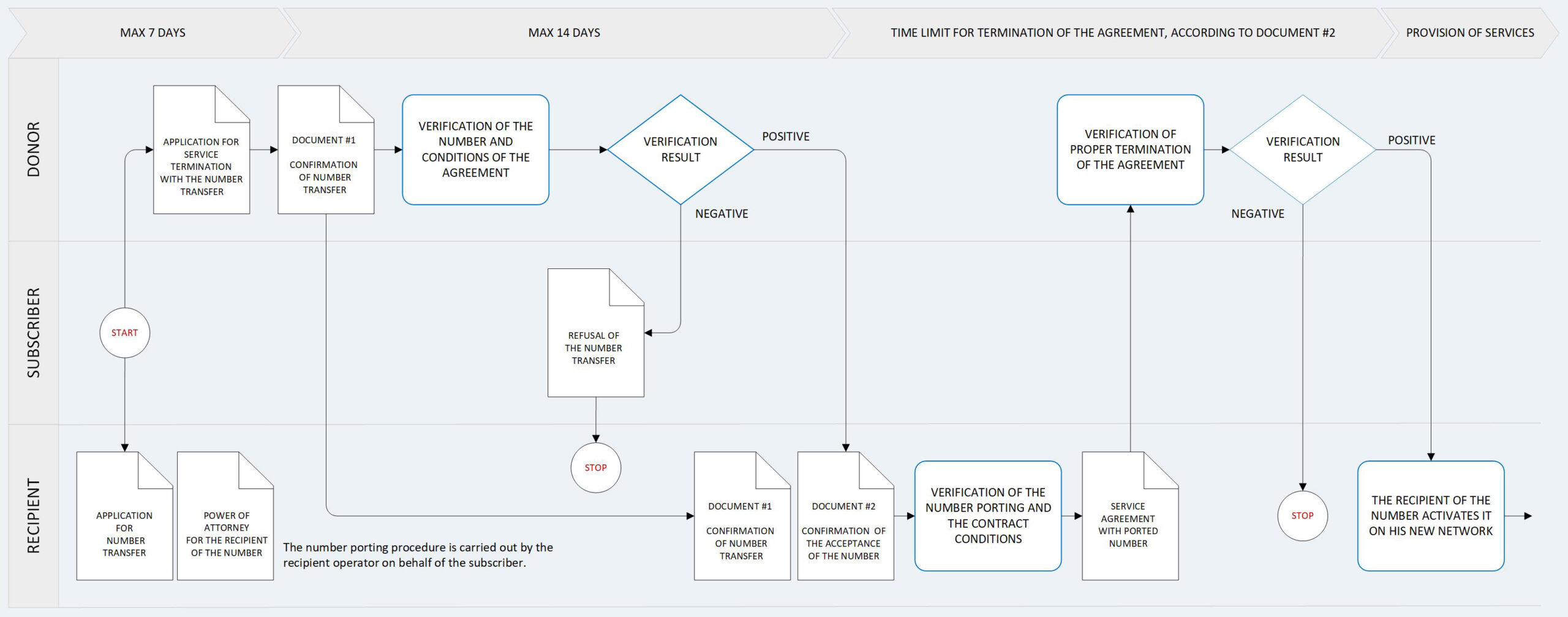
Number portability procedure (MNP) in the post-paid system, with the option of a power of attorney for the operator-recipient of the number