Strategic planning in the CZH S.A. Group
Case study
Centrala Zaopatrzenia Hutnictwa S.A. (CZH S.A.) – the metallurgical supply central – was established in 1946 as a state-owned enterprise, whose founding body was the Minister of Industry. For several decades, it used the privilege of mandatory brokerage in the trade of goods related to metallurgy and mining. The situation changed with the political transformation at the turn of the 1980s and 1990s. Centrala lost its privileged position on the market and had to find its place in the realities of free market competition. In 1992, the functions of the founding body were entrusted to the Katowice Voivode, and nine years later CZH S.A. was transformed. into a joint-stock company. Over time, new companies appeared in its vicinity, related to the Headquarters by ownership and business relations.
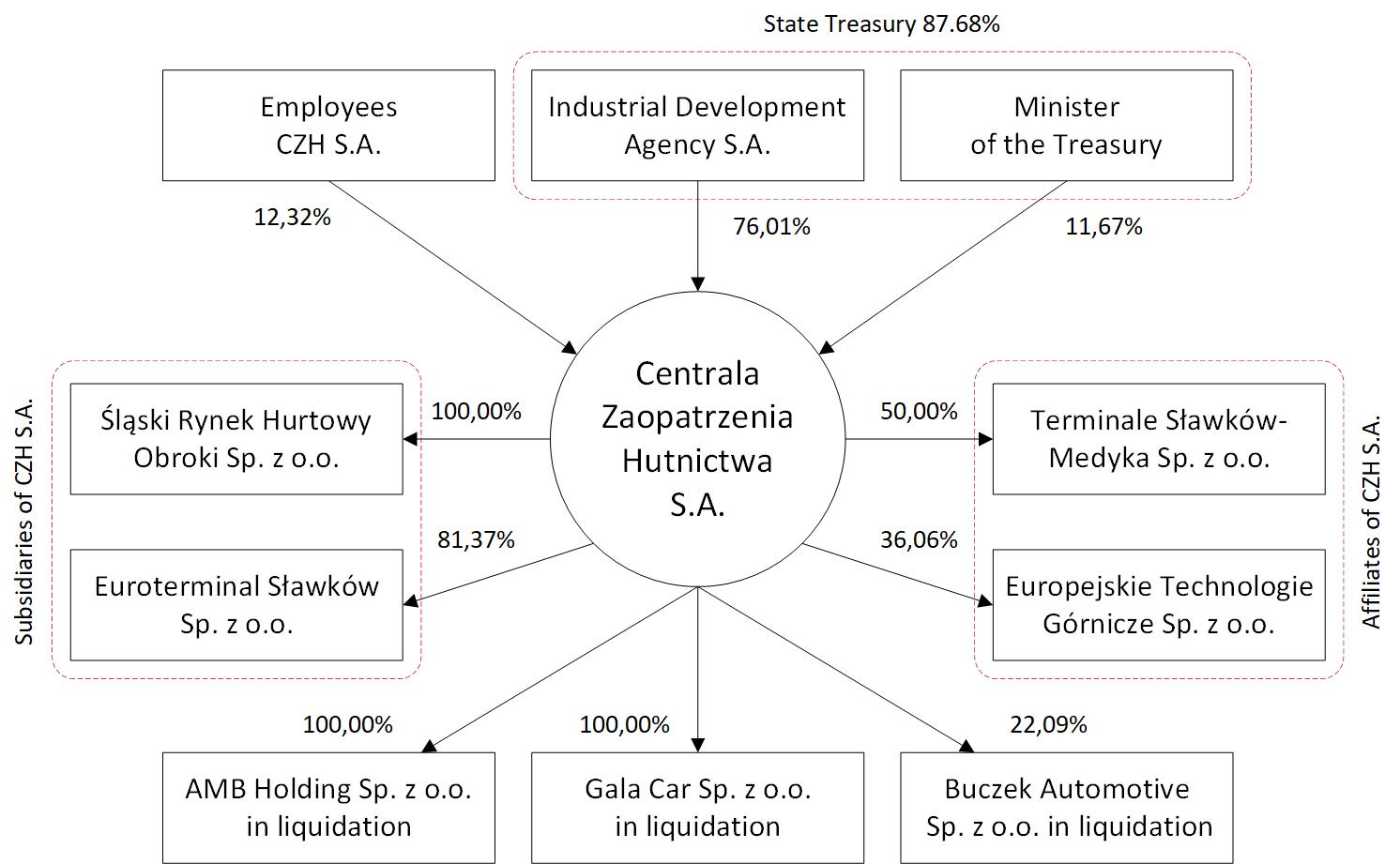
Free-market economic mechanisms meant that Centrala could not withstand the pressure of growing competition. In 1999, it was placed under receivership. After commercialization (2001), however, it rose from the fall and began to earn a profit. Positive impact on the development of CZH S.A. had decision to build an international logistics center in Sławków (2004), which the company had high hopes for. In 2010, pursuant to the decision of Agencja Rozwoju Przemysłu S.A., the terminal was separated from the organizational structure of CZH S.A. and transformed into a company under the name of Euroterminal Sławków Sp. z o. o. Centrala took over 81.37% of shares in this company, while for itself this meant the need to resign from plans to directly develop lucrative logistics and forwarding activities. CZH S.A. was forced to develop a new strategy for its further operations.
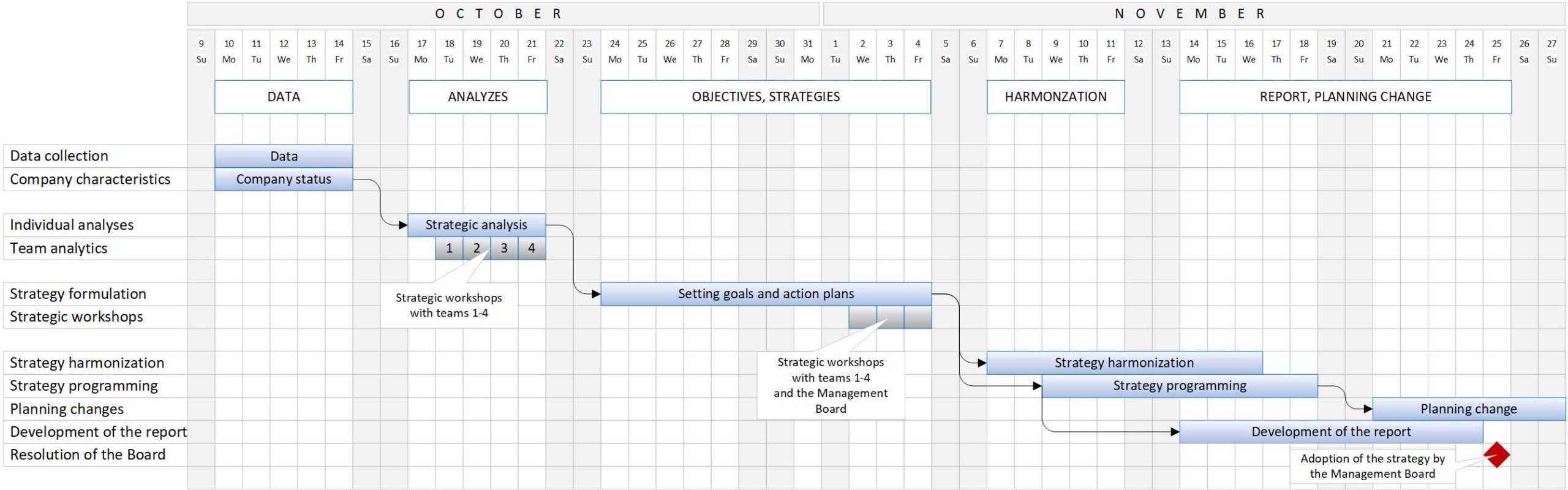
CZH S.A. turned to me for methodical help in finding an idea for a new business and in formulating a new strategy at a difficult moment in its history. I accepted this challenge, undertaking to lead the company through a complex process of strategic planning at the group level and at the level of several business units, managed directly by CZH S.A. The scope of the agreed work included analyzes of individual segments of the Head Office’s operations, setting new business goals and appropriate action plans, as well as developing assumptions for the organizational change management plan.
As a result of the cooperation, which lasted about four months, a strategic plan was created presenting the results of research on the conditions for the company’s development and setting new strategic goals, strategy maps, strategic indicators, as well as instructions regarding further restructuring, operational and project activities. CZH S.A. strategy for the years 2012-2015 was prepared in the form of a report intended for its dominant shareholder – Agencja Rozwoju Przemysłu S.A. (representing the State Treasury).
Stakeholders and decision makers
CZH S.A. and related to it companies belonged to the State Treasury, so the future of each of them was most often decided in ministerial offices. The functioning of state-owned companies is definitely different from private enterprises, which have full autonomy to decide about themselves. State-owned companies are free to develop their operations, but at the strategic level they are largely subject to political influence.
CZH S.A. stakeholder group was very diversified. Some had a real impact on determining the directions of the company’s development, while others could only give opinions on the decisions of the former. A clear awareness of the political, institutional and social conditions in which the companies of the CZH S.A. group operated made it easier to decide on new directions of economic activity and to set realistic goals and action plans. The stakeholders with the greatest influence on shaping the group’s strategy were: Agencja Rozwoju Przemysłu S.A., the Minister of the State Treasury, the Management Board of CZH S.A., the company’s clients, employees and management of CZH S.A., the Management Board of ŚRH Obroki and trade unions of CZH S.A.
Portfolio of companies and strategic business units
CZH S.A. generated revenues from its own operating activities and from the activities of its subsidiaries and associates. Individual sources of income have been classified as income from separate operating segments, i.e. strategic business units, offering an individual product in a separate industry and on a separate market.
The profit generating centers that were directly managed by CZH S.A. were trading activities, financial services and real estate management. In the business model of the Head Office, at the operational level, there was a close connection between commercial activities and financial services. The portfolio of companies was managed by the Head Office as the owner. The best (most profitable) companies in the CZH S.A. group portfolio were: former Euroterminal Sławków, Śląski Rynek Hurtowy Obroki, TP Sławków Medyka and European Mining Technologies.
Work on the strategy
During the period of work on the strategy, CZH S.A. achieved stable revenues and a satisfactory level of profit, operating in demanding markets under strong competitive pressure. It did not have significant market shares or price-setting powers. The company’s operations were heavily dependent on its suppliers and burdened with high procurement costs. The lack of active acquisition of new customers significantly limited the possibility of achieving higher revenues and better profitability.
Centrala’s asset was its high financial liquidity, as well as the quality of its assets and human capital. The company enjoyed a good reputation as a reliable business partner, a reliable employer and had numerous business contacts, shaped over several decades of history. It had a large growth potential as well as property and organizational resources that could be flexibly used for effective business development. The weakness, however, was the lack of a vision for development, market stagnation and poor brand perception. The threat was posed by consolidations in the steel industry, politicization of decisions and growing competition. The main challenges that the Headquarters had to face were increasing the efficiency of using its own resources, entering new markets and transforming the still existing, ossified culture of a state-owned enterprise into a modern organizational structure, capable of achieving market successes in a strong competitive environment.
CZH S.A. Group
In 1945, two economic units were established to supply the Polish metallurgy. These were Centrala Surowców Hutniczych (the Central Office of Metallurgical Raw Materials) and Centrala Dostaw Hutniczych (the Central Office of Metallurgical Supplies). In 1946, the Minister of Industry merged both headquarters into one state-owned enterprise, which has been operating to this day under the name of Centrala Zaopoczenia Hutnictwa. In 1958, Biuro Dostaw Rud Zagranicznych (the Foreign Ore Supply Office) and Składnica Centralna (the Central Storehouse) were attached to CZH and subordinated to the Iron and Steel Metallurgy Association. In 1960, the Iron Ore Preparation Plant in Burki was also attached.
In the period of the Polish People’s Republic, the primary objective of CZH’s activity was to supply the metallurgy industry with raw materials, fuels, technical materials as well as machinery and equipment. From 1982, it performed the tasks of the commodity turnover center, acting as an obligatory intermediary in the trade of materials. A breakthrough in the history of the company took place in 1990 with the introduction of the principles of free-market economy. At that time, the principles of central planning and distribution ceased to apply.
Changes in the political system forced the transformation of Centrala into a typical commercial unit, arranging its relations with steel companies on the basis of free, administratively unrestricted partnership. In 1992, the founding body for CZH p.p. became the Voivode of Katowice. The years 1998 and 1999 brought serious financial losses, which resulted in the introduction of receivership and the implementation of a recovery program. In 2001 CZH p.p. transformed into a joint-stock company. In 2002, CZH S.A. achieved the first profit after commercialization. In 2003, the Minister of Treasury transferred 71% of the company’s shares to the portfolio of Agencja Rozwoju Przemysłu S.A.
The testimony of history clearly confirms the relationship between political freedom and the free market economy. I know no example of a “free society” in any time or place that is not characterized by something comparable to the free market, as a form of organization for the bulk of the economy.
Milton Friedman
Training and strategic workshops for CZH S.A. Group
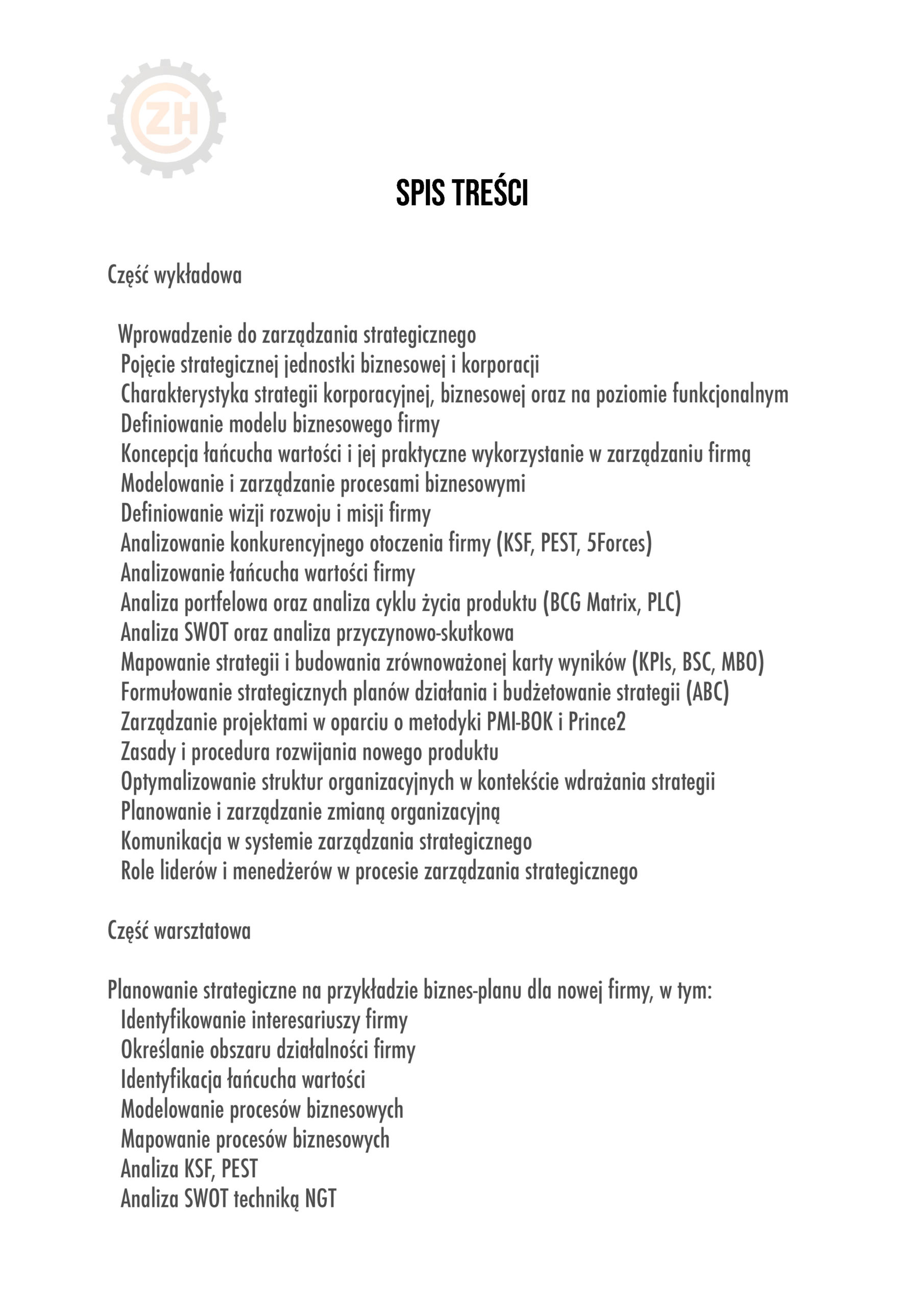
Prior to commencing work on the strategy, the management board and top management of the CZH S.A. group companies participated in a two-day training in the field of strategic company management, organized by me in cooperation with Avenhansen. I developed the lectures and exercises taking into account business and management issues related to the daily functioning of companies. The main objective of the training was to prepare the participants for active participation in the strategic planning project. After its completion, participants gained knowledge and skills that allowed them for:
- assimilation the basic knowledge in the field of strategic company management;
- better understanding of CZH S.A. business model and process structure of the company;
- identifying elements of strategic management in own decisions and actions;
- becoming acquainted with the main stages of the process of planning and implementing the company’s strategy;
- differentiation of strategies at the level of the group and individual economic units;
- understanding the essence and practical use of the value chain concept,
product and industry life cycle analysis as well as portfolio analysis; - getting to know the elements of the macroeconomic and competitive environment of the company;
- acquiring the ability to set strategic goals, map strategies, describe goals with measures and their cascading;
- designing strategic action plans, strategic budgeting, creating balanced scorecards and
learning the principles and tools for effective management of organizational change.
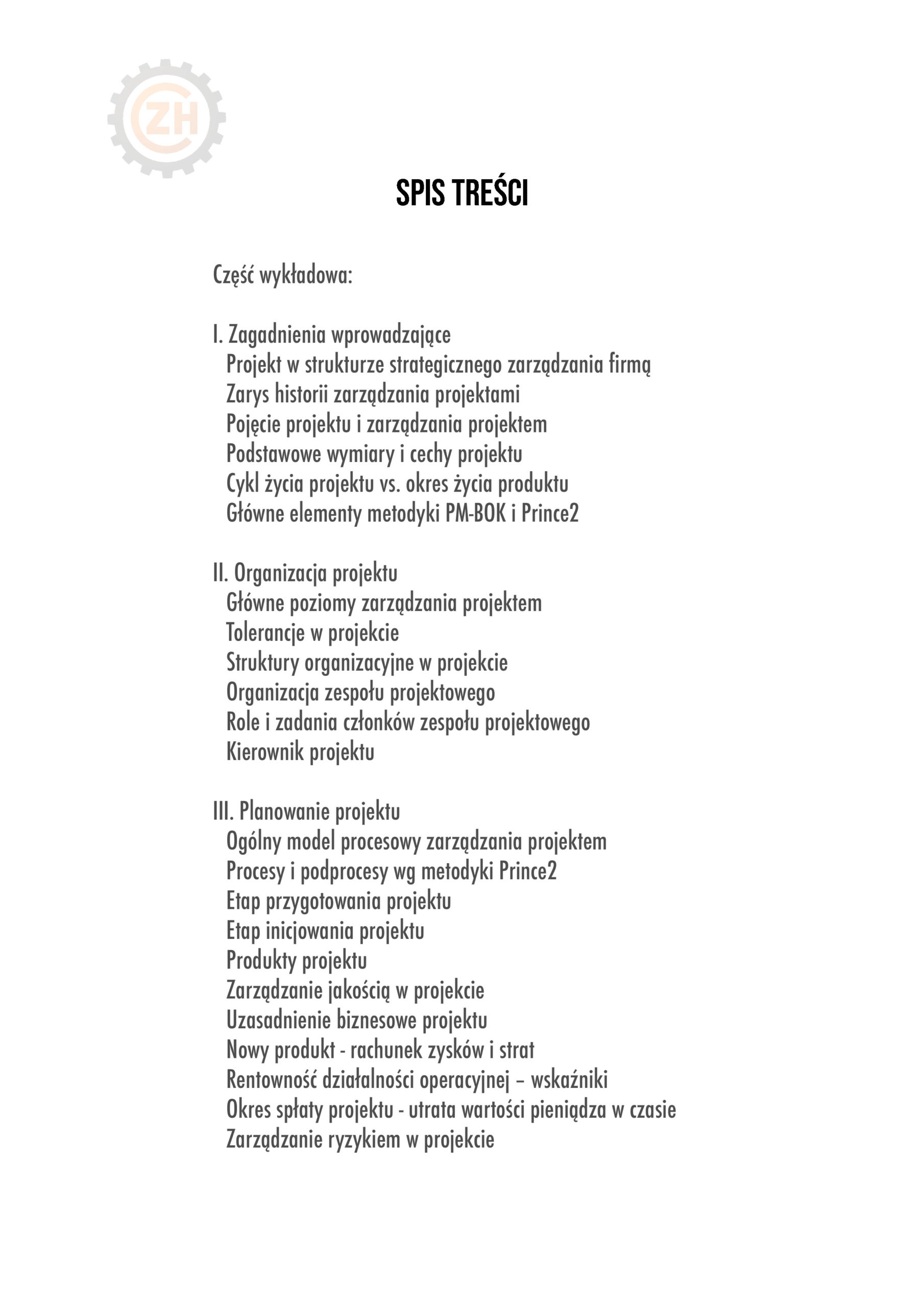
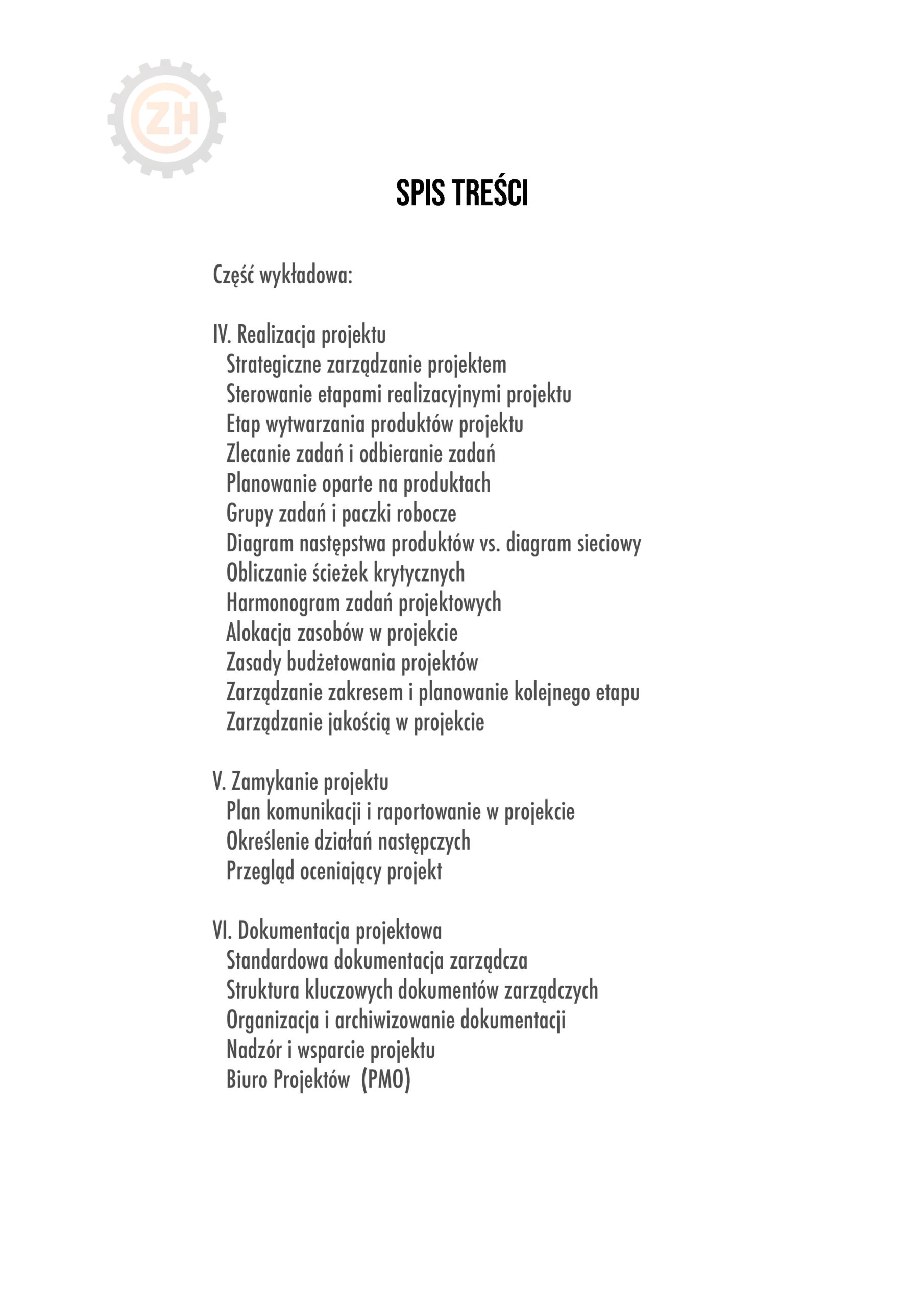
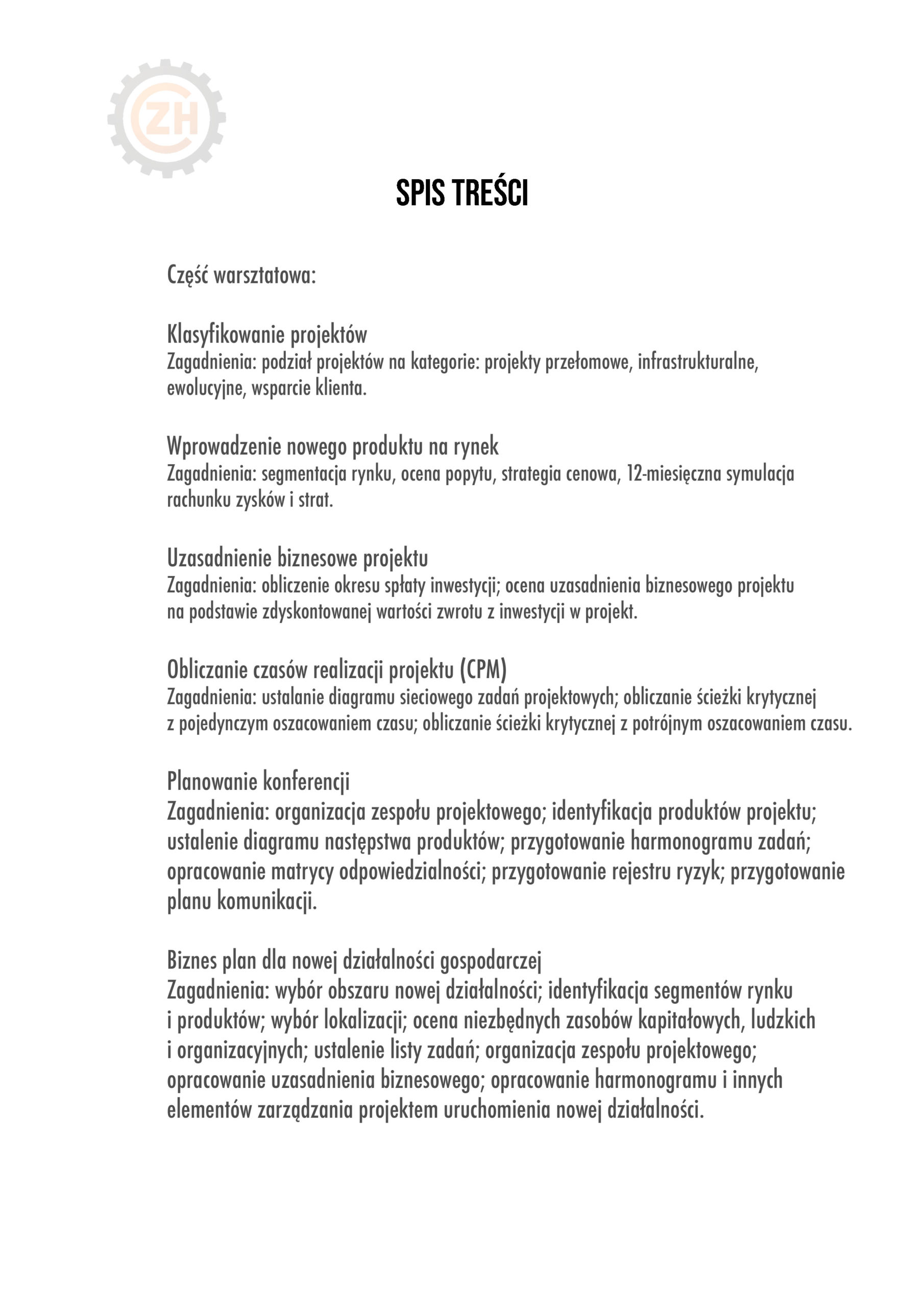
After completing the strategic planning project, I organized a two-day training course presenting the practical aspects of project management. The aim of this second training was to present a practical approach to planning and implementing projects based on the Prince2 and PMBOK methodologies, to prepare participants for restructuring activities, related to the implementation of a new development strategy.