Decision making procedures by PTC authorities

Case Study​

According to the American “quality guru” Edwards Deming, 94% of all quality problems arise from the fault of the management. In turn, the “management guru” Peter Drücker claimed that what we call management, to a large extent consists of … making it difficult for people to work. The essence of these statements was to draw attention to the fact that the quality of the organization’s functioning is primarily determined by its leaders. They set an example, inspire, motivate and create conditions for creative and committed cooperation.

The Management Board of Polska Telefonia Cyfrowa devoted much attention to optimizing business processes, including internal communication procedures and decision-making procedures by the company’s international shareholders. Establishing efficient decision-making procedures at the highest management levels was one of the major challenges, having a significant impact on shaping the proper organizational culture of this modern and fast-growing company.

Preparing and documenting decisions of the company's authorities

I have developed the procedures described in the document entitled “Principles of preparation and documentation of decisions of the authorities of Polska Telefonia Cyfrowa Sp. z o.o.” as an element of the formalized quality system at PTC. I have been acting at that time as an internal management consultant. The purpose of that document was to establish rules for dealing with internal management deeds, such as:

  • orders of the General Director of PTC,
  • ordinances of PTC Management Board members,
  • resolutions of the PTC Management Board,
  • resolutions of the PTC Supervisory Board,
  • resolutions of the PTC Shareholders’ Meeting.

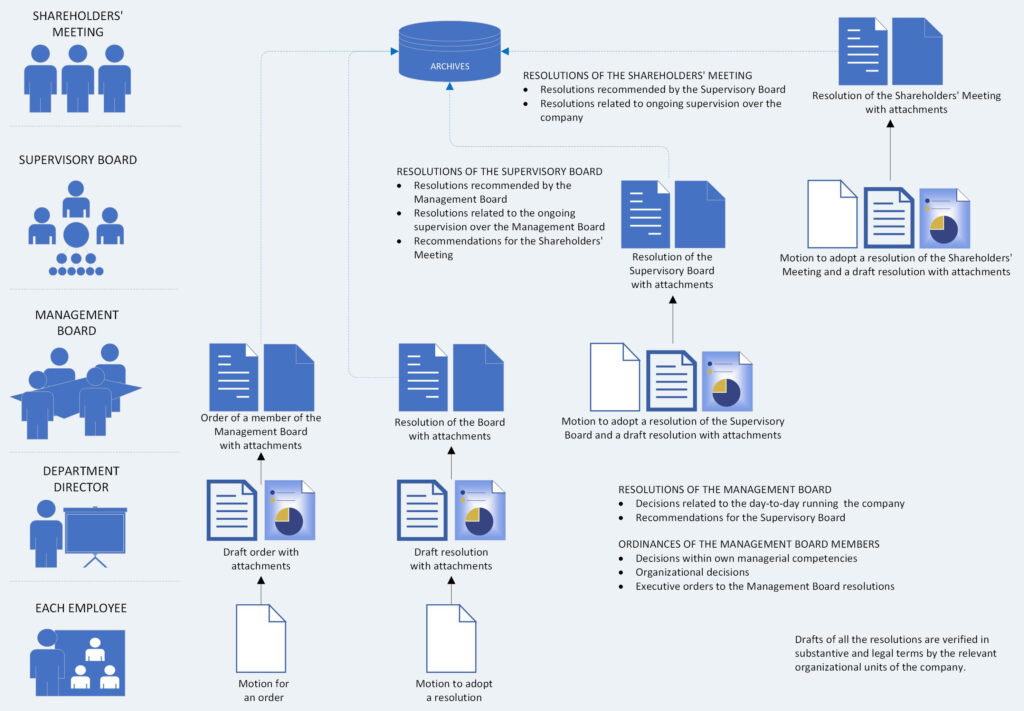
These procedures defined the paths for making decisions in internal and external relations of the company’s governing bodies. They contributed to the improvement of current, operational communication between the Management Board of PTC and directors of departments and managers at lower management levels. They established the sequence of proceedings in specific categories of cases, as well as the correspondence procedure for making decisions by the Supervisory Board and the General Meeting of Shareholders. 

The development of the procedure required ensuring full compliance with the provisions of the Company Agreement, the provisions of the Code of Commercial Companies and the procedures and practices already existing in the company. 

Quality management system

The essence of the quality management system is constant care for the production of products and services that are best suited to the needs of customers. A good product is the result of well-designed and correctly implemented organizational solutions (process and procedures), as well as high work culture. Quality management is taking coordinated actions in a repeatable cycle of PDSA – Plan-Do-Study-Act (Plan-Do-Check-Adjust).

The approach to the quality improvement system can be deterministic (ISO9001, Six Sigma) or dynamic (TQM, Lean Management). In PTC practice, both approaches were used, based on the universal ISO9001 standard, defining the following principle principles: (1) customer orientation, (2) committed leadership, (3) motivating employees, (4) process approach, (5) system approach and ( 6) constant improvement of quality at all workstations. The quality system was implemented by the Quality and Internal Audit Department in cooperation with an external certification body, under the direct supervision of the PTC Management Board. 

A business process is a set of interrelated activities (procedures) aimed at creating a value for the customer. The course of the process is determined by four basic values: INPUT – input value, OUTPUT – output value, GUIDE – a value describing the course of the process and ENEBLER – worker (people and technologies), performing a specific type of transformation (convertion) of the input value (resource) into the output value (product). Business processes, also known as transformation processes or work processes, can perform various types of transformations: physical (production), locational (logistics), exchange (trade), physiological (medicine), informational (IT) and many others. 

Quality management in the company consists, among others, in finding answers to the following questions: Do we have correctly identified processes? How many main and supporting processes do we have? How are the processes related to each other? Who owns each process? How are the processes located in the organizational structure of the company? Are they documented and how? 

Procedures are a component of a process or sub-process. They can be identified with tasks in the technological process, which consist of a certain number of individual activities. The procedure can be presented in the form of a flow diagram, which greatly facilitates the analysis of activities and tasks, catching errors and optimizing procedures. A process may contain one or many interconnected procedures, the execution of which creates an output value from the process (transforms the input value into the output value). 
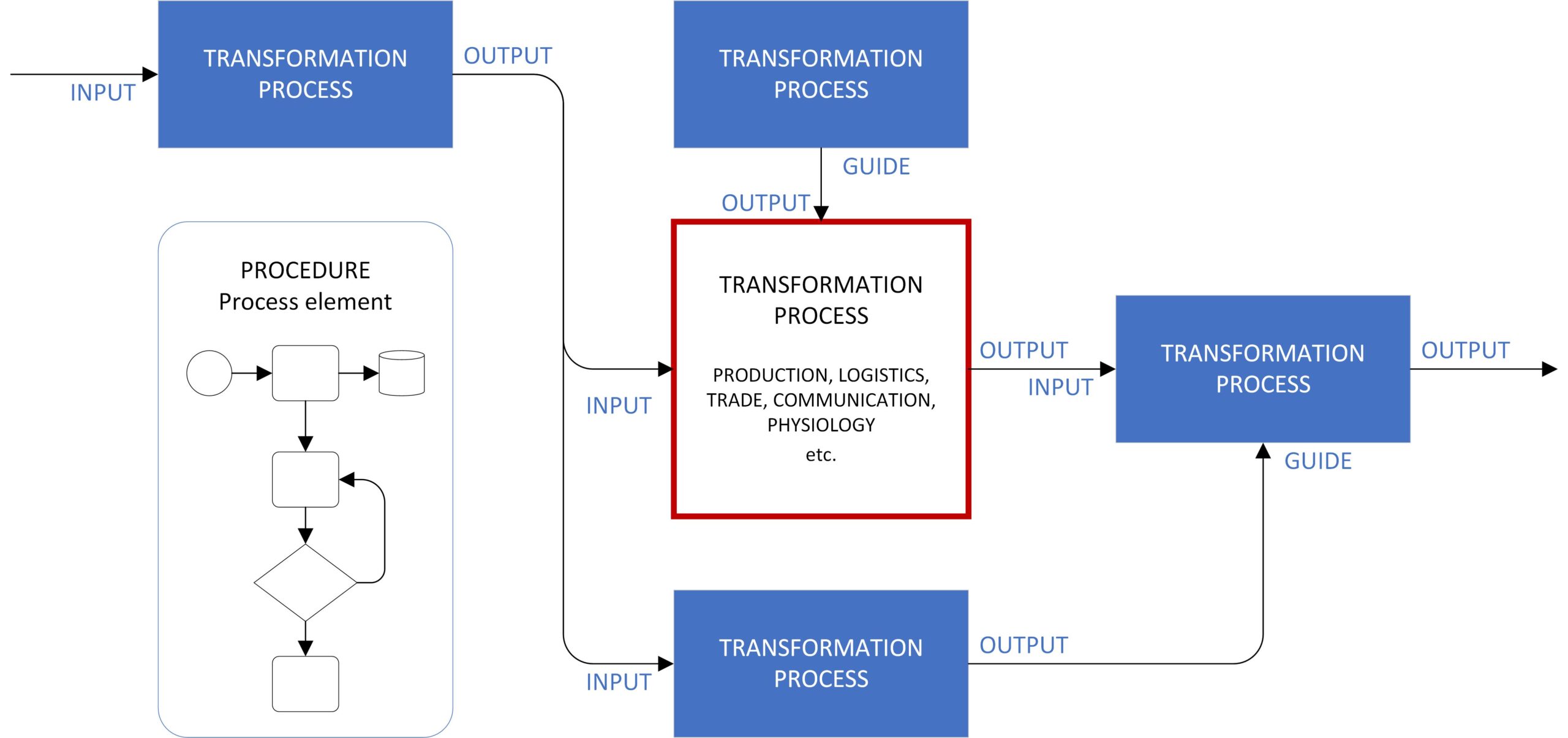
Business process management includes four basic stages: (1) modeling and designing activities, tasks, procedures and processes; (2) implementation and testing of processes with the use of appropriate tools and employee training; (3) ongoing monitoring, documenting and reporting of procedural processes and (4) analyzing and correcting processes by simplifying procedures, shortening the time of performing activities, introducing parallel tasks, etc. 

The efficiency of technological systems and the quality of work of regular production employees can affect the achievement of better results of the company’s operations in about 20%. The decisions of the management, i.e. the quality of management, have a much greater impact on the quality and effectiveness of its functioning. Good management consists in optimizing the use of company resources, i.e. reducing operating costs while maintaining good product quality. High organizational and operational efficiency is achieved primarily by harmonizing the company’s business model with its organizational structures and work processes. Cyclic analysis and correction of these three elements of the company’s infrastructure is one of the tasks undertaken as part of quality management. 
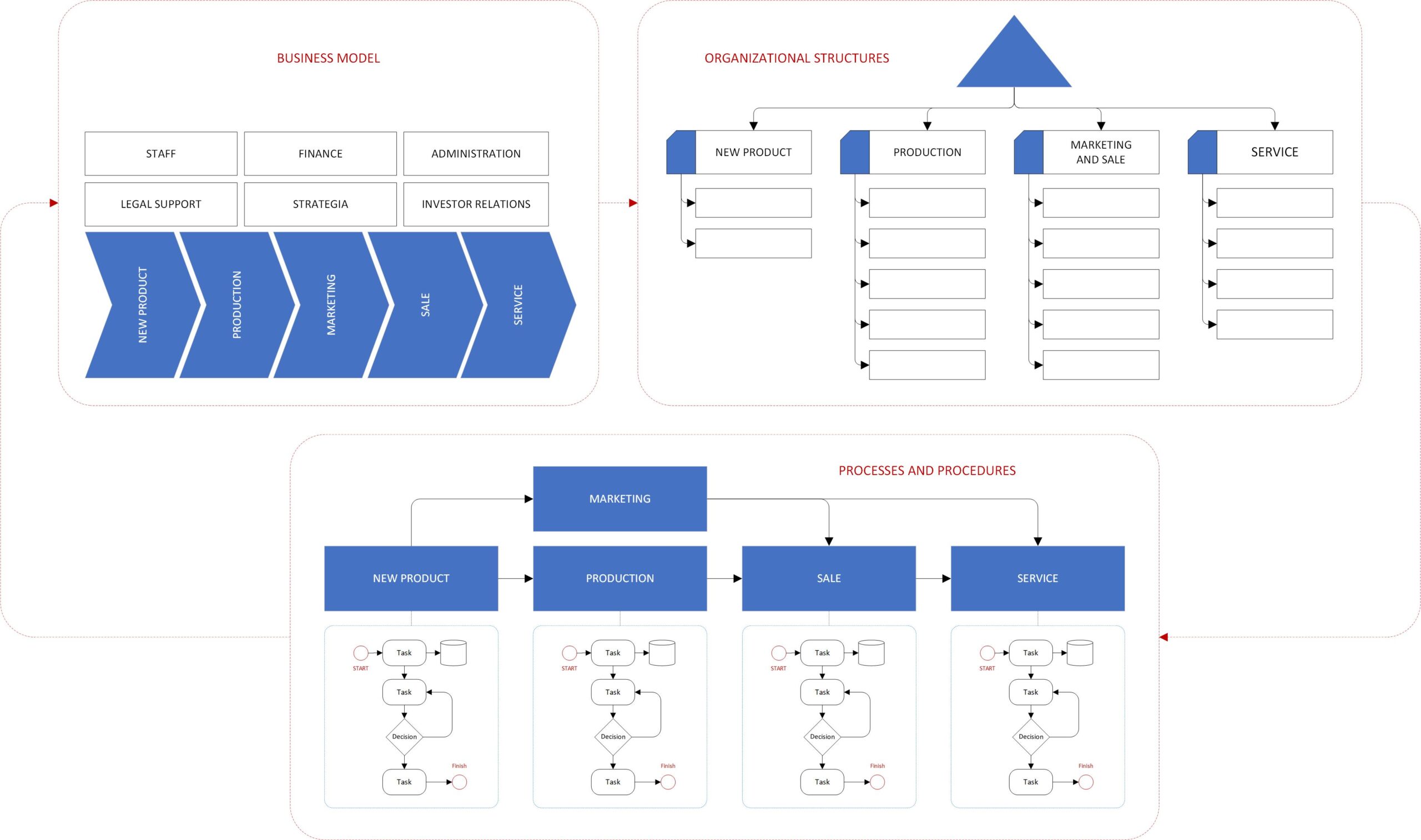
A business model is a way (sequence of activities) characteristic for a given industry, in which a company creates value for a customer (product, service). Organizational structures are characterized by two basic parameters – the maximum span of control and the maximum command chain. Business processes are composed of procedures, and larger ones can be divided into sub-processes.
You must not appoint anyone as a manager, who is more concerned with who is right than what is right. When personal considerations take precedence over job requirements, corruption is born. The board should not appoint a manager, who considers intelligence more important than integrity. 
A person may know too little and do poorly; may lack capacity and judgment; and yet may not cause a harm. However, if someone lacks character and integrity, then – no matter how brilliant knowledge and skills he poseses – he causes a destructive effect. He destroys people, the company’s most valuable resources. He destroys morale and quality of work. 

Peter Drücker

Form and property of procedures

The description of the procedures has been prepared in text and graphic form. The text was developed in accordance with the principles of legislative technique, while the graphic part presented procedural paths in the form of flow diagrams. A separate place is devoted to the description of the principles of archiving documents related to the activities of the company’s bodies. An integral part of the description of the rules of conduct was also a set of 18 appendices, setting out templates for applications, notifications, meeting agendas, presentations, orders, resolutions and minutes.

The procedures became the property of the Shareholder Service Department, which is responsible for the day-to-day organization of the work of the Management Board and the Supervisory Board of PTC, as well as the company’s relations with its investors. Ownership of procedures means the obligation to constantly supervise their application and introduce corrections and improvements. 

An outline of the procedures for adopting internal management acts by the company's governing bodies