The scope and forms of support in projects
Project management training
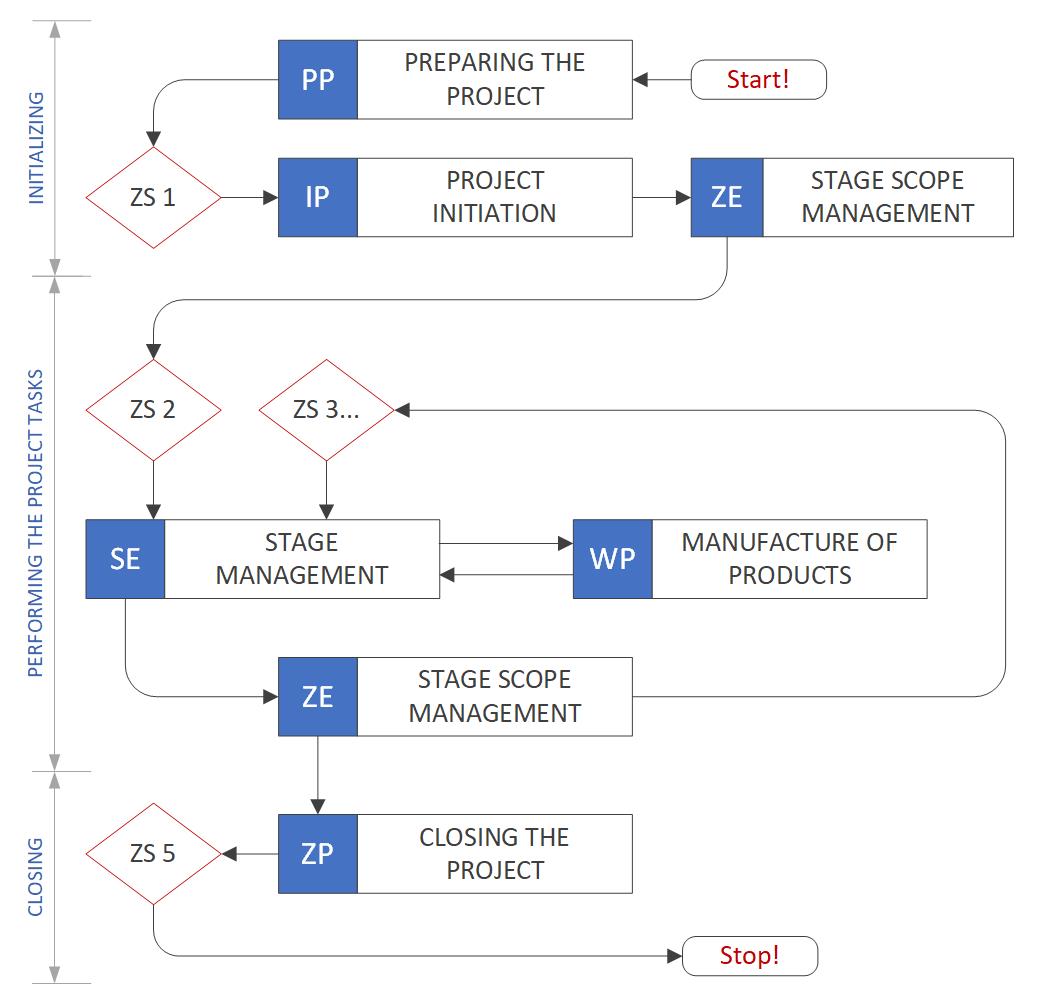
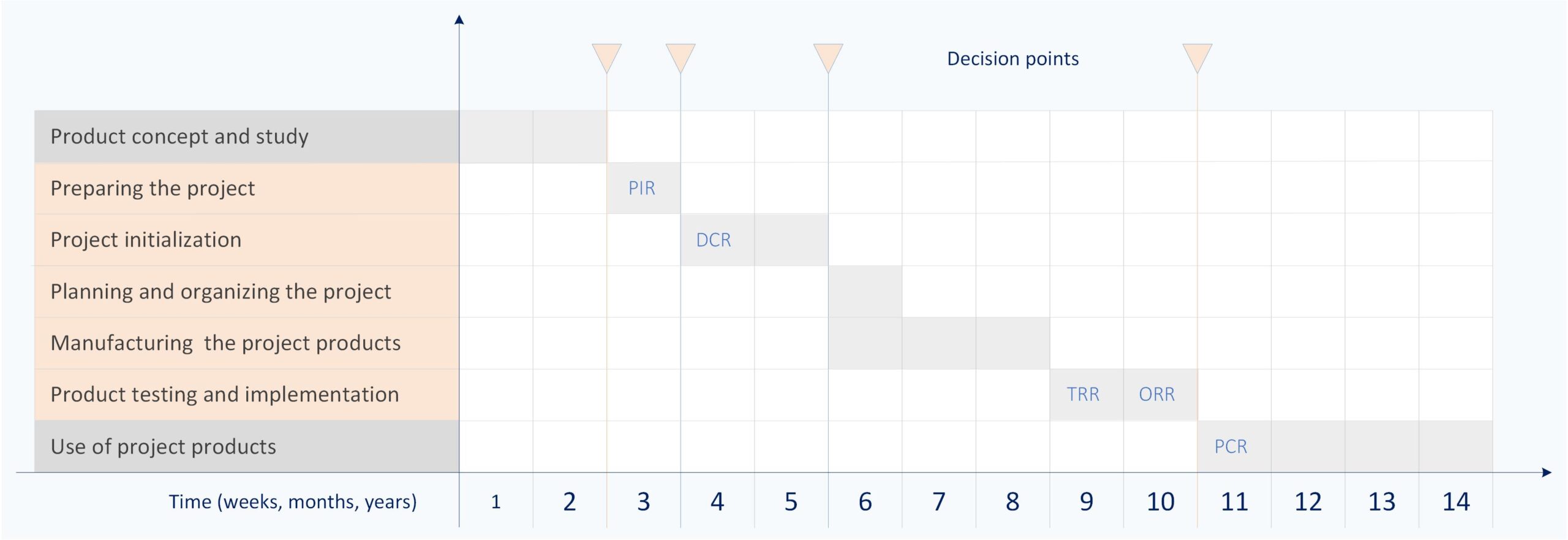
Practical introduction of project sponsors and project teams to the issues of project management, in particular the principles of preparing the concept and planning a project, organizing project teams, as well as performing tasks and documenting project issues.
Advisory support in project proceedings
It consists in ensuring ongoing supervision over the methodological and substantive correctness of the project procedure. It is provided at the level of the project sponsor, steering committee or project manager. The goal is to ensure the smooth running of the project, obtain the required quality parameters and minimize the risks.
Outsourcing of project management
It consists in entrusting the consultant with the duties of the project manager or the manager of the task force or the performance of the indicated project tasks. The transfer of responsibility may take the form of a generic power of attorney, setting out the rules for representing the client in a specific scope (e.g. in negotiations with business partners or in proceedings before regulatory authorities). |
Reasons for failures in projects
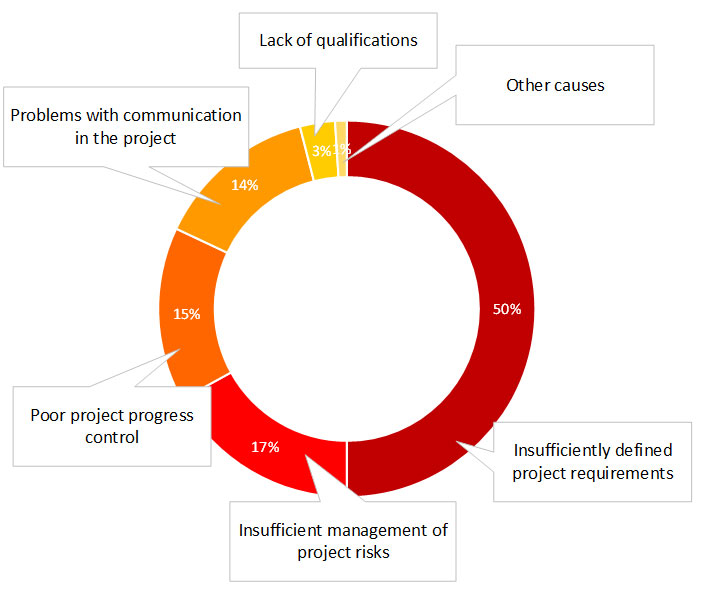
All organizations have a list of costly project failures.
 |
|
The main reason for failure in projects is insufficient clarification of expectations regarding project outputs.
The lack of commitment of the project sponsor usually results in insufficient planning, weak risk management
and poor ongoing supervision over the the project.
Conditions and forms of cooperation
Establishing cooperation as part of the services offered is preceded by the stage of analyzing the client’s needs, defining goals and determining its scope. The basis for the decision to establish cooperation is the assessment of the specificity of the project and the conditions for its implementation. Cooperation, as part of consultative support in projects, includes the following stages:
- Conclusion of a confidentiality agreement,
- Agreeing customer needs in the field of project management and the scope of cooperation,
- Formulating goals and tasks as well as acceptance criteria for the work performed,
- Agreeing the conceptual assumptions of the project and the framework cooperation schedule,
- Determining the resources necessary to implement the planned tasks,
- Establishing the rules of communication and other detailed terms of cooperation,
- Conclusion of a cooperation agreement,
- Performance of agreed works,
- Project closure and settlement,
- Preparation of the final report and presentation materials.
The basic legal forms that may constitute the basis for establishing cooperation in projects are presented on the Cooperation page.
In implementation projects aimed at purchasing and implementing specific technical solutions, there are usually three parties: the buyer, the seller and the consultant. The role of the consultant in these types of projects can be of two types: (1) he can act as an advisor or project manager on the buyer’s side, or (2) as an advisor on the supplier’s side. Its role in both cases is to ensure effective communication between the parties and to facilitate the implementation of systems.
|

 Pacta sunt servanda!