Pacta sunt servanda!

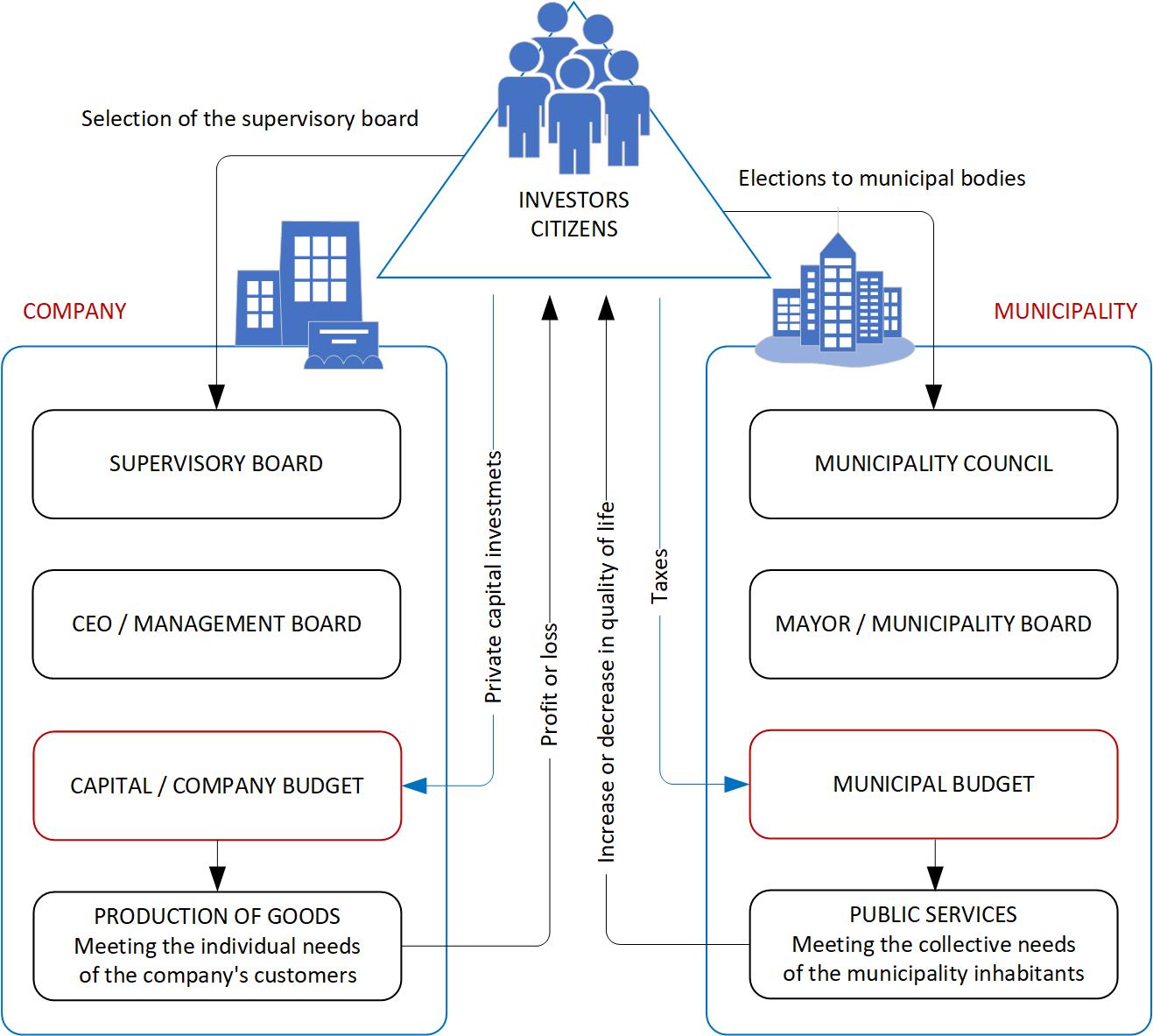
As part of the work on the “Strategy for the development of the city of Zgierz”, a survey of all the city’s inhabitants was carried out, with particular emphasis on the economic sector and graduates of Zgierz high schools (high school graduates). The choice of such a research profile was determined, on the one hand, by concern for the condition of the local economic sector, and, on the other hand, by the need to create the best possible starting conditions for young Zgierz residents.
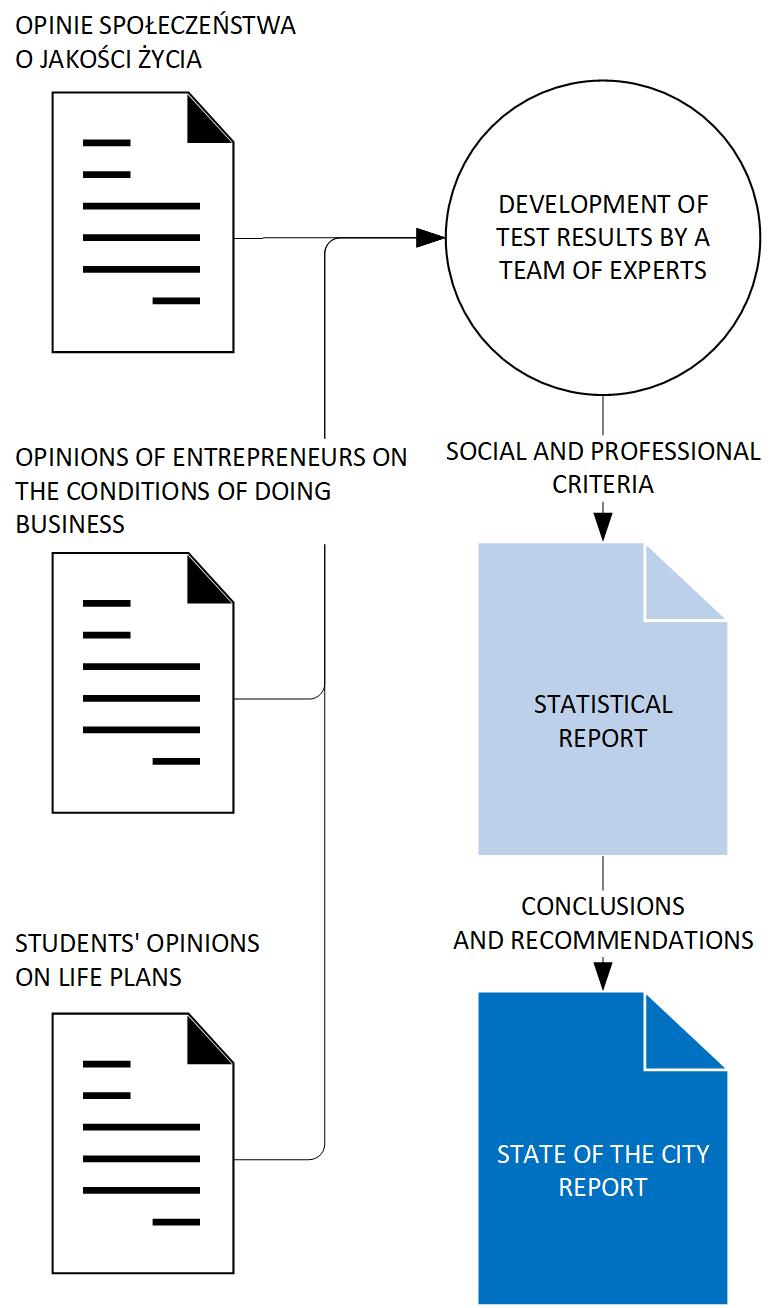
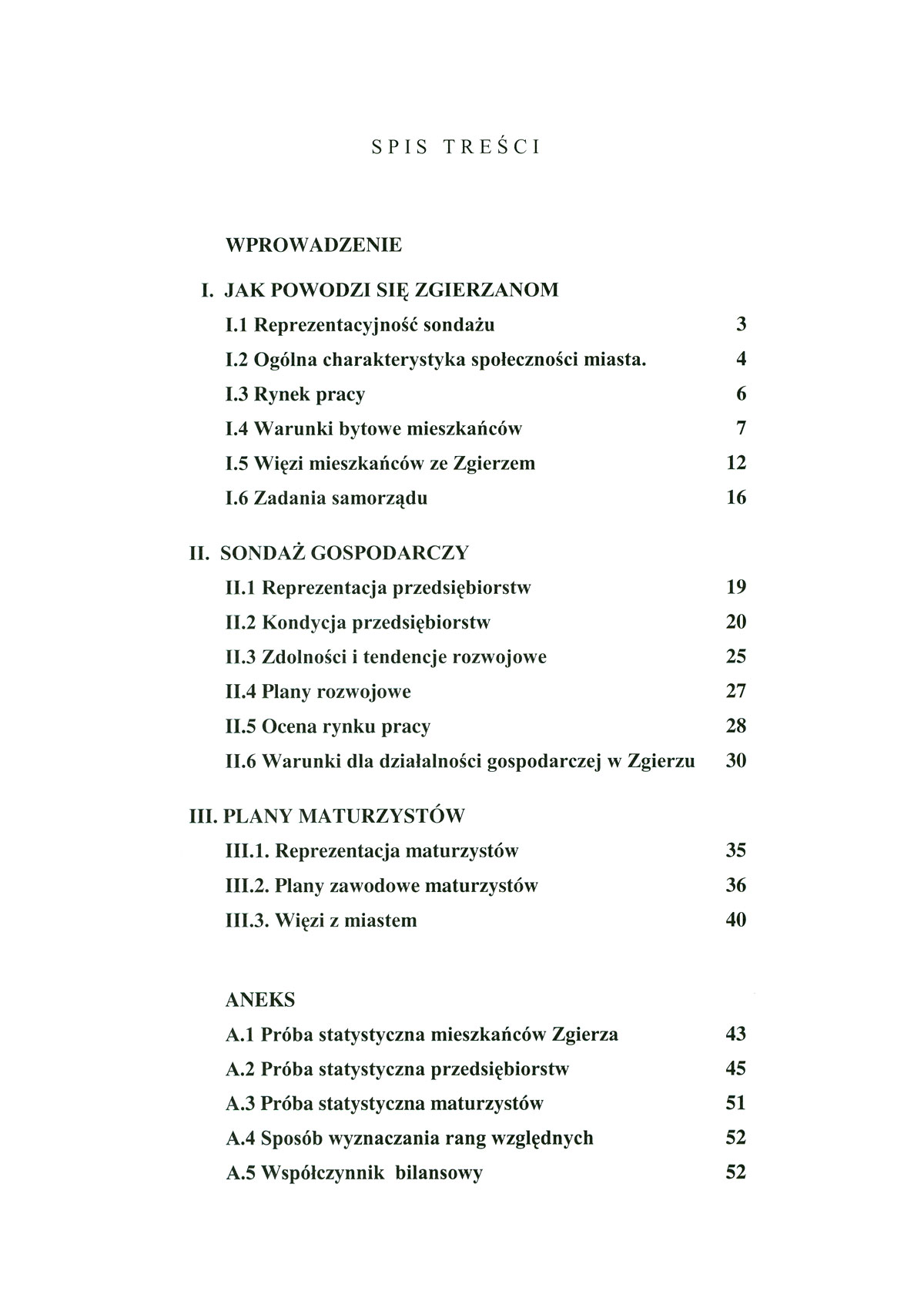
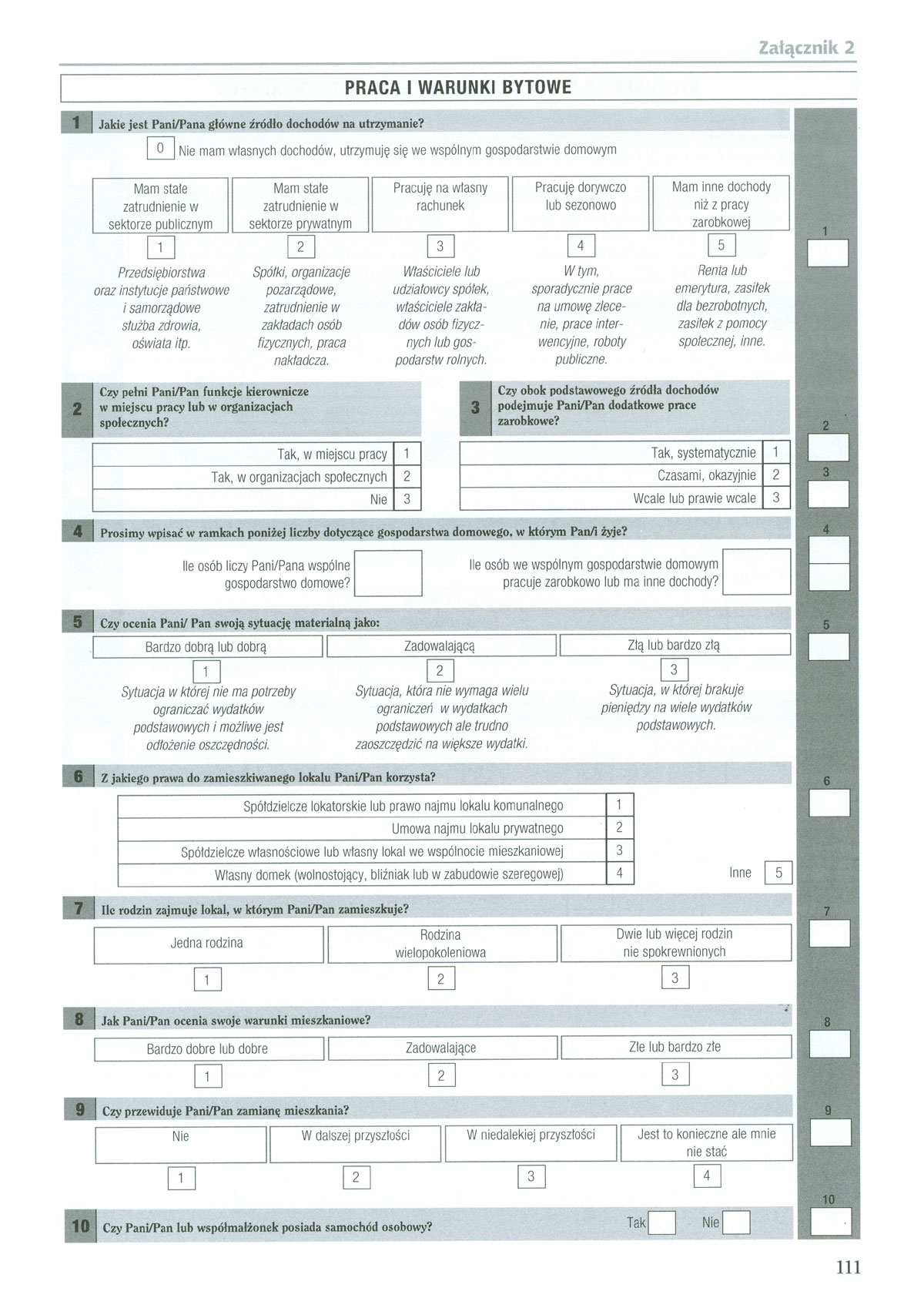
Statistical research was prepared and conducted by prof. Stanisław Socha with the help of employees of the City Development Department. In the survey, consisting of 24 questions, respondents were asked to characterize their financial and housing situation, sources of income and to express their opinion on the quality of life in Zgierz. A survey with 30 questions about the conditions of doing business in Zgierz and their expectations towards the local authorities was prepared for entrepreneurs.
From several thousand responses, an image emerged of a community firmly rooted in the new political reality, but uncertain of its future. The majority of people expressed satisfaction with the living conditions, while declaring expectations regarding care and social functions performed by local authorities. The high school graduates declared their will to continue their education, while their further plans were rather related to the search for life opportunities outside Zgierz. Entrepreneurs developed their activities in the first years after the political transformation, and then encountered obstacles related to the growing quality requirements of production and financing of their activities.
The collected opinions clearly indicated the need to formulate a vision of further development of the city, setting out the directions of specific activities of the local authorities and administration in the perspective of the next dozen or so years. They indicated that urban development objectives should focus primarily on creating the best possible conditions for the development of the local economy, as it is a source of household income and financing of public tasks. The condition of this sphere directly determines local demographic trends, and thus determines the prospects for further development of the city.
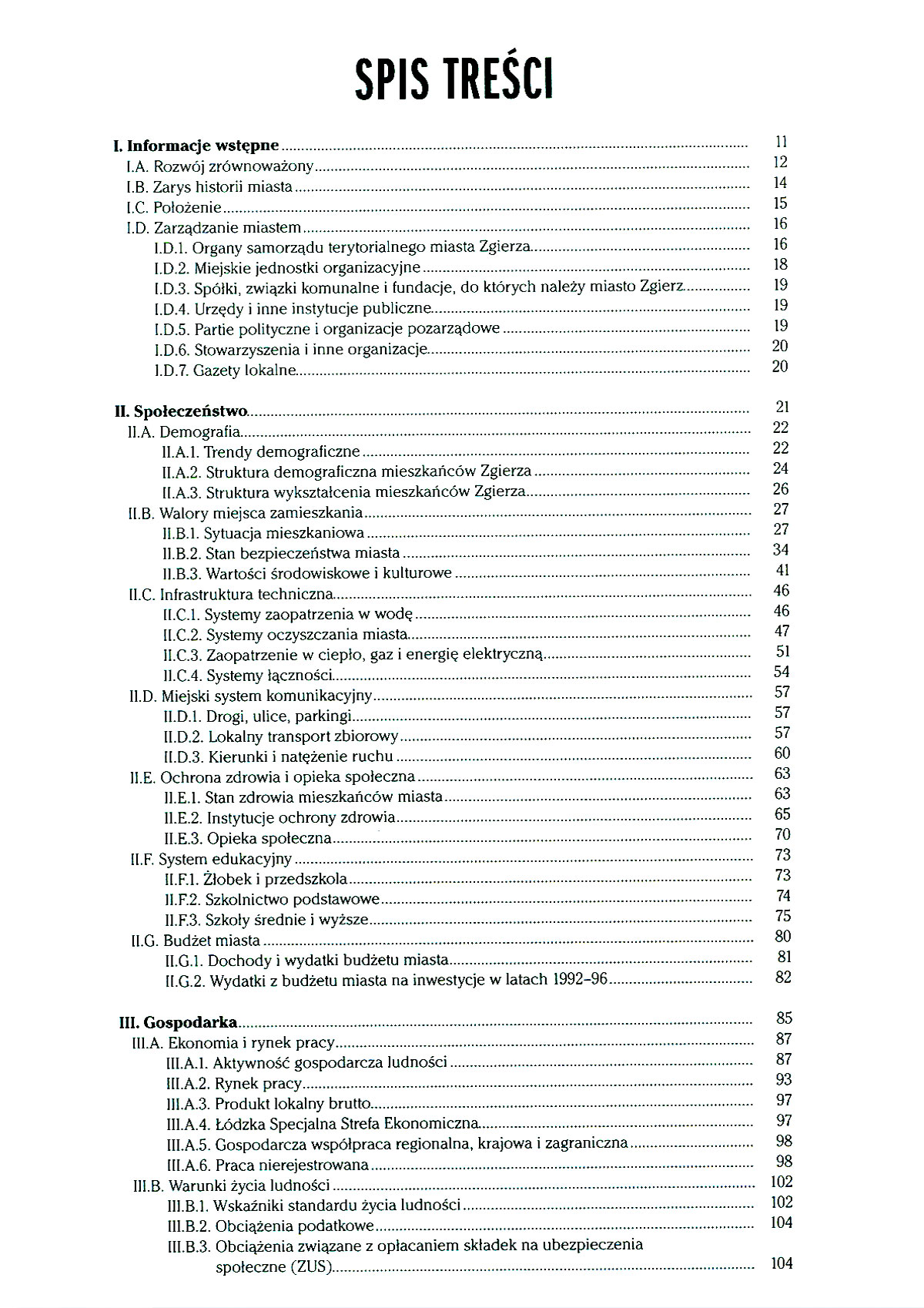
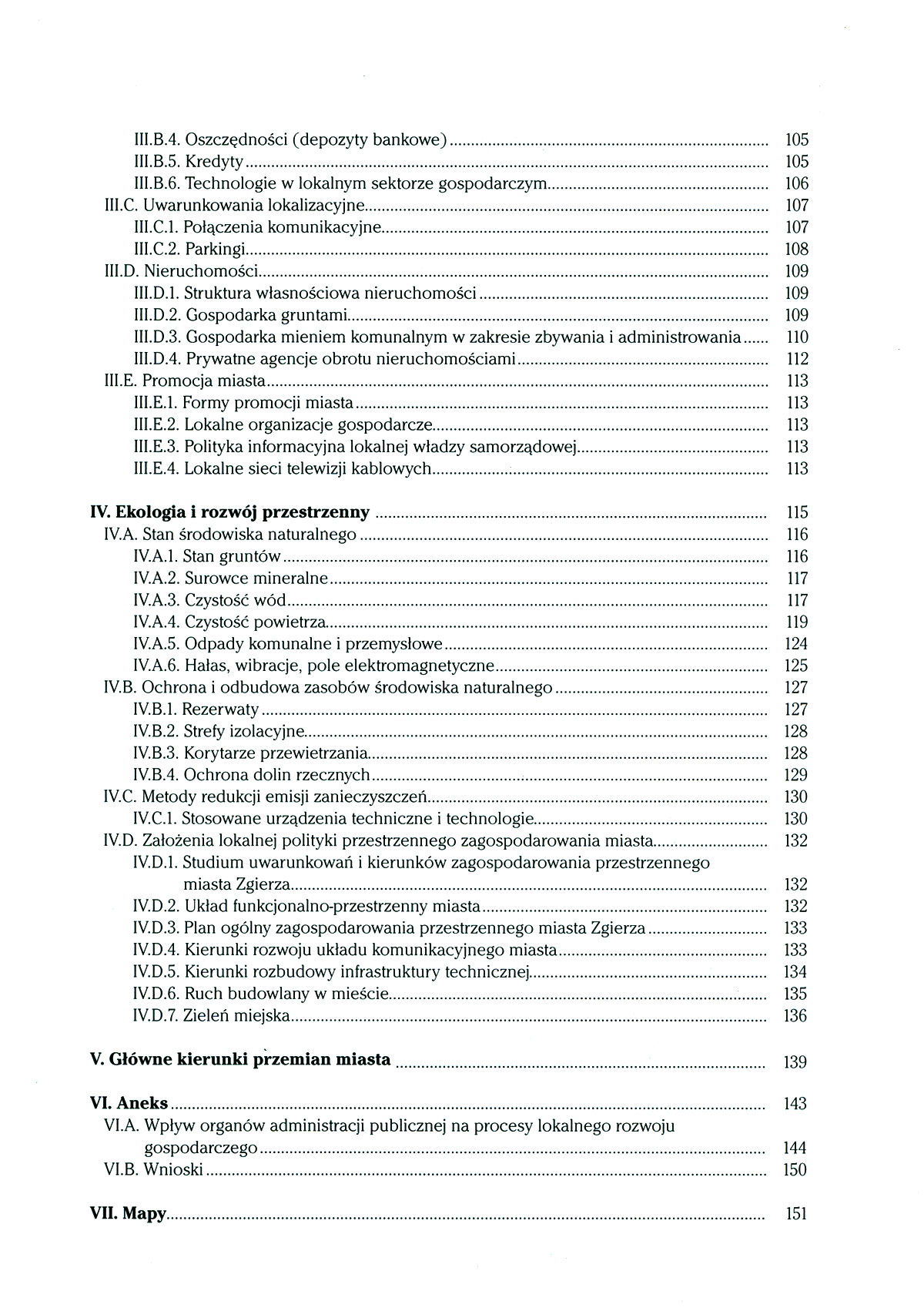
“Report on the condition of the city of Zgierz 1997” was the first study that presented a fairly complete picture of the city in its social, economic and spatial dimensions. The aim of the report was to present, in a concise and clear form, a systematized description of the most important features of the city as well as phenomena and changes in its space over the last few years.
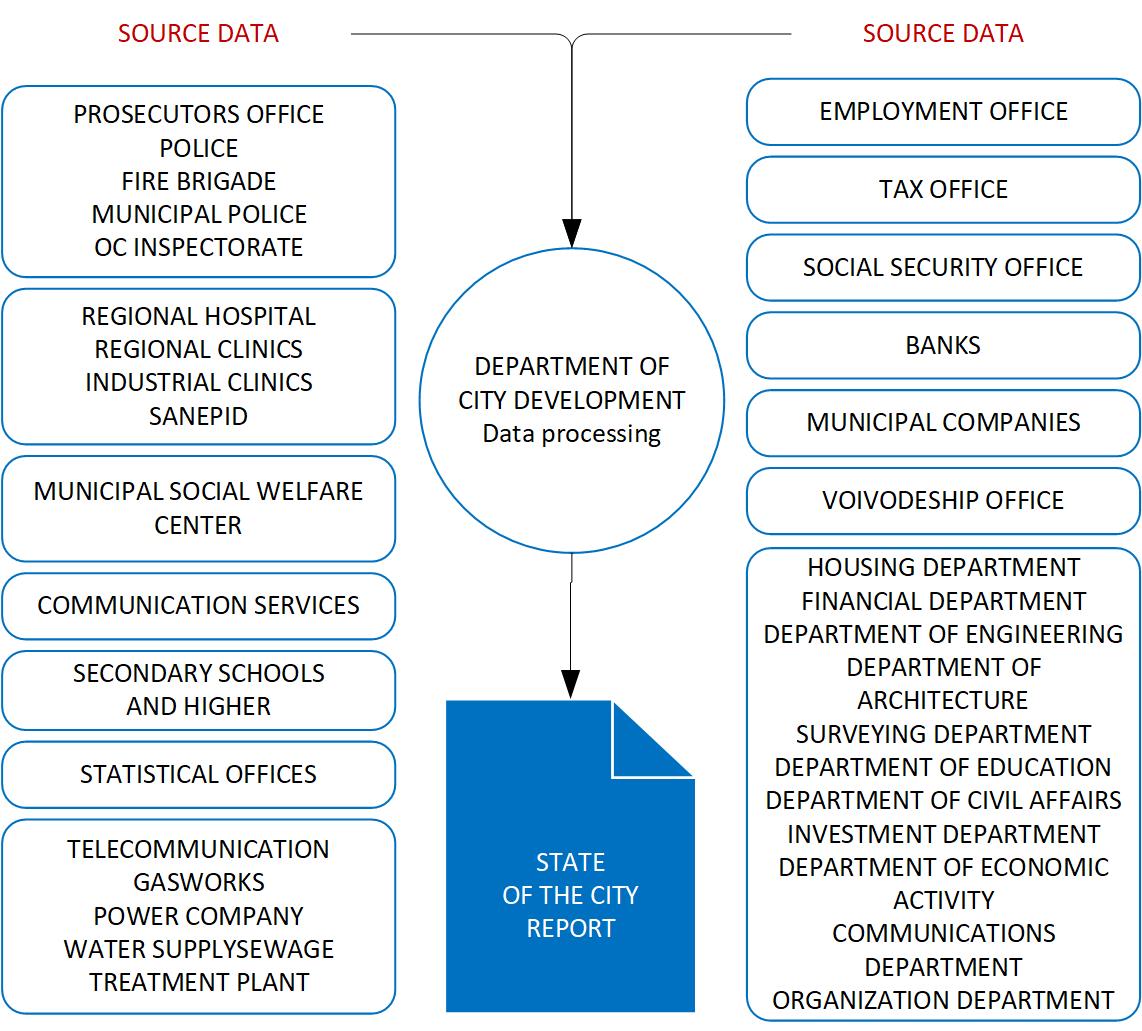
It was used by the City Development Convention to identify the strengths and weaknesses of the local self-government community as well as the opportunities and threats to its development. It was also used by urban planners and other experts involved in the development strategy and the study of the conditions and directions of the city’s spatial development. Moreover, it became an interesting source of information for Zgierz councils and residents. Today, it is an important archival document presenting the face of the city from the period of profound political changes.
Work on the report was carried out by the City Development Department. The information for the report came from individual departments of the municipal office, municipal services and organizational units, as well as many external institutions related to the life and functioning of Zgierz. The authors of the report made special efforts to ensure that the information presented was presented in a transparent manner and described in a language understandable to the average inhabitant. More attention was paid to the presentation of phenomena, trends and conclusions than to the publication of “dry”, extensive and difficult to understand, specialist data.
The structure of the content of the report, in its individual chapters, included a description of the past and present status as well as forecasts and predictions. Individual issues have been presented, as far as possible, in the national and regional context – in accordance with the principle: “Think globally – act locally”. This way of presentation facilitated the comparative assessment of social and economic phenomena, as well as the identification of cause and effect relationships.
In the mid-1990s, access to data on the functioning of the city was seriously hampered. A lot of information was simply not collected, and access to other information – dispersed in many institutions – was limited. At that time, many public institutions were not equipped with computers and did not process information in electronic form. For this reason, the collection and processing of data for the report required a significant amount of work. Moreover, there were more or less justified doubts as to the possibility of making information available and publicly disseminating.
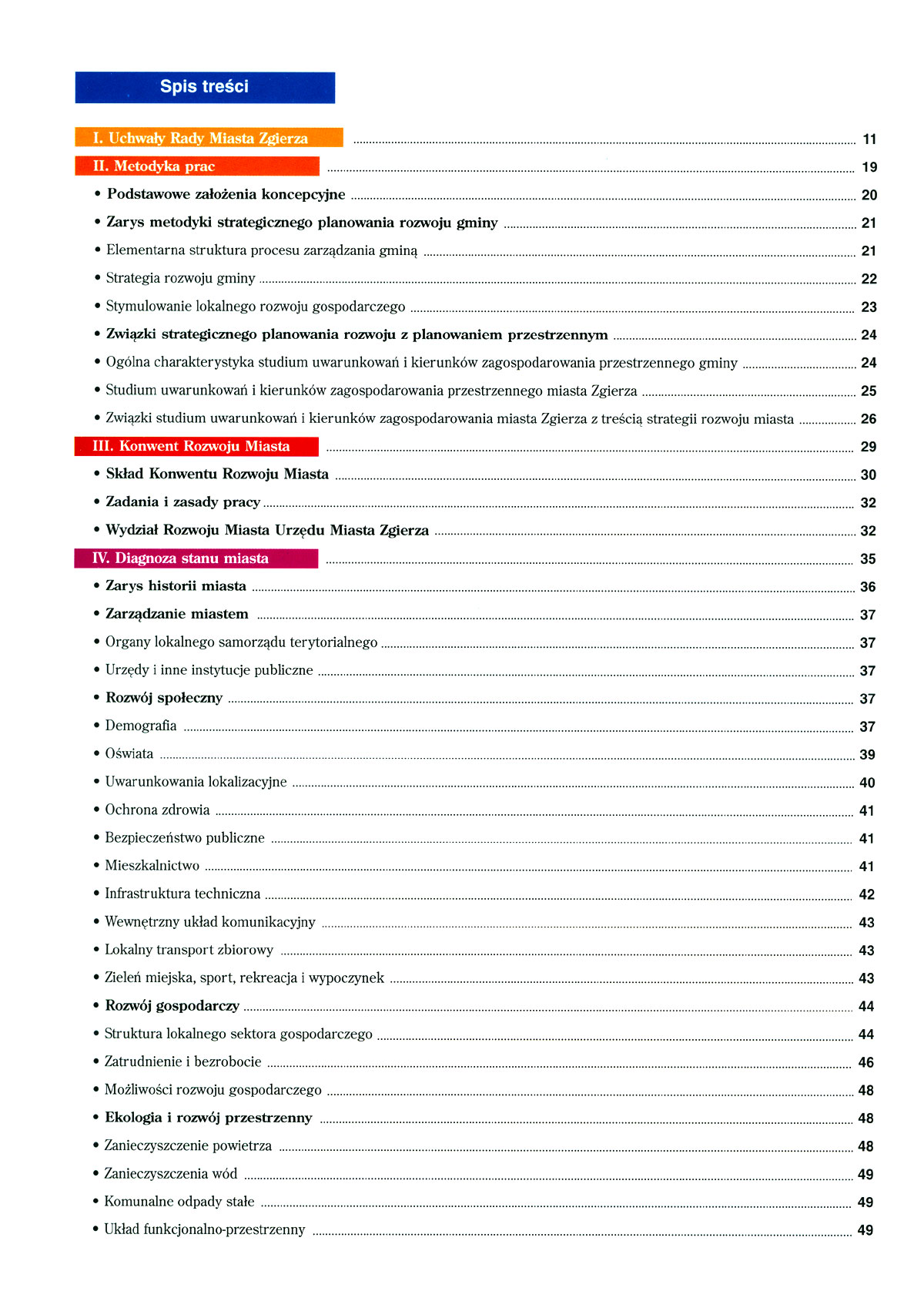
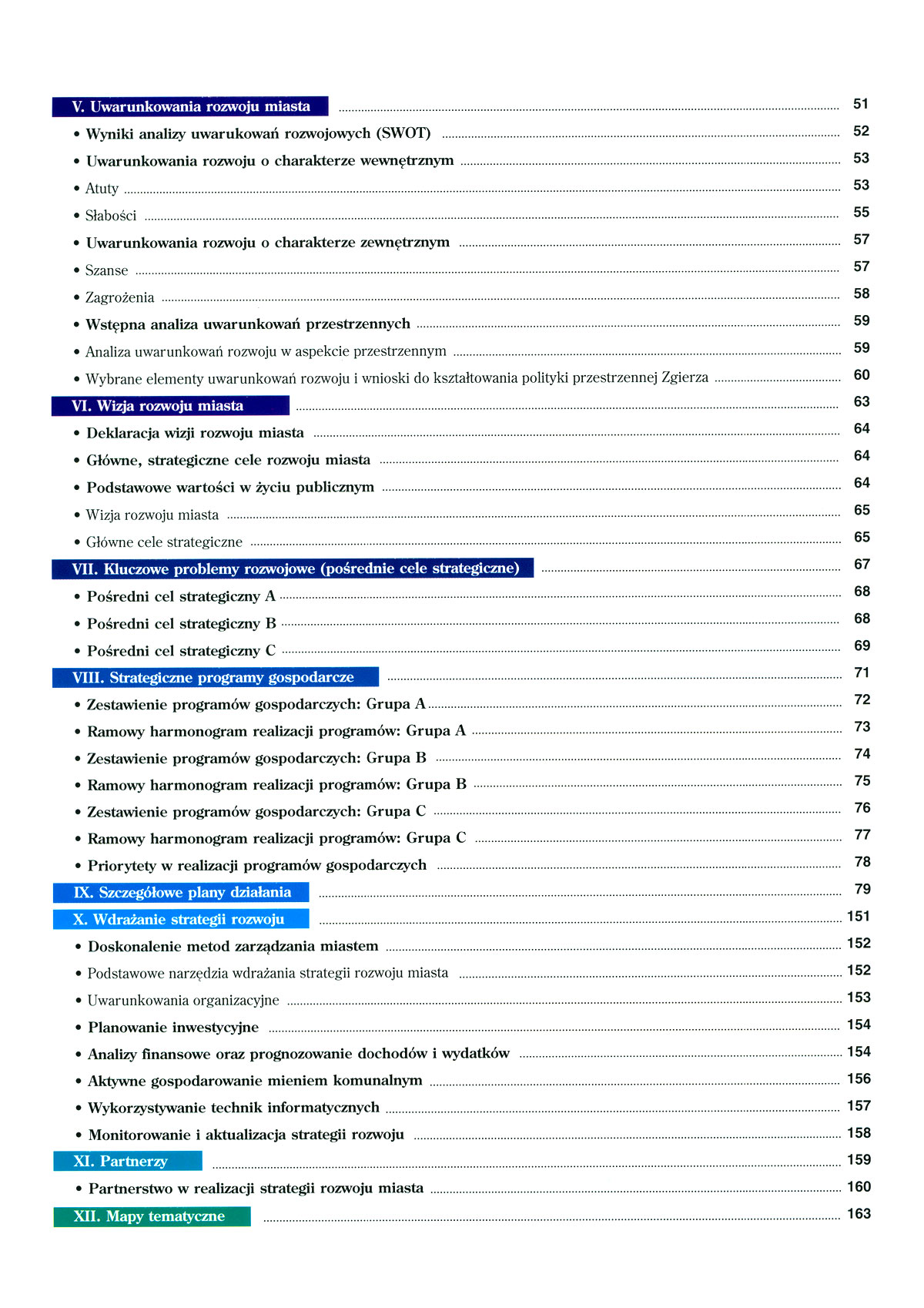
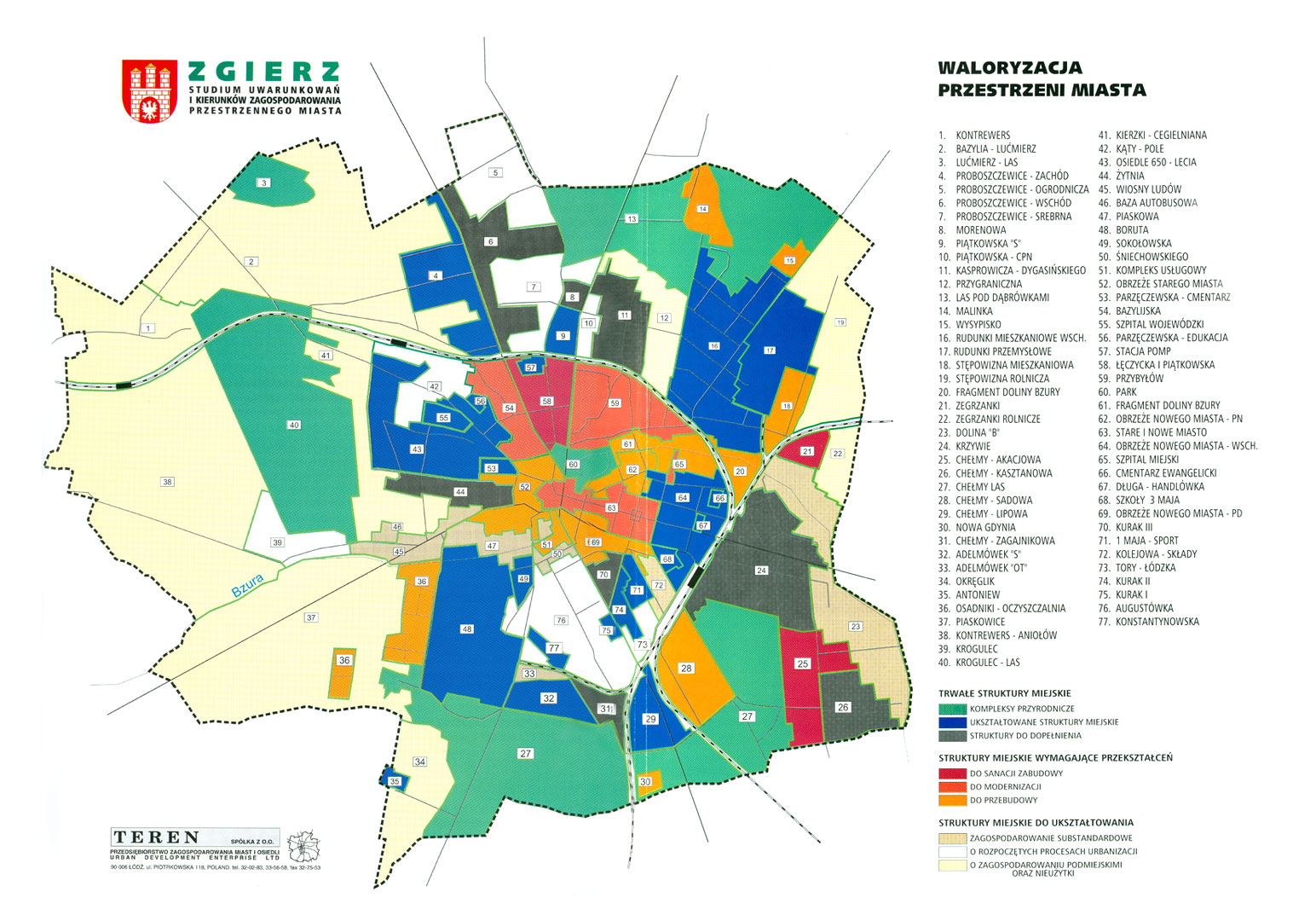
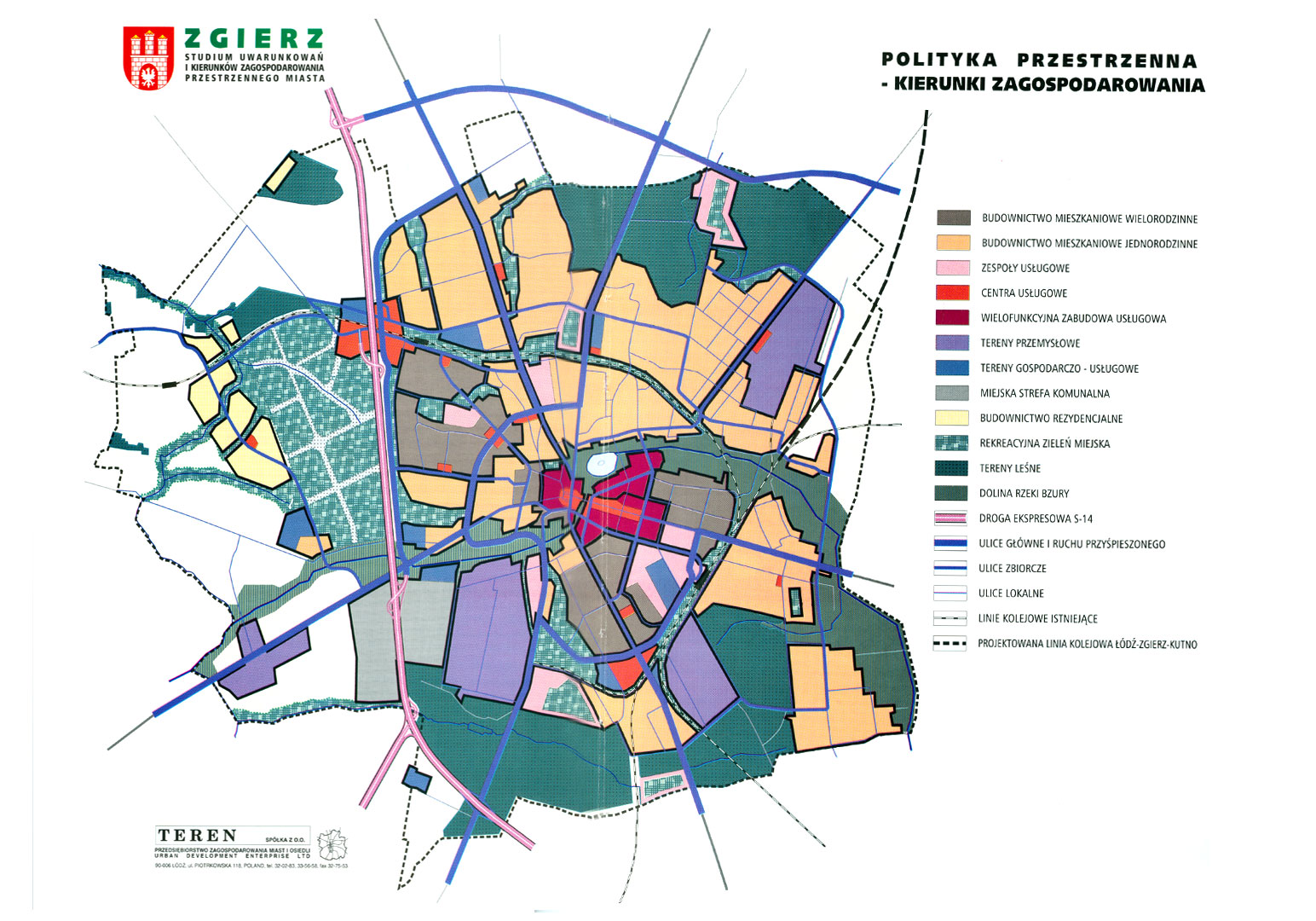
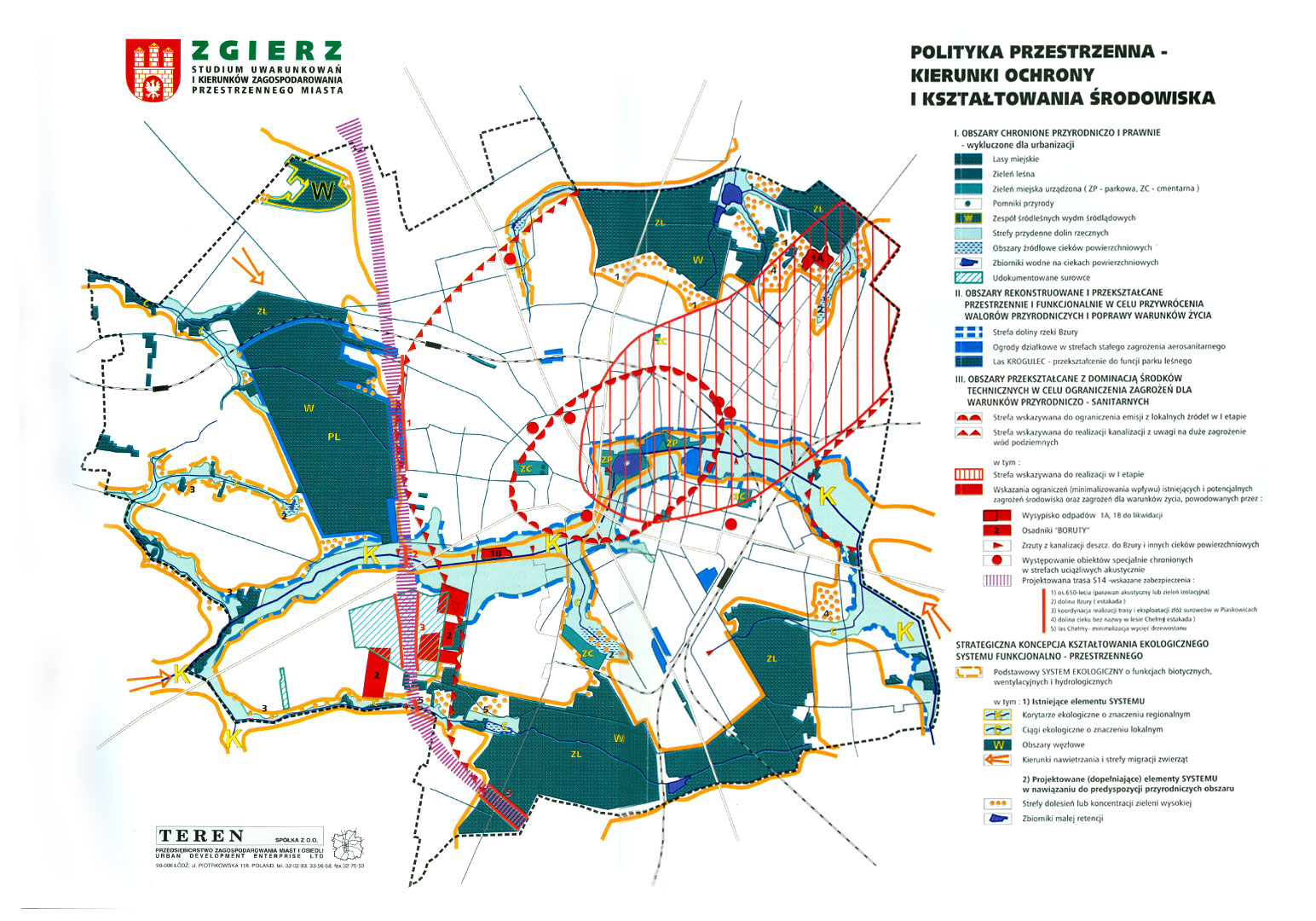
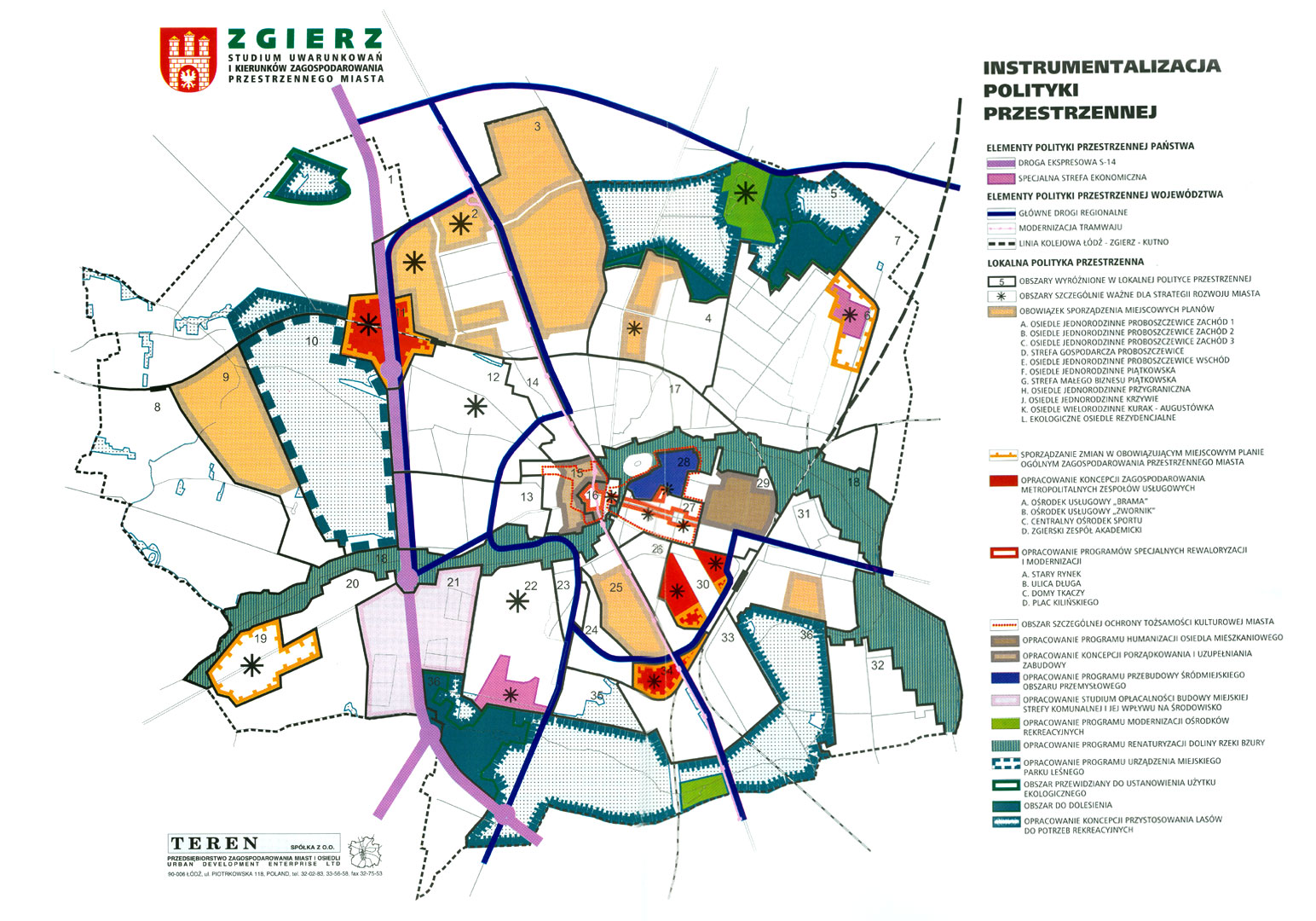
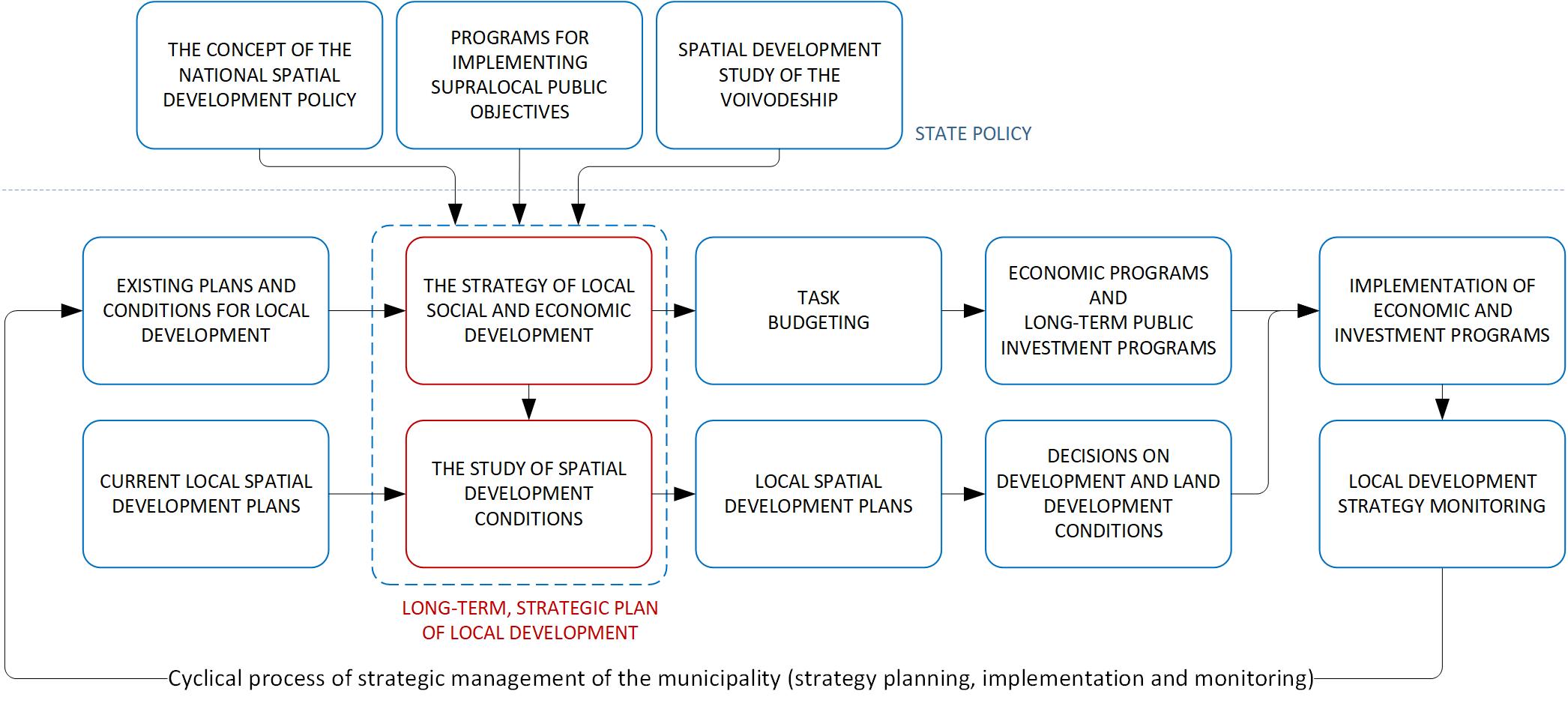
Work on the long-term development plan for the local government community in Zgierz lasted two years. The document entitled “Strategy for the development of the city of Zgierz” was its main part, defining the vision of the city’s development, areas of concentration of strategic activities, main and intermediate strategic goals and a set of economic programs, the implementation of which should contribute to the achievement of development goals. The content of the document focused on the social and economic life of Zgierz. The issues related to spatial management were described in the second, complementary document – “Study of conditions and directions of spatial development of the city of Zgierz”.
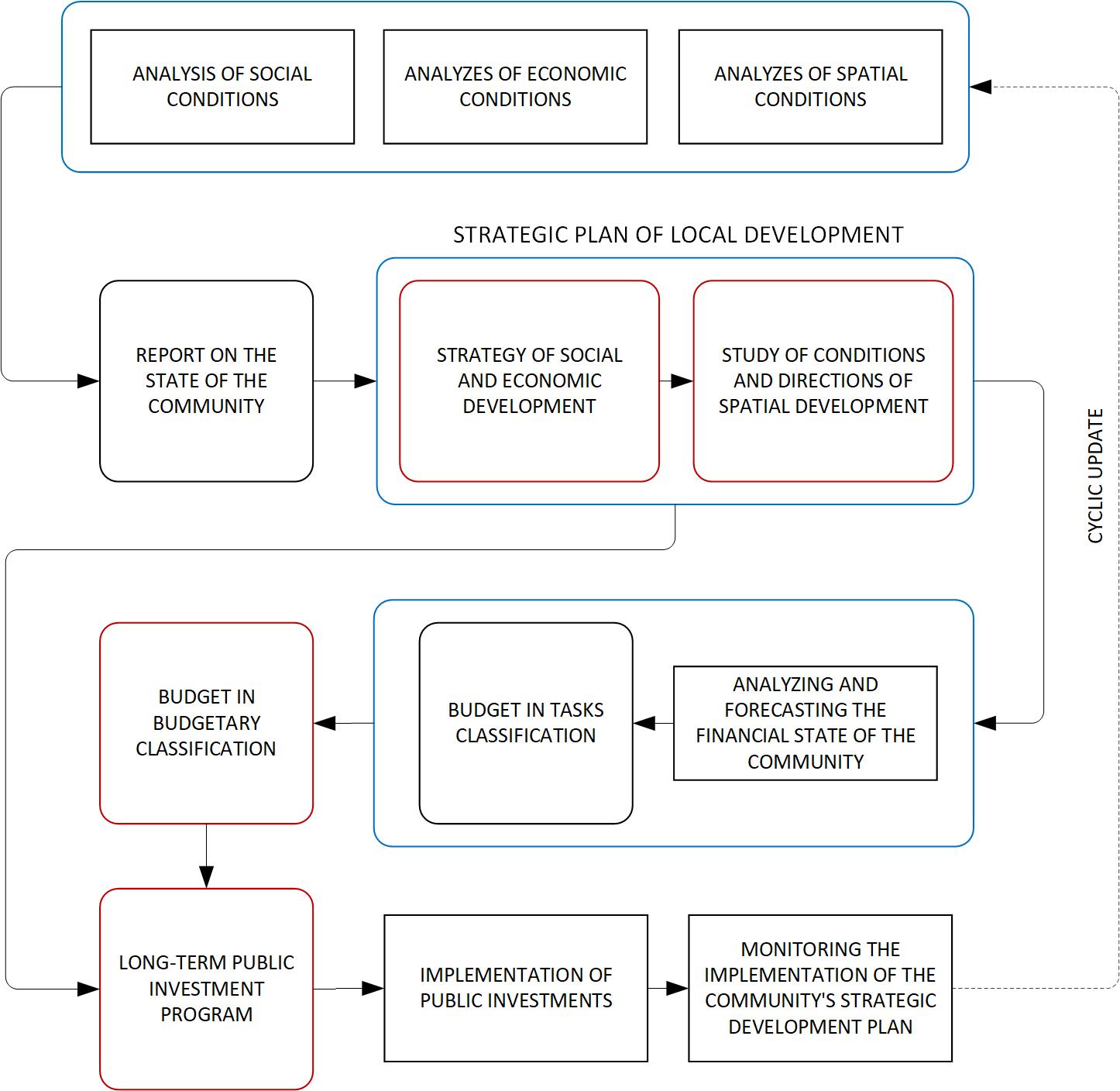 Większość strategicznych programów gospodarczych realizowana jest w trybie inwestycji publicznych, dlatego programy o takim charakterze zostały oznaczone w „Studium” stanowiącym podstawę kształtowania polityki przestrzennej i inwestycyjnej miasta. Poza programami o charakterze inwestycyjnym, sformułowano także programy, których realizacja przybierała formę pozainwestycyjnych przedsięwzięć projektowych. W strategii rozwoju zapisano również katalog podstawowych wartości etycznych i społecznych, które powinny stanowić fundament wszelkich działań podejmowanych w przestrzeni publicznej.
Główne cele strategiczne dla Zgierza zapisano następująco:
- Stworzenie przyjaznych warunków do życia oraz wzrostu zasobności miasta i jego mieszkańców.
- Wypracowanie pozytywnego wizerunku miasta, jako miasta nowoczesnego, sprawnie zarządzanego, bezpiecznego i przyjaznego.
- Ukształtowanie zdrowego i mądrego, obywatelskiego społeczeństwa.
- Stworzenie na obszarze miasta ładu przestrzennego oraz systemów nowoczesnej infrastruktury technicznej.
- Rewitalizacja centrum i parku śródmiejskiego oraz odbudowanie naturalnych zasobów przyrodniczych.
Strategia rozwoju miasta, przyjęta do realizacji uchwałą Rady Miasta z dnia 5 czerwca 1998 roku, miała szczególne znaczenie w jego historii. Była to pierwsza próba kompleksowego ujęcia zachodzących przemian, dokonania ich oceny oraz świadomego wyznaczenia kierunków dalszego rozwoju. Jej wartość polegała także na zaangażowaniu licznych przedstawicieli miejskich środowisk w proces analizy uwarunkowań oraz formułowania głównych kierunków rozwoju samorządowej wspólnoty. Nie była to autorska propozycja lokalnej władzy, ale efekt współpracy i porozumienia lokalnych grup społecznych, wspomaganych przez odpowiednich specjalistów i ekspertów.
The Spatial Development Act of July 7, 1994 introduced a new planning act in the local government – “Study of the conditions and directions of spatial development of the commune”. The Study did not have and still does not have the power of a local law act, but it was and remains an act of internal municipal management. In practice, this means that local spatial development plans (which are formal acts of local law) cannot be adopted in contradiction to the directives of the study.
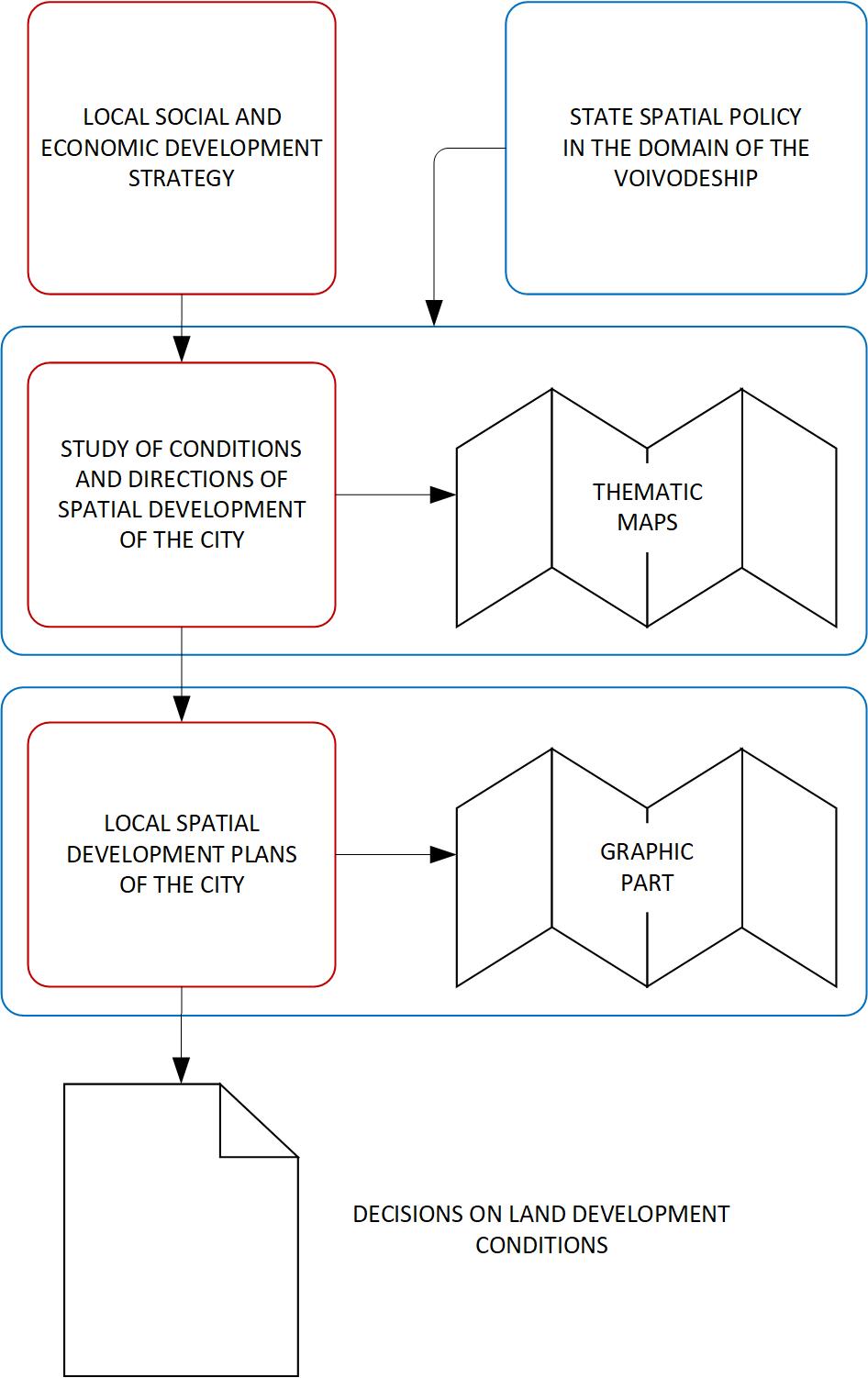
In the absence of detailed legal instructions on how to prepare it, the original approach to the study was varied. In some communes it was decided that it should cover only spatial issues, while in others it was assigned features of a strategic development plan.
The “Study of conditions and directions of spatial development of the city of Zgierz” has been linked to the process of planning social and economic development. Data on the city and the results of analyzes conducted in the process of strategic planning served, among others, urban planners preparing the Study for Zgierz. The content of the Study included references to the location of strategic economic programs, most often taking the form of investment projects. The practical significance of the Study in the structure of the long-term development plan consisted in shaping the content of local spatial development plans (constituting the basis for issuing decisions on land development and development conditions) in such a way as to enable the implementation of the strategic investment programs.
The Study adopted on June 5, 1998 was the basis for shaping and implementing the spatial policy in Zgierz in the years 1998-2003. It was a particularly important period due to the change in the rules of local spatial planning and management, new legal regulations, the adoption of the spatial development plan of the Łódź Voivodeship (2002) and the increase in investment involvement of the city authorities. The Spatial Development Act of 1994 was replaced by a new Act of March 27, 2003, reinforcing the importance of the study among local planning acts. The current record of Zgierz spatial policy along with digital maps is available in the Public Information Bulletin of the Zgierz City Hall.