Academic lectures

Objectives of cooperation 

Preparation of academic programs in the field of management, including lectures, exercises, study visits, work placements and other forms of education. Organizing and managing projects aimed to develop bachelor’s, master’s and MBA study programs, addressed to business staff, as well as to employees of various enterprises and public administration. Determining assumptions for new academic programs based on the requirements regarding the scope of the desired education, didactic limits, time limits, language requirements, ECTS scores, apprenticeships and the semester timetable.

Scope of the offer

  • Analysis of requirements regarding the scope of education
  • Analysis of teaching limits and language requirements
  • Analysis of time limits and required ECTS scores
  • Analysis of requirements for the content of lectures and exercises
  • Analysis of apprenticeship requirements
  • Analysis of requirements for master’s degree seminars
  • Collecting and systematizing source information
  • Development of the subject structure of the academic program
  • Determining the list of basic and major subjects
  • Development of the content of individual subjects
  • Development of syllabuses and tests
  • Development of a didactic schedules
  • Development of the apprenticeship program
  • Development of the final document with a description of the program
  • Development of a guidebook for students
  • Determining the number of semesters and teaching hours
  • Development of a project plan for launching an academic program
  • Determining the composition of the project team and allocating tasks
  • Establishing schedules and coordinating design work

Value for a customer

  • Substantively coherent and comprehensive academic program
  • Full compliance of the training program with the requirements
  • Variant proposals for the structure of the educational program
  • Uniform format of subject documentation
  • Carefully prepared plans of lectures and workshops
  • Professionally prepared project
  • Efficient coordination of the project work
  • Short deadlines for the implementation of the project tasks 

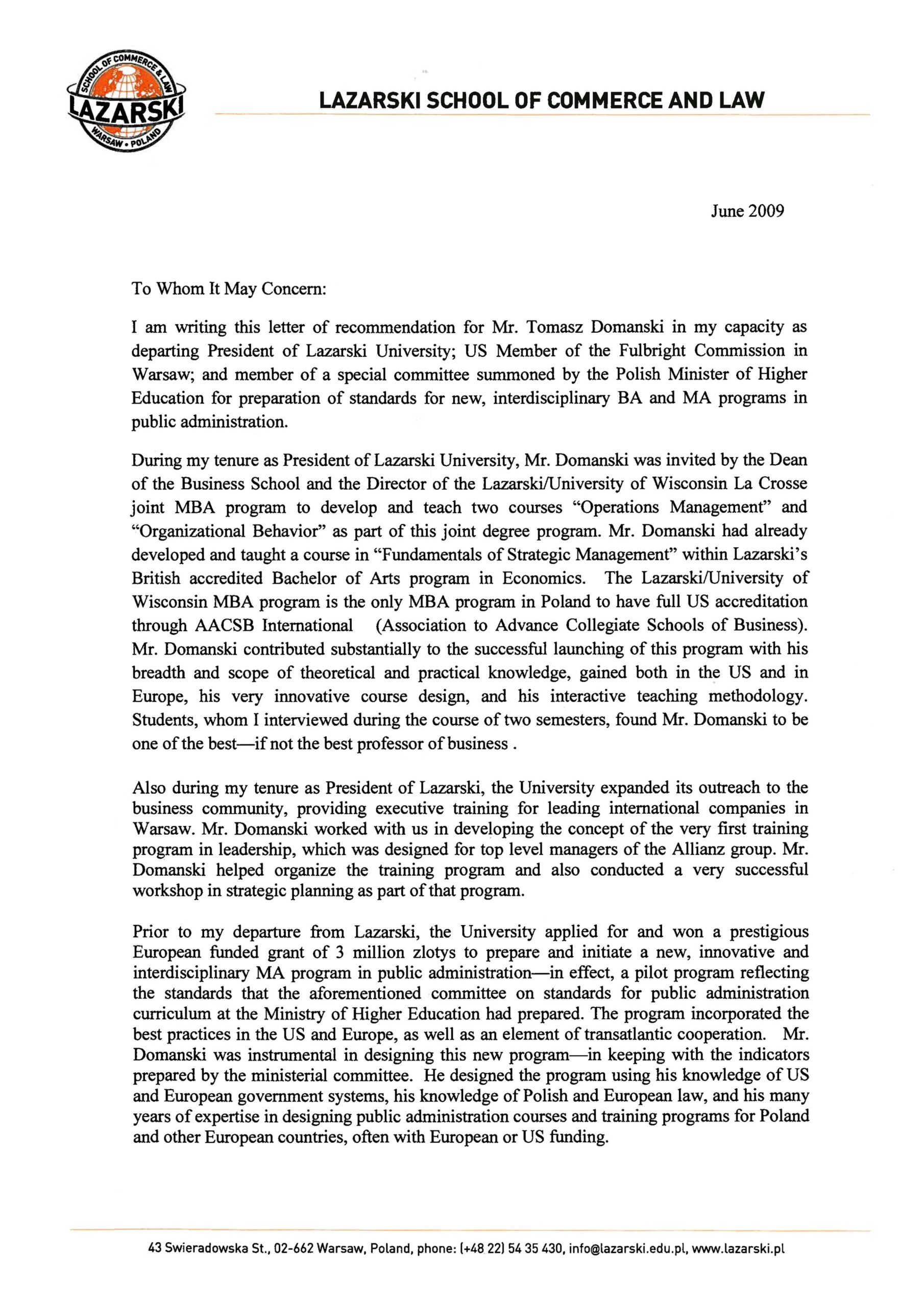
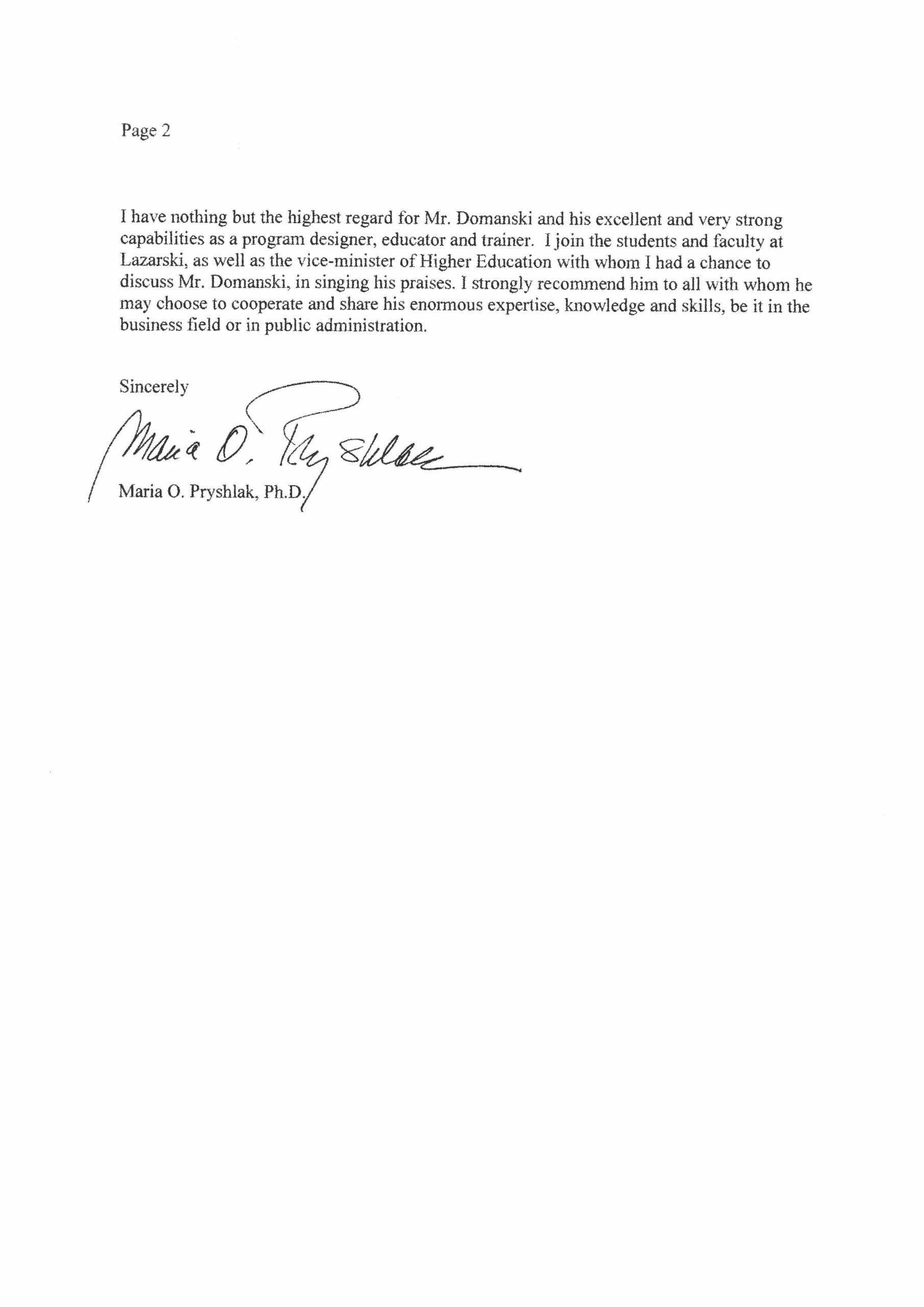
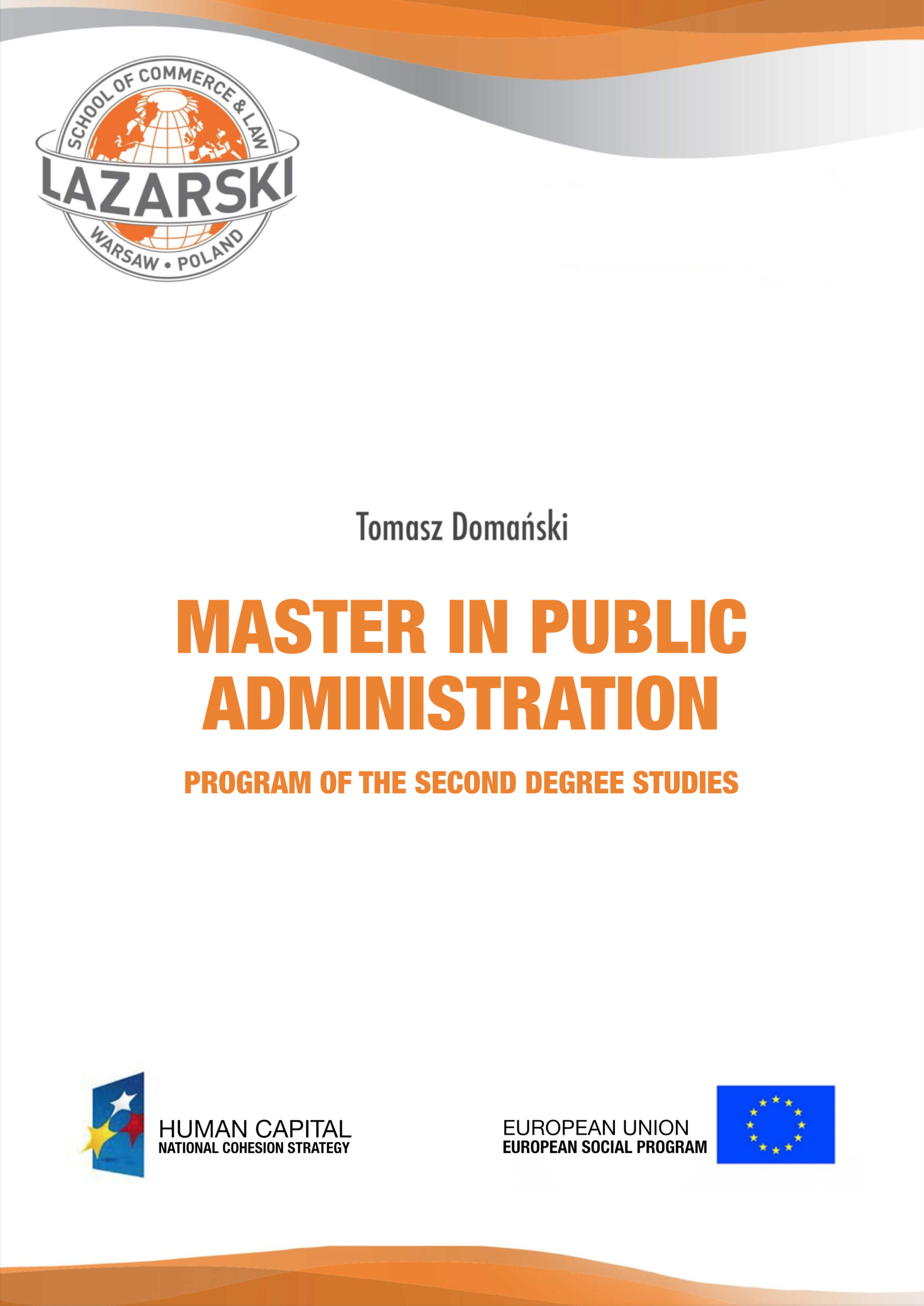
The brochures presented on the right side contain descriptions of academic programs prepared for The Lazarski University and the Academy of Finance and Business “Vistula” in Warsaw. The particular emphasis in the presented educational programs has been placed on the transfer of practical knowledge and skills, allowing graduates professionally conduct analyzes and solve real problems occurring in their professional environments.

An important feature of both programs is their international orientation, which is reflected in the adoption of universal management standards as the basis of education. In addition to hard issues related to methods and tools, they discuss psychological and emotional aspects related to human capital management in the work environment. The languages of instruction are Polish and English.

Objectives and structure of the course 

Introducing students to the field of strategic management, which charactezizes the highest level of an enterprise management. The subject focuses on presenting a theoretical lecture and engaging in practical exercises aimed at providing managerial skills needed to efficiently run a modern company in a demanding market and business environment. The acquired knowledge will allow students to understand the impact of macroeconomic and competitive forces, as well as factors related to the location of the company. It will also equip them with professional analytical and management tools, enabling formulation of corporate and business strategies and effectively implementing them. The overriding goal is to prepare the students to competently perform operational and managerial tasks in a modern company. 

Duration AssessmentLanguage
30 teaching hours
65% – lectures (9 sessions)
23% – group work (3 sessions)
12% – student presentations (2 sessions)
group projects – 60% (pass)
final exam – 40% (1.5 hours)
Polish or English

Content of the course

1. Introduction to strategic management

  • Basic issues:
    • Company and its stakeholders
    • Market and market segmentation
    • Sector and industry
    • Business model
    • Value Chain
  • Customer needs and their satisfaing
  • Strategic management in practice of a company
  • Development of vision and mission of a company
  • Strategic, tactical and operational goals

2. Company operation strategies

  • Strategies at the corporate level:
    • Vertical integration,
    • Diversification
    • Strategic alliances
  • Building a competitive advantage at the level of economic units
  • Building the company’s competitive advantage at the functional level
  • Total Quality Management – concept and techniques
  • Organizing and restructuring the company

3. Analyzes and strategic planning

  • Sources of a company’s competitive advantage
  • Analyzes of the macro-environment of the company
  • Analysis of the company’s competitive environment
  • Analyzes of the internal conditions of the company’s development
  • SWOT analysis, and cause and effect analysis
  • Formulating strategic goals
  • Formulating strategic action plans

4. Implementation and monitoring of the company’s strategy

  • Methodology of strategic planning and the content of strategies
  • Operational metrics, strategic goals and action plans
  • Strategy mapping and budgeting
  • Project in the strategic management system
  • Restructuring and managing organizational change
  • Monitoring and updating the company’s strategy

Expected learning outcomes

After completing the course, the student should be able to:

  • Explain what a “strategy” is and what it means in the practice of the company’s operation;
  • Identify groups of company stakeholders and explain what relationships bind them to the company;
  • Recognize the main differences between strategies formulated at the corporate, business and functional levels;
  • Determine how the company can build its competitive advantage over others;
  • Present the main elements of the planning process;
  • Distinguish strategic planning from strategic management;
  • Define roles and tasks of managers at various levels in the process of strategic management;
  • Discuss the terms: Value Chain, Matrix Value, Industry Life Cycle;
  • Practically use of strategic analysis tools;
  • Describe the principles of using operational activity measurement systems;
  • Develop strategy maps and balanced scorecards;
  • Distinguish between the technical and psychological aspects of the change management process;
  • Distinguish between the roles and tasks of leaders and managers;
  • Explain the main principles of restructuring and change management. 

Objectives of cooperation

Providing assistance to graduates of schools and universities in making employment decisions, as well as career development directions. Discussing the benefits and burdens of full-time employment and presenting the characteristics of employment in the economic sector and public administration. Presentation of the challenges that must be faced when deciding to start an independent business. Support in finding answers to the following questions:

  • Is a full-time job a stabilization and a symbol of success in life?
  • Is an own company a realized dream about freedom and fortune?
  • What does the modern labor market offer?
  • Can anyone run their own business?
  • Stay in my country or emigrate?
Form of trainingDurationWorking methods
Open or closed2-8 hoursLecture and consultation

Training program

  • Bright and dark sides of full-time employment
  • Where and how to look for a job?
  • Employment in business or in public administration?
  • Education for full-time work
  • Registered unemployment rate
  • Large, medium and micro-enterprises in crisis periods
  • Reasons for starting your own business
  • What industry should you start a business in?
  • Entry barriers to business
  • Business plan and business modeling
  • Organizing activities, i.e. demand-product-delivery
  • Investments and financing business activities 
  • P&L statement simulations
  • Company profitability ratios
  • What pays off and when?
  • Business conditions in Poland and in the world
  • Economic emigration – causes and directions
  • Quality of life in Poland and abroad
  • Who was born is for the full-time employment?
  • Who was born to run its own company?

Consultations and coaching

The training can be supplemented with individual or group consultations or coaching in the field of business management and organization. Consultations and coaching may be offered as a regular service provided by school career centres.

Trainings for business

Offer characteristics

“mini MBA” is a unique training program addressed to the middle and senior management in business. It provides sought-after knowledge and practical management skills that are necessary to effectively run and develop business in the conditions of global standardization of economic processes, growing competition and intensifying crisis phenomena. In a concise educational formula, it offers a rich package of competences necessary for every manager who wants to run a modern company professionally. 

Training of managerial competences is an attractive alternative to expensive, stationary academic programs such as Master of Business Administration (MBA). The topics and structure of the trainings that make up the “mini MBA” program have been developed on the basis of its author’s experience gained from many years of professional practice in modern, international business and consulting. The value of the offered program has been proven in numerous open and closed trainings organized for small, medium and large enterprises. In each case, it received the highest ratings from participants recruited from among the management staff of private and state-owned companies. It was also offered as an academic subject in study programs implemented in cooperation with the University of Wales and the University of Wisconsin.

Structure of the training program

The training program under the general name of “mini MBA” consists of three extensive modules that can be offered individually or in combination – as a scalable program for building managerial competences spread over time. The division of the program into three modules, with varying degrees of detail of the presented topics, allows for flexible adjustment of the content and form of training to the individual needs of the participants.

Training modulesDurationAdditional workshopTraining type
    Strategic management in business2 days ( 16 hours )1 dayOpen or closed
    Practical aspects of project management2 days ( 16 hours )1 dayOpen or closed
    Training of managerial competences5 days ( 40 hours )///Closed

Training program

A detailed training program in individual modules is presented in the brochure prepared for download. The first and second training modules can be extended by an additional workshop day, aimed at consolidating the presented knowledge and skills. In the case of closed training, an additional day may be dedicated to individual consultations devoted for analysis of problems occurring in the company using the training.

Training objectives

Lectures and workshops should allow you to understand the connections between numerous managerial functions performed at the strategic, tactical and operational levels of a company. After completing the training, participants will gain knowledge and skills that will allow them to:

  • Understanding what an “autonomous economic unit” is;
  • Learning and distinguishing different types of strategies in business;
  • Learning methods for effective planning and implementation of strategies;
  • Identification of standard elements of the strategic management process;
  • Assimilating the roles of leaders in the process of strategy planning and implementation;
  • Identification of company stakeholder groups and their impact on the company;
  • Identification of elements of the company’s business model;
  • Identification of the company’s process structure;
  • Understanding the practical importance of the company’s value chain;
  • Practical use of the product and industry life cycle model;
  • Practical use of the portfolio analysis model;
  • Assimilation of analytical methods used to study the company’s environment;
  • Strategy mapping and construction of operational metrics;
  • Constructing balanced scorecards;
  • Formulating strategic action plans and strategy budgeting;
  • Efficient project management based on the PMBOK and Prince2 methodologies;
  • Designing and optimizing business processes and procedures;
  • Designing and optimizing organizational structures;
  • Professional change planning and change management;
  • Conscious shaping of corporate governance;
  • Understanding the importance of strategic thinking.

The program is an extended version of the “Strategic management in business” training. The closed training formula allows you to adapt its content to the specificity of the industry in which the company operates and its business model. An important advantage of this formula is also the possibility for the company to obtain free consultations related to the issues covered by the training.

The working methods used during the training allow for easy assimilation of both theoretical content and practical skills. Lectures are clear and richly illustrated with multimedia presentations. Workshops are conducted with the help of case studies, outlines, forms and spreadsheets. Professional terminology is presented in Polish and English. The optimal size of the group of participants, allowing for comfortable and effective conduct of workshops, is 10-15 people. This reservation is irrelevant if the training is limited to the lecture part only. 

Cooperation objectives 

Providing practical skills in organizing, planning, implementing and closing a project, allowing to minimize project failures, in particular:

  • Presenting the project as a tool for implementing strategic action plans,
  • Presentation of the key elements of the popular Prince2 and PMI-BOK methodologies,
  • Detailed presentation of project management processes and sub-processes,
  • Providing practical skills in the field of:
    • Organizing the project and the project team,
    • Calculating the profitability of the project,
    • Product-based planning,
    • Project budgeting,
    • Project risk management,
    • Project quality management,
    • Analysis of project stakeholders and the project’s relationship with the environment,
    • Project communication,
    • Keeping project documentation.
  • Presentation of the tasks, organization and tools of the project office,
  • Discussion of the main causes of project failures.
Form of trainingDurationMethods of work
Open or closed1-3 days (8-24 hours)Lectures and workshops

Training program

The training program includes six extensive thematic blocks and workshops, which are described in detail in the brochure presented here. The framework scope of the training covers the following issues:

  • An outline of the history of project management
  • The concept of project and project management
  • Basic dimensions and project features
  • Project life cycle vs. Product lifetime
  • The main elements of the PM-BOK and Prince2 methodology
  • Organization of the project team
  • Process model of project management
  • Project products
  • Quality management in the project
  • Business justification for the project
  • New product – Profit and loss account
  • Profitability of operating activities – ratios
  • Project payback period – loss of value of money over time
  • Project risk management
  • Controlling project implementation stages
  • Task groups and work packages
  • Product follow-up diagram vs. Project network diagram
  • Project tasks schedule
  • Principles of project budgeting
  • Organization and archiving of project documentation
  • Project supervision and support
  • Project Management Office (PMO)

Effects of the training

  • Acquisition of basic definitions, concepts and concepts relevant to technology audit
  • Getting to know the structure of the technological audit process
  • Distinguishing the division of roles and responsibilities in the process of technological audit
  • Acquisition of the ability to cooperate with the management staff of the audited company
  • Assimilation of the rules of documenting and reporting the course of a technological audit
  • Identifying key functional areas of the company and the principles of assessing their efficiency
  • Identifying the company’s primary stakeholder groups and understanding their impact on management decisions
  • Identifying elements of the company’s business model and the basic process structure of operational activities
  • Ability to use the concepts of the value chain, product life cycle and portfolio analysis in practice
  • Acquisition of methods for studying the macroeconomic and competitive environment of the company
  • Acquisition of the ability to set strategic goals, map strategies, describe goals with measures and their cascading
  • Acquisition of the ability to design strategic action plans, budgeting and monitoring the strategy
  • The ability to identify strategies at the corporate level of autonomous economic units and at the functional level of the company
  • Acquisition of knowledge and skills in the field of project management based on the PM-BOK and PRINCE2 methodologies
  • Learning the principles and tools for managing change
  • Getting to know the roles of managers in shaping the organizational order and corporate culture of the company in the period of transformation

Cooperation objectives 

Introduction to the issue of technological audit, which is the basic stage of the process of strategic company management, and presentation of the concepts, methods and tools appropriate for this field. Acquisition of the ability to identify negative phenomena and their causes within the company and in its environment, limiting the possibilities of its development and building a strong competitive position on the market. The training is addressed to middle and senior management of enterprises, as well as to other organizations.

Form of trainingDurationMethods of work
Open or closed1-3 days (8-24 hours)Lectures and workshops

Training program

Technological audit in the process of strategic management

  • Basic definitions and terminology
  • Technological audit as an element of the company’s strategic management process
  • Characteristics of the strategy at the functional level of the company
  • Defining the company’s business model
  • The concept of the value chain and its practical use
  • Business process and process management
  • Mapping of business processes and operating procedures
  • Basics of the analysis of the organizational structure of the company

Technological audit implementation methods and tools

  • Management by objectives and the measures of strategy
  • Analyzing the company’s competitive environment (CSF, PEST, 5Forces)
  • Portfolio analysis and product life cycle analysis (BCG, PLC)
  • Developing a new product for the company’s competitive advantage
  • Analyzing cause and effect relationships (SWOT, 5M)

Technological audit in the context of organizational change management

  • Project management – PMI BOK vs. Prince2
  • Designing organizational structures and restructuring
  • Basic change management models
  • Resistance and methods of eliminating resistance
  • The roles of leaders and managers in change management
  • Communication and shaping corporate governance

Expected effects of the training

  • Acquisition of basic definitions, terms and concepts relevant to technology audit
  • Getting to know the structure of the technological audit process
  • Distinguishing the division of roles and responsibilities in the process of technological audit
  • Acquisition of the ability to cooperate with the management staff of the audited company
  • Assimilation of the rules of documenting and reporting the course of the technological audit
  • Identifying key functional areas of the company and the principles of assessing their efficiency
  • Identifying the company’s primary stakeholder groups and understanding their impact on management decisions
  • Identifying elements of the company’s business model and the basic process structure of operational activities
  • Ability to use the concepts of the Value chain, Product life cycle and
  • Portfolio analysis in practice
  • Acquisition of methods for studying the macroeconomic and competitive environment of the company
  • Acquisition of the ability to set strategic goals, map strategies, describe goals with measures and their cascading
  • Acquisition of the ability to design strategic action plans, budgeting and monitoring the strategy
  • The ability to identify strategies at the corporate level of strategic business units and at the functional level of the company
  • Acquisition of knowledge and skills in the field of project management based on the PM-BOK and PRINCE2 methodologies
  • Learning the principles and tools for managing change
  • Getting to know the roles of managers in shaping the organizational order and corporate culture of the company in the period of transformation

Cooperation goals

Presentation of the basic concepts, terms and methods of organizational change management, with particular emphasis on its psychological and emotional side. Presentation of professional methods of planning organizational change, ways of coordinating it and overcoming the natural resistance of employees. The training is addressed to everyone who intends to acquire practical knowledge and skills in the field of managing a modern company, and in particular to:

  • Middle and senior management of enterprises,
  • Managers of projects of strategic importance to the company,
  • Employees of strategy and marketing departments,
  • Reserve management staff.
Form of trainingDurationMethods of work
Otwarte lub zamknięte1 or 2 days (8-16 hours)Lectures and workshops

Training program

  • The importance of organizational changes (transformation and restructuring of the company)
  • Relationship between the strategic plan and planning organizational change
  • Basic concepts of organizational change management
  • Basic types of restructuring processes
  • Distinguishing between technical and psychological aspects of change management
  • Organizational change management process structure
  • Organizational change plan – content and planning principles
  • Change management team vs. project teams
  • Participants of the changeŁ sponsor, change agent, managers, employees
  • A capital resource plan in the change management process
  • Passive attitudes in the change management process and their causes
  • Psychological reactions of employees to changes
  • Individual approach to employee change plan
  • Achieving awareness, understanding, acceptance and commitment to change
  • Social engineering in the process of managing organizational change
  • Ten strategies for effectively engaging in change
  • Communication in change management – principles, methods and goals
  • The roles of leaders and managers in the change management process
  • Principles of shaping the right corporate culture
  • Key success factors in the change management process
  • Common causes of change failure

Workshop part

  • Identifying key strategic projects
  • Organizational change planning
  • Communication planning in the process of change
  • Setting the organizational change management team

Expected effects of the training

  • Acquisition of basic concepts and terms related to change management
  • Acquiring the ability to distinguish between the technical and emotional side of change
  • Acquisition of the ability to identify the sources of employees’ resistance to changes
  • Getting to know the methods of analyzing the degree of employees’ readiness for changes
  • Getting to know the methods of motivating and engaging employees in changes
  • Learning how to avoid failures in implementing changes
  • Understanding the roles of leaders and managers in the change process
  • Understanding the role and assimilating the tasks and working methods of the change agent
  • Learning the principles of effective communication in the process of introducing changes

Cooperation objectives

Transfer of practical knowledge and professional experience in the field of strategic management, in the mode of direct cooperation with company employees, consisting in solving real tasks related to their professional practice. Developing employees’ competences in the field of strategic analysis and planning, management by objectives, process management, planning and project management as well as planning and managing organizational change. 

Scope and forms of cooperation

FormScope of cooperation
Business coachingThe program is addressed to outstanding workers and middle management. It is carried out in the form of individual meetings devoted to building competences related to the sphere of strategic management in business. 
Group coaching The program is addressed to small teams of employees and managers. Meetings with the group are devoted to improving managerial competences by analyzing the group’s tasks and methods of work in its professional environment.
Executive coachingThe program is addressed to top management. The meetings are devoted to solving real problems related to the sphere of planning and strategic management, project management and organizational change management planning. 

Consultation meetings are held at the client’s premises, in accordance with the agreed schedule and work plan. The culmination of the program is the final report, specifying the assumed goals and achieved effects, a description of the program implementation, an opinion on the student and recommendations on the directions of his further education. 

Stages of cooperation

  • Signing a confidentiality agreement
  • Defining educational needs and the scope of counseling assistance
  • Agreeing on the agenda of consultation meetings and the work plan
  • Setting the meeting schedule
  • Agreeing the rules of communication and terms of cooperation
  • Implementation of the program as agreed
  • Controlling program effects
  • Preparation of the final report


Competences and ethical attitudes of employees are invaluable capital of every company. Very often it is its only source of competitive advantage on the market. Acquiring and maintaining this capital is one of the most important goals of professional human resource management. Organizations that build their strength based on respect and care for employees are usually well prepared for difficult times, when extraordinary mobilization and loyalty to the company is necessary. 

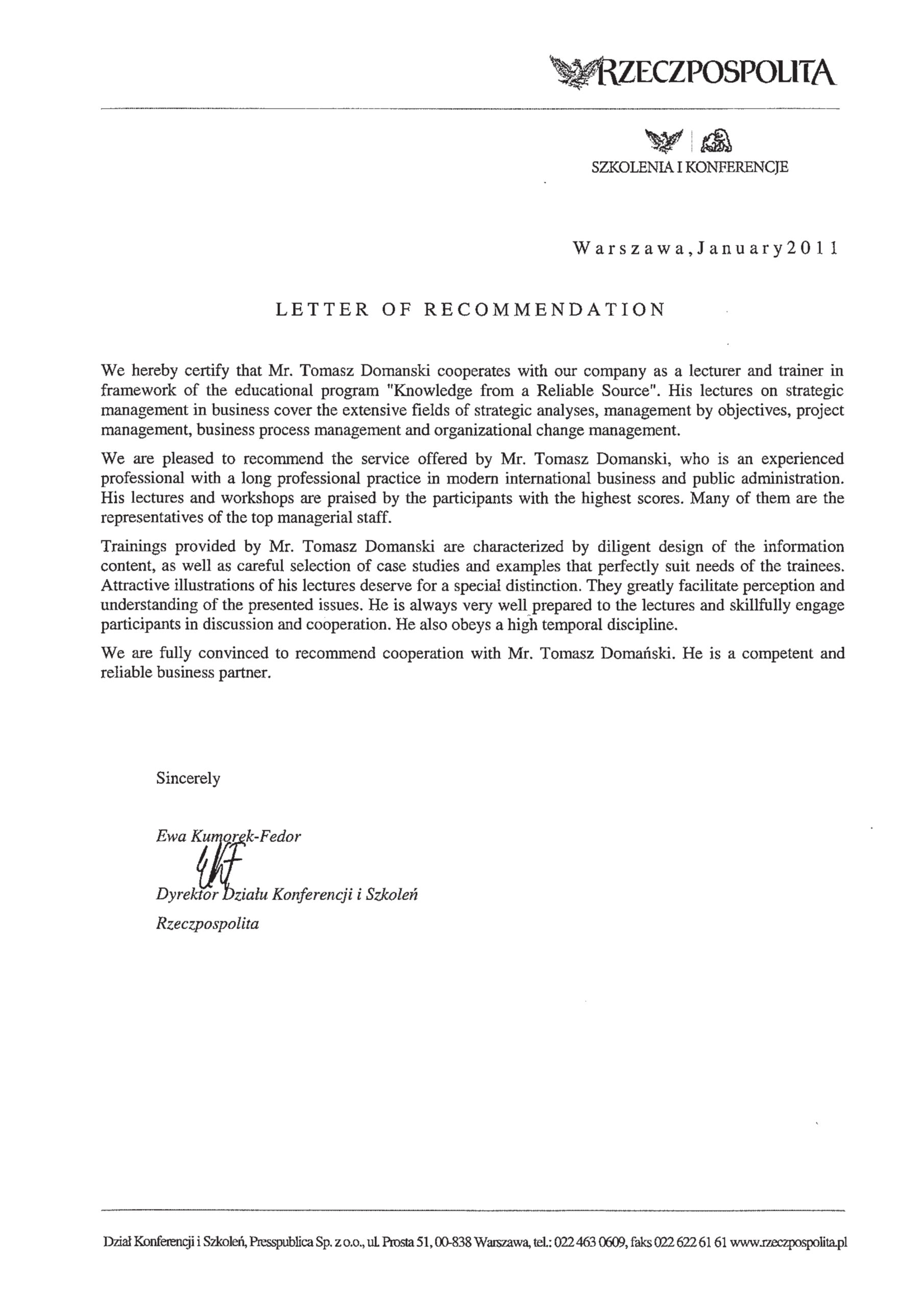
Tomasz is a detail-oriented manager who is able to design, set up, run and supervise processes carefully without losing sight of the strategic objective. Tomasz was a mentor to me and it has been a real pleasure to collaborate with him in the fields of Business Intelligence and Strategy at PTC. I also learned a lot from Tomek outside of the professional context as he shared and taugh me his passions i.e.: Jazz, Photography and Leonardo da Vinci.

Ghislain d'Adesky

Telio Group

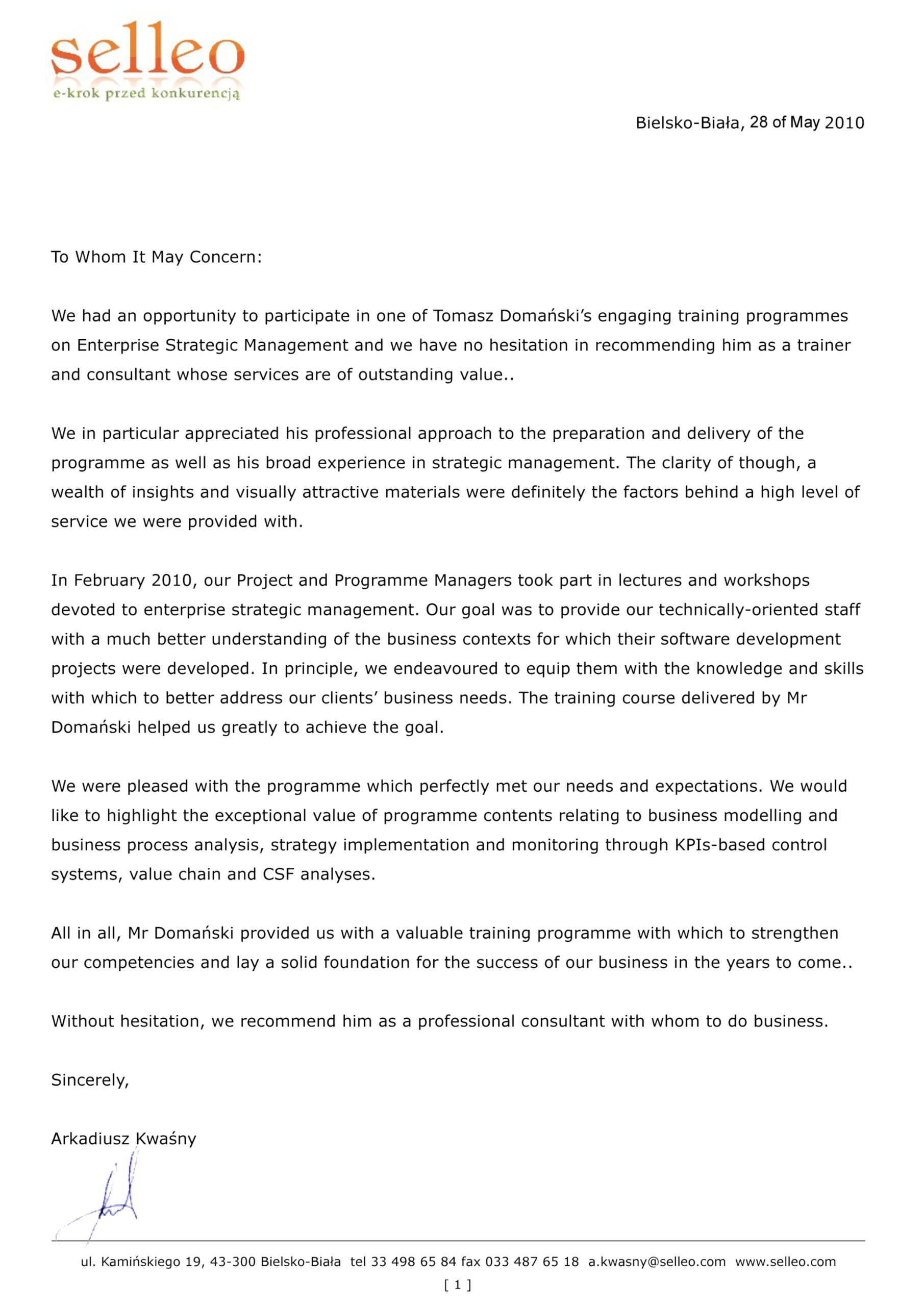
We had an opportunity to participate in one of Tomasz Domański’s engaging training programmes on Enterprise Strategic Management. We in particular appreciated his professional approach to the preparation and delivery of the programme as well as his broad experience in strategic management. The clarity of though, a wealth of insights and visually attractive materials were definitely the factors behind a high level of service we were provided with. We have no hesitation in recommending him as a trainer and consultant whose services are of outstanding value.

Arkadiusz Kwaśny

Games 4Experience

Wisdom can be acquired alone through study and reflection, but character is only developed in everyday situations that force you to make choices between the available alternatives and the temptations of life.

Brian Tracy

Training for public administration

Objectives and addressees of the training

Presentation of methods and tools used by local authorities for strategic planning of local sustainable development, understood as a balance between social, economic and spatial development. The training focuses on the issues of planning and programming activities related to stimulating the local economy, meeting the collective needs of residents, spatial planning, nature protection and investment and financial policy of local government units. The training is addressed to people professionally related to local government at the commune (city), poviat or voivodeship level.

Form of trainingDurationMethods of work
Open or closed1 or 2 days ( 8-16 hours )Lectures and workshops

Training program

Lecture part

  • Transformation of the Polish system
  • Clients and stakeholders of the state power
  • Principles of stimulating sustainable local development
  • The special importance of the local economy
  • Methodology of strategic planning of local development
    • Methods of analysis of local development conditions
    • Social consultations and professional consulting assistance
    • Formulating a report on the state of the commune / city / province
    • Setting strategic goals and describing them with measures,
    • Mapping strategies and creating balanced scorecards
    • Forecasting the finances of a local government unit
    • Public investment programming and performance budgeting
    • Monitoring and updating local development strategies
  • Sources of financing public investments
  • Project management in local government units
  • Process management and designing organizational structures
  • Shift management
  • The use of information technologies in local government

Workshop part

  • Identifying local authority stakeholders, their needs and expectations
  • Formulating the composition of the Commune / City / Voivodeship
  • Development Convention
  • Methods of analysis of conditions for the implementation of strategic development programs
  • Setting and cascading strategic goals and planning tasks
  • Strategy mapping and building a balanced scorecard
  • Long-term programming of municipal investments
  • Project planning and management techniques

Training effects

The training allows you to understand the links between numerous managerial functions and decisions taken at the level of local legislative and executive authorities. In addition to issues related to planning, it devotes a lot of space to the issues of budgeting and project implementation. Strategic planning in the public sphere makes sense only when the established plans are consistently implemented.

Objectives and addressees of the training

Introducing participants to the issues of strategic management in public administration units and presenting the principles, concepts, methodological solutions and tools appropriate for this field. Presentation of public administration units as organizational structures that should use proven management tools in order to raise their efficiency to a higher level and reduce costs. Realizing that strategic management is the basic way to achieve priority development goals, thanks to the optimal use of available resources.

The training is tailored to the needs of people professionally connected with both central and local public administration: voivodship government administration, as well as local government administration at the level of commune, poviat and region. The recipients of the training are in particular:

  • Councilors of communes, poviats and voivodeship assemblies,
    presidents of cities, mayors and commune heads,
  • Senior and middle management of the central and provincial government administration,
  • Senior and middle management of the commune, poviat and regional administration,
  • Employees of strategy departments and project managers,
  • Employees of institutions cooperating with central and local government administration,
  • Training and consulting companies.
Form of trainingDurationMethods of work
Open or closed1 or 2 days ( 8-16 hours)Lectures and workshops

Training program

Lecture part

  • Customers and stakeholders of state authorities
  • The specificity of strategic management in public administration
  • Setting the strategic goals of an administrative unit
  • Establishing strategic action plans
  • Strategy mapping and setting strategic metrics
  • Strategy cascading to the operational level
  • Create balanced scorecards
  • Budgeting of the action strategy
  • Long-term programming of public investments
  • Project management in the public sphere
  • Mapping and optimizing work processes
  • Optimization of organizational structures and restructuring
  • Organizational change management
  • Roles of leaders and managers in strategic management

Workshop part

  • Identifying power stakeholders and their needs and expectations
  • Identifying major and supporting functional areas
  • Setting and cascading strategic goals and planning tasks
  • Mapping the strategy and creating its monitoring systems
  • Project planning and management
  • Group work techniques and TQM tools

Training effects

  • Mastering the terminology related to the field of strategic management
  • Understanding the importance of strategic management in public administration
  • Acquisition of the ability to identify power stakeholders and their needs
  • Mastering the methodology of professional strategic planning
  • Mastering strategy mapping skills
  • Mastering the ability to create strategic measures
  • Assimilation of the principles of management by objectives
  • Mastering the principles of strategy budgeting
  • Mastering the principles of long-term programming of public investments
  • Mastering the principles of planning and managing projects and programs
  • Mastering the principles of mapping and optimizing work processes
  • Mastering the principles of planning and managing organizational change

Training objectives  

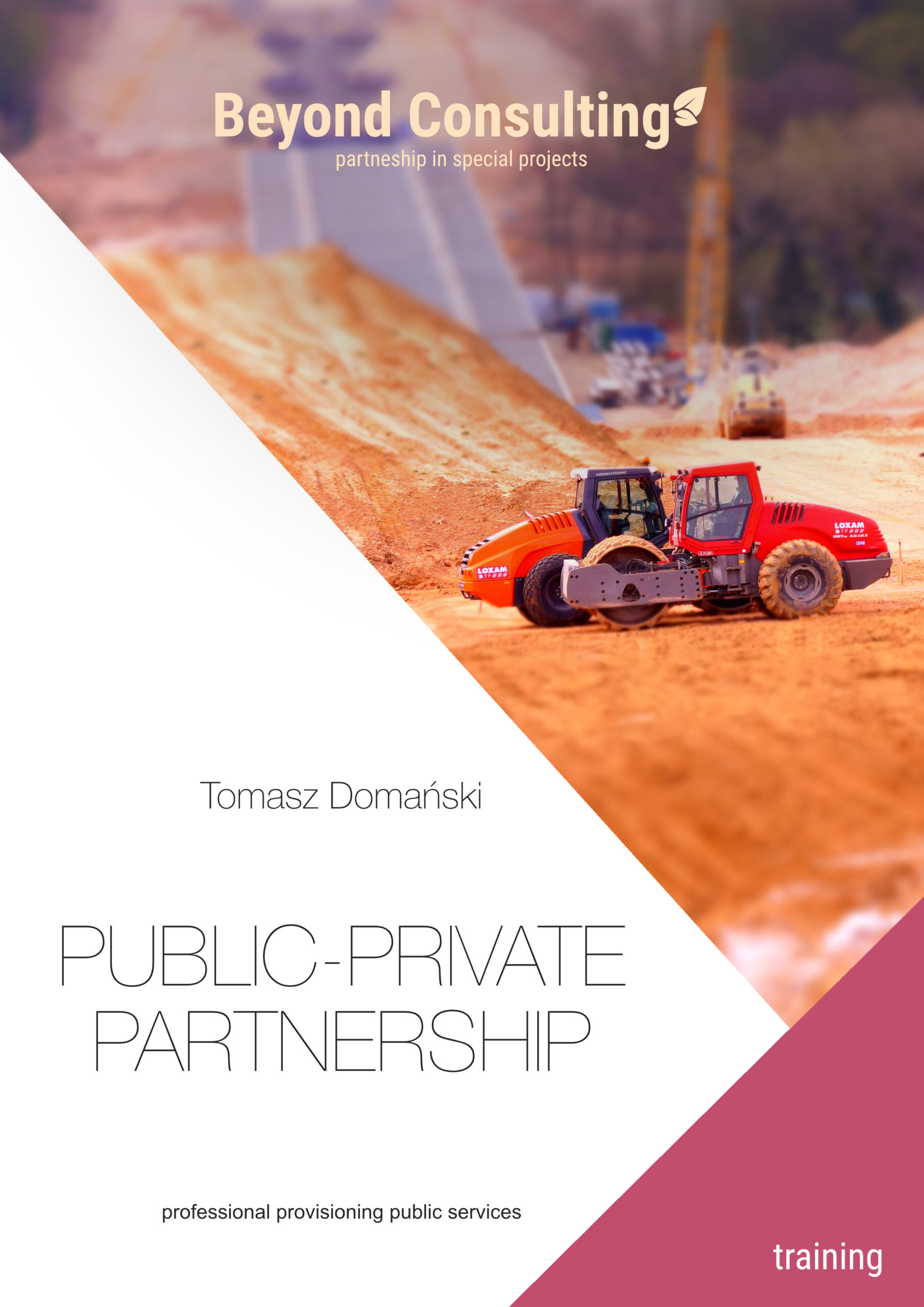
Discussion of the essence of public-private partnership (PPP) and the possibility of using it in the municipal services sector. Transfer of knowledge on legal and organizational solutions used by central and local government administration as a basis for establishing cooperation with private enterprises. Sensitization to the benefits and risks associated with entrusting public services to private economic entities. Presentation of PPP on domestic and foreign examples.

Form of trainingDurationMethods of work
Open or closed1 day( 8 hours )Lectures and workshops

Training program

Lecture part

  • The essence of public-private partnership
  • Service Agreements
    • Management contracts
    • Leasing
    • Concessions
    • BOT contracts
    • Transfer of ownership of municipal property
  • Public-private joint ventures
  • Benefits and threats of public-private partnership
  • Choosing the optimal form of cooperation with private entities
  • Negotiating and concluding PPP contracts
  • The process of introducing organizational changes
  • Control of the performance of public-private contracts
  • Workshop part 

Workshop part

  • Selection of the optimal form of PPP for selected municipal services
  • Identify the material provisions of the
  • PPP contract
  • Identifying risks and how to manage them

Effects of the training

  • Understanding the essence of public-private partnership
  • Understanding the need to entrust public services to private entities
  • Acquisition of legal forms appropriate for public-private agreements
  • Awareness of the risks and threats associated with PPP
  • Getting to know the principles of implementing public-private partnership
  • Learning the principles of controlling the performance of public-private contracts

Training objectives

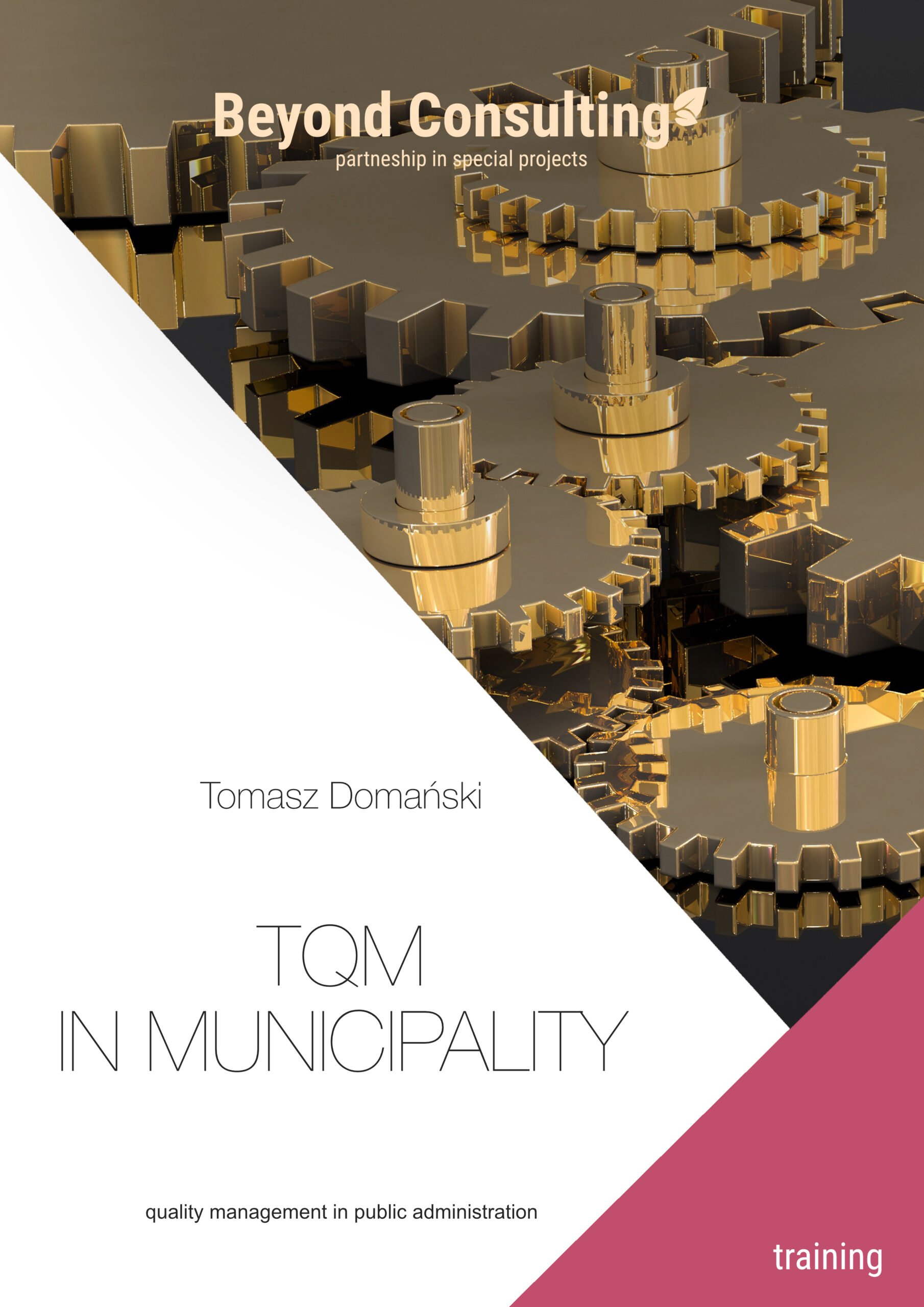
Introduction to the issues of comprehensive improvement of the quality of management in public administration, with particular emphasis on local government units, as well as the presentation of several useful techniques to support decision-making processes. Presentation of the TQM system on examples of the functioning of public and private organizational structures as proof that quality management systems can be equally successfully implemented in both these sectors. Demonstration that, regardless of the different conditions of functioning of private and public organizations, each of them is subject to the same rules in the field of management organization.

Form of trainingDurationMethods of work
Open or closed1 or 2 days ( 8 or 16 hours )Lectures and workshops

Training program

Lecture part

  • Traditional and modern management methods
  • Philosophy and techniques of TQM vs. ISO standards
  • Basic features of the TQM system
  • Building a quality system
  • Improving the work process
  • Constant improvement of the organization’s functioning quality
  • Orientation to customer needs
  • Promoting teamwork
  • Leadership vs management
  • Vertical and horizontal communication
  • Assessment of the quality of public services
  • Implementation of TQM in the commune
  • Selected TQM techniques
  • Standardization of quality systems
  • Ethics in public service

Workshop part

  • Target Tree Analysis and Chart
  • Force field analysis
  • Cause and effect analysis
  • Analyzing and modeling operating processes
  • Modeling workflow diagrams
  • Brainstorm
  • Delphi method
  • Nominal Group Technique

Training effects

  • Assimilation of basic concepts in the field of TQM
  • Understanding the essence of the TQM philosophy
  • Distinguishing the TQM system from the standardized ISO system
  • Getting to know the principles of building a TQM system in municipal organizational units
  • Learn how to methodically approach problem solving
  • Getting to know the basic set of TQM techniques
  • Getting to know the principles of measuring the quality of public services
  • Raising awareness of the relationship between public administration and its environment
  • Getting to know the professional principles of teamwork organization
  • Awareness of the roles of leaders in the management structure of municipal organizational units
  • Distinguishing the roles of leaders from managerial functions